
The Mandalorians: Jews of the Star Wars Galaxy
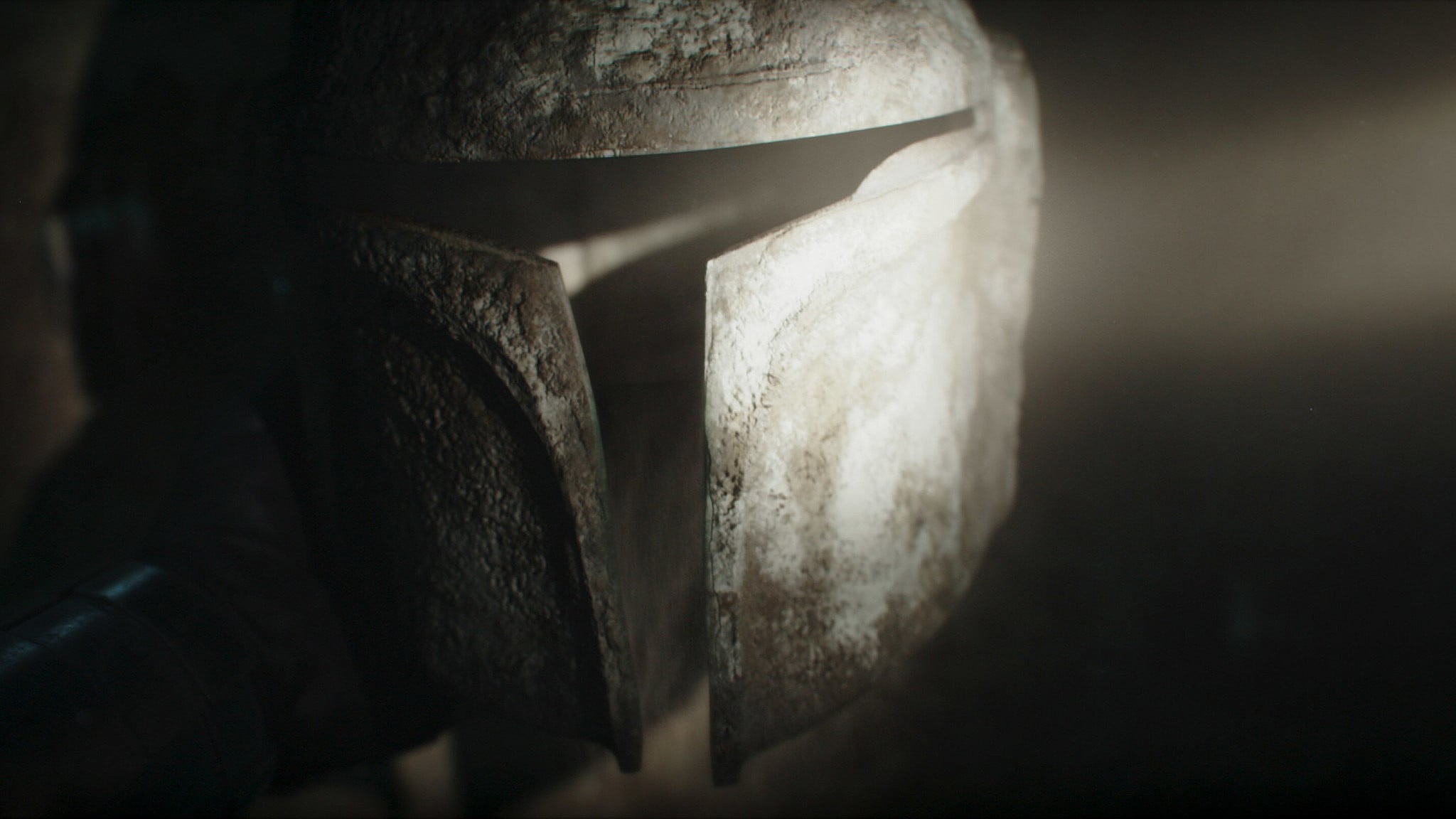
This weekend marks the release of The Mandalorian and Grogu, the first Star Wars film in cinemas since 2019. To prepare, I decided to rewatch the Disney+ show, The Mandalorian. I made a jaw-dropping discovery: the titular group of people, the Mandalorians, are Space Jews! I doubt this was intentional on George Lucas’s part, but it feels as though it was from the showrunners of The Mandalorian Season 3.
For instance, the title of its seventh episode, “The Spies,” is a reference to the Twelve Spies of Israel. In the Torah, Moses and Aaron sent twelve spies, one from each Tribe of Israel, to scout out the land of Canaan, while, in the episode, a handful of Mandalorians returned to the ruins of Mandalore to see if it was indeed habitable. As I’d come to discover, this was only the first of many parallels.
Despite Boba Fett, the first Mandalorian seen in Star Wars, being introduced on film in The Empire Strikes Back in 1980, the lore behind the Mandalorians didn’t get elaborated on until season two of Star Wars: The Clone Wars. They were a pacifist society after a brutal civil war forced all the Mandalorian warriors to be exiled to the moon of Concordia. However, a terrorist group known as Death Watch threatened the peace, and after teaming up with the former Sith Lord Maul, they overthrew the pacifist Mandalorian government. Bo-Katan Kryze, the sister of the Duchess of Mandalore, was the second-in-command of the Death Watch, but worked with the Republic to reclaim Mandalore after Maul took over.
This is where the Jewish symbolism begins; the parallels between the Galactic Republic turned-Empire and the Roman Republic turned-Empire are stark. The Romans first entered Judea under the pretense of peace to mediate in a civil war, but stayed and took control over the territory (and became an Empire during that time). In Star Wars, the Republic involved itself in a civil war on Mandalore, and after winning, the liberation force became an occupational force of the Galactic Empire.
17 years later, Bo-Katan turned to fighting the Empire. While she succeeded at first, the Empire perpetrated a genocide at a level unseen in Star Wars (save Death Stars destroying planets). In what became known as the Night of a Thousand Tears, they turned Mandalore into glass and killed the vast majority of Mandalorians, sending the survivors into exile across the Galaxy. By the time of The Mandalorian, there were small communities of Mandalorians hiding on many different planets.
This directly parallels the destruction of the Second Temple of Jerusalem by the Romans after Jewish resistance to their rule and occupation (commemorated by the Jewish holiday of Tisha B’Av), and the following Jewish Diaspora, where Jews lived in small autonomous communities across Europe, the Middle East, and Africa.
And just as the Jewish community turned to many different movements (such as Reform, Conservative, and Orthodox), the Mandalorians did as well. Some, like the Children of the Watch, turned to religious fanaticism to survive. Others, like Bo-Katan, vowed to continue fighting and return Mandalore to greatness.
Things changed once Bo-Katan regained the Darksaber, the unifying symbol of the Mandalorians, and united both observant and secular Mandalorians to retake their homeworld. They arrived home, only to discover the Empire, who had been the ones to genocide and kick them out, had settled and were living there. They return, defeat the Empire, and re-establish a sovereign Mandalore.
This clearly parallels the Zionist movement and the Jewish return to Eretz Yisrael. After being expelled for thousands of years (definitely in diaspora longer than the Mandalorians), they returned to their ancestral land only to find it Arabized, with strangers having made it their own.
This also reflects the messiah in Jewish prophecy; the Mandalorians have the Mand’alor and the darksaber, a role filled by Bo-Katan, and just as how in Judaism, the Messiah will unite all Jews and lead them back to Eretz Yisrael, Bo-Katan unites both the observant and secular Mandalorians and leads them back to Mandalore.
This is just one aspect of how integral parts of Mandalorian culture are reflections of both early and modern Judaism. For starters, Mandalorians are an ethnoreligion: one can be a secular Mandalorian and still be Mandalorian. And if one were to “convert” to being a Mandalorian, they would be a full Mandalorian foundling. This is seen firsthand with the protagonist of The Mandalorian; Din Djarin wasn’t born a Mandalorian, but was adopted and became one through essentially an Orthodox conversion. This is exactly how Judaism functions in the real world; the process of conversion is tough, but when a non-Jew converts, they become a full-fledged member of the tribe and are seen as such by the Jewish community.
Mandalorians also have a tribal system in the same way as Judaism; Just as how Mandalorians have a Clan they are from (an equivalent to their immediate family), and then a House their Clan is pledged to, so too do Jews have their family and also the larger tribe.
Very similar religious divides as we see in Judaism exist for Mandalorians. They have a Creed, which parallels the Halakhah of Judaism. The Creed calls on all Mandalorians to never remove their helmets to avoid exposing their face (not too dissimilar to the Orthodox view on women covering their hair). Some Mandalorians follow the Creed strictly, similar to Orthodox Judaism, such as the Children of the Watch, including the titular character of The Mandalorian and Grogu, Din Djarin. Then there are less observant Mandalorians who wear the armor but don’t follow the Creed as strictly as others, such as Death Watch, Bo-Katan, Boba and Jango Fett, and most of Mandalorian society before their planet’s destruction.
Mandalorians are truly the Jews of Star Wars, having parallel stories, traditions, religious values, and culture. They are a really important piece of Jewish representation in media and pop culture, and I hope the Jewishness of the Mandalorians continues to be emphasized in Star Wars stories to come.