The moral stakes of parenthood after death
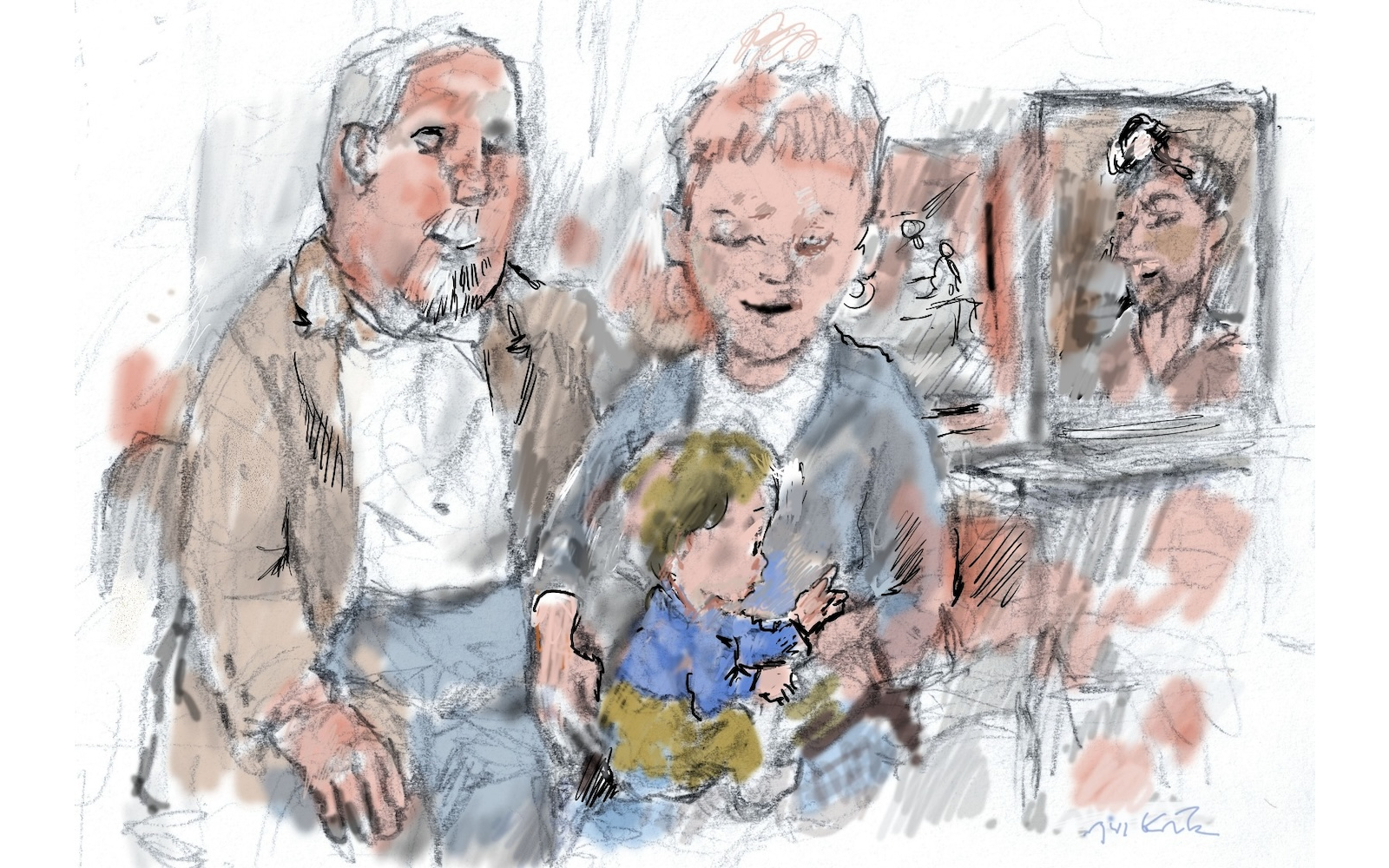
Since October 7, 2023, Israel has seen far too much death. More than a thousand civilians and soldiers were murdered in a brutal massacre unprecedented in the country’s history. Hundreds more soldiers and young civilians lost their lives in the longest war Israel has known since its founding. Many of them never had the chance to fall in love or bring new life into the world. A small minority froze their sperm before they died – sometimes as part of fertility treatments, sometimes out of a tacit awareness that their fate might be sealed. But the vast majority left behind no explicit indication of their wishes regarding their bodies or genetic material after death.
After the days of mourning, their spouses, parents, brothers, and sisters arise and say, “Let us give him a child. Let us continue his legacy.” In many cases, sperm is retrieved within hours of death through a simple medical procedure. It is then frozen, waiting for the day it might be used to create new life. At this point, the system asks: Did he give consent? What was his desire, explicit or implicit?
But these are precisely the wrong questions. The main argument of those opposed to using sperm retrieved after death is the lack of explicit consent – how can we know this is what he would have wanted? The honest answer is that we cannot know for certain. But does the absence of a statement necessarily mean objection? Is the silence of a young man who never imagined his own death and never made a will tantamount to an unequivocal prohibition on the birth of a child from his sperm?
Society does not operate this way in almost any other area related to death. When a person dies without a will, their property is divided according to law. If burial instructions are absent, the person is buried according to custom. In many countries, including Israel, acts of identification, analysis, and treatment are performed on the deceased without prior consent. Many countries have even adopted policies where organ donation is the default unless the person has explicitly refused.
In Israel, there is no specific legislation on the issue of posthumous sperm use, but rather an Attorney General directive from 2002 stating that a family must prove the deceased’s desire to father children even after death. This was, in fact, the basis on which a court this month granted permission to the mother of fallen IDF soldier Sgt. Maor Eisenkot to use his sperm: the court accepted that her son had expressed wishes to father a child posthumously. Even so, nothing requires a court to adhere to this position, and some have rejected it outright. Thus, any legal developments in this area have resulted from case-by-case judicial interpretation alone.
It is difficult to argue that, of all aspects of death, it is only in the question of continuity – the birth of new life – where silence is equated with opposition. This is where the question of the “moral gamble” comes up. If the sperm is used to produce a child, and that was indeed the deceased’s wish, then we have created life, brought comfort to the bereaved family, and continued his story. If we were wrong and he did not want this, no harm is done: his body was not desecrated, his name was not tarnished, and no action caused him suffering – he is gone. But if he did in fact wish to father a child after his death and we do not use the sperm, then we have erased possibility, denied continuity, and missed the chance for new life.
Declining to use the sperm is a moral decision where only one party – life – might pay the price. And yes, if a person has stated in writing, in speech, or in a trusted document that he does not wish to have children after his death, his will must be respected. A biological will, like a will regarding property, is a binding document. Explicit desire overrides all doubt. But silence is not a will. Society does not need permission to act where nothing has been said. It does so routinely: determining burial places, conducting ceremonies, handling remains, distributing inheritances.
If we could ask each of the fallen whether he would like to have a child after his death, how many would answer no? How many, even if they never said a word, would hope to have a child bear their name and continue their life? When a bereaved spouse or parent expressly seeks to have a child, it is not an abstract idea. There are frozen sperm, a declared desire to raise the child, and love seeking a path to fulfillment. There is a life that can be written. All that is required of the state is not to interfere.
And while the state has begun to shorten procedures for soldiers killed in action, what about civilians killed in hostilities, or those who die in accidents, or from disease, or in disasters? Do they not deserve the opportunity to leave a legacy behind?
Especially today, when death is so present, so palpable, in the absence of an explicit refusal, we must say with a clear moral voice: life must triumph over silence. Not out of defiance toward death, but out of loyalty to life, because what a person has not had time to say, society may – and sometimes must – say in their place. Sometimes, the most profound and humane way to remember those we have lost is not only to preserve their name on a tombstone, but to let their children be born.