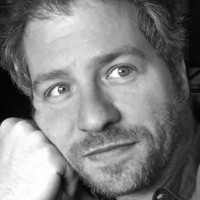
The Moser Phenomenon
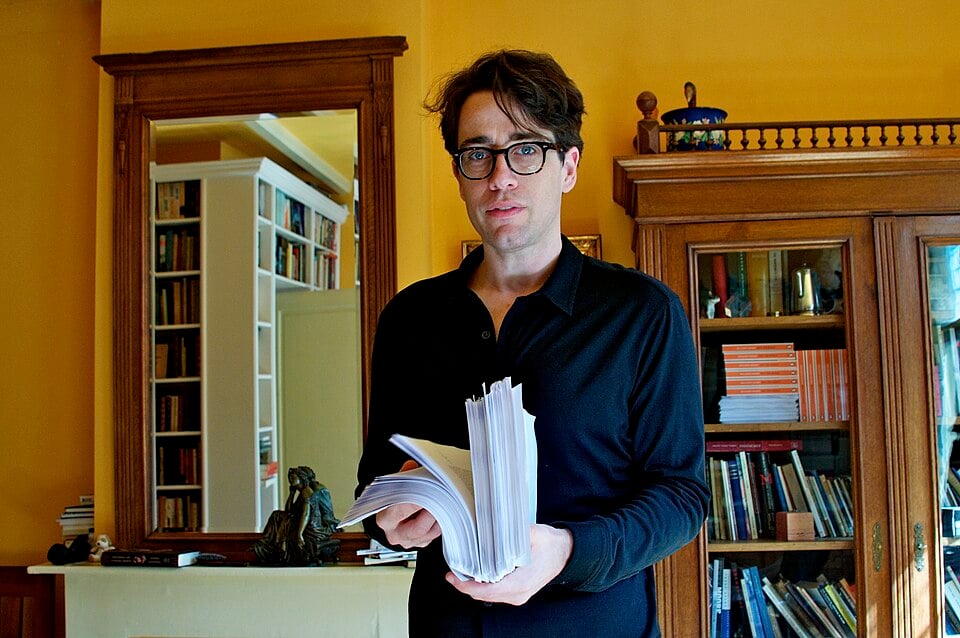
Ours is Benjamin Moser. His new book, Anti-Zionism: A Jewish History, promises a “hidden tradition” of Jewish dissent. He has taken it to Times Radio, to SOAS, to the New York Public Library, and to the YouTube channel of Zack Polanski, a few weeks after Polanski’s Green Party voted to define Zionism as racism. In an interview watched more than 450,000 times, he said he had “volunteered to dynamite” his career. For a man who says he has been silenced, he is remarkably hard to avoid.
Moser tells the story that serves him. Every Jew who leaves the covenant faces a choice: walk away quietly, or find a role that requires a Jew Card but asks nothing of him. Anti-Zionism offers the second. It turns distance into conscience, and it lets a man speak “as a Jew” with the authority of a prophet and none of the obligations.
Look at the twelve Jews he enlists. Aaron Samuel Tamares went to the 1900 Zionist Congress as a delegate before he turned away. Jacob Israël de Haan arrived in Jerusalem as a Zionist. Hannah Arendt was a Zionist activist, and in 1967 she wrote that “any real catastrophe in Israel would affect me more deeply than almost anything else.” Avi Shlaim served in the Israeli army, and he still writes that he has never questioned Israel’s legitimacy within its pre-1967 borders.
These weren’t prophets of a lost tradition. They were men and women on the fringes of Jewish life, or Jews still finding their way, who wrestled with the Jewish state, some of them all their lives. Moser takes their struggle, cuts it off before it ends, and presents it as a verdict.
De Haan shows it most clearly. He is the anti-Zionists’ favorite martyr, shot dead in Jerusalem after evening prayers in 1924. A Dutch visitor the year before described him as the Orthodox Jew through and through, a man who kept every commandment. His last book of poems is the diary of a man at war with himself, and it keeps returning to the Wall: “Wat zou die Muur meer dan eene muur zijn / Wanneer hij niet gemuurd stond in ons hart” (”What would that Wall be but a wall, if it were not built into our heart”). His struggles were his own. They deserve better than to be instrumentalised.
Today he has three sets of mourners. One honours the saint and hides the poems. Another honours the poet and drops the prayers. A third honours neither, and uses him as a weapon against the people he prayed with. A man who spent his last years trying to hold his contradictions together has been split three ways and turned into a mascot.
The Herzl in this book is built to fit a verdict reached in advance: a racist, an antisemite, a man who wanted the Jews to disappear. Moser’s own main source on Herzl, the Harvard historian Derek Penslar, reads the same episodes as the acts of a man desperate to rescue Jews from antisemitism. Faced with that fact, Moser said: “I have a different interpretation.” A historian follows the evidence to a conclusion. Moser starts from the conclusion and builds the person he needs.
He tells audiences that Schnitzler called Herzl the only true antisemite he had ever met. That line belongs to a character in one of Schnitzler’s novels, speaking about a Zionist leader who is never named. He attributes to Churchill a phrase that Ronald Storrs wrote. He presents Nazi propaganda, published two months after the Nuremberg Laws, as the laws’ own “introduction.” In The New Yorker, Isaac Chotiner concluded that Moser has “an unfortunate tendency to misrepresent the authorities he enlists.” In the Jewish Review of Books, Allan Arkush found that he and another author he reviewed “relentlessly distort, cherry-pick, misquote, and misrepresent their sources.”
Even if Schnitzler had said it, it would prove less than Moser thinks. Herzl’s impatience with the Jews who didn’t fit his plan, whether they were observant, poor, uneducated or simply unwilling to be remade, was hardly unique. Every grand scheme for solving “the Jewish question” has had its embarrassing Jews: the ones who spoil the picture. Moser has a scheme of his own. For him the Jewish problem is Zionism, and his embarrassing Jews are the millions who love Israel. He holds them in the same contempt he condemns in Herzl.
Jews despising other Jews for not fitting their vision is a sad and very old story, and our sages taught that it is why we went into exile in the first place.
The errors matter less than the argument they serve. It runs: Herzl was a flawed man, so Zionism is a flawed idea, so Jewish sovereignty in the land is illegitimate. Each step is a leap. Herzl didn’t create the Jewish bond to the land. He inherited it, as every Jew before him had, from the prayer book. Moser has argued with one man and believes he has refuted a people.
Moser accuses Herzl of trying to abolish “the traditional definition of the Jews.” He is half right, and he has the wrong half.
Herzl did try to detach Judaism from the Jew, and to cut Zionism loose from Judaism. He imagined a people without its Torah, a nation that would no longer need its God. But the longing for Zion wasn’t detachment. It was the part of Herzl that stayed Jewish, the one thread still tied to two thousand years of prayer for the return. Moser attacks the only thing in Herzl that the tradition would recognise, and shares the rest: a Jewishness cut loose from Judaism.
Nor is the definition Moser invokes traditional. The idea of the Jews as a religious community and nothing more arrived with emancipation in the late eighteenth century, and Reform Judaism turned it into a creed. In 1885 its Pittsburgh Platform declared: “We consider ourselves no longer a nation, but a religious community, and therefore expect neither a return to Palestine…” The tradition itself never separated the God of Israel from the people of Israel, or either of them from the land. Moser’s “traditional” Jew is Edwin Montagu’s Jew.
I have argued elsewhere that you can be a Jew without being Jewish . Being a Jew can be a matter of birth and nothing more. Remaining a Jew, and passing it on, takes the covenant.
So grant Moser his premise: to be Jewish is, first of all, a religious matter. Then the authority to say what Judaism requires belongs to the religion itself: its texts, its sages and the communities that live by them. On the land, that tradition has spoken for two thousand years in every prayer book. The Ramban, the great thirteenth-century sage, counted living in the land among the Torah’s commandments, binding on every Jew “even during the exile.” Even the rabbis who opposed Zionism argued about when and how the Jews would return, never about whether the land was theirs.
Moser cannot borrow the religious definition of a Jew and reject the religious authority that comes with it. If Judaism is a religion, he is not its judge. If it is not, he has no business invoking “the traditional definition” at all.
Montagu, the only Jew in the British cabinet at the time, denounced the Balfour Declaration in 1917, and he stayed formally Jewish largely because his father’s will required it. In 1943, Congregation Beth Israel in Houston, Moser’s hometown, adopted principles that rejected a Jewish state. The same document barred from voting anyone who believed in the dietary laws, and it dismissed Hebrew as unintelligible. Anti-Zionism and the abandonment of the covenant arrived in the same document. They usually do.
I work in marketing, and I recognise the model. Every campaign needs a credentialed endorser, and Moser is this one’s: he has a Pulitzer, he is Jewish, and he is available and willing. What he brings to each platform isn’t new history. It is the line “even a Jew says this,” and that line has never needed footnotes.
In branding, there is also a name for a label that outlives its product: a legacy brand. The name stays on the shelf long after what was inside has changed. Jewish anti-Zionism is that kind of brand. Montagu’s assimilated world is gone, and so is the Bund. The American Council for Judaism is a footnote. Even the Houston congregation reversed itself. Each generation takes the label down, dusts it off and sells it again as a discovery.
For any serious reader, the book does nothing to unsettle the case for Jewish sovereignty in the Jews’ ancestral homeland. At most it shows that twelve Jews, after centuries of persecution, were torn and conflicted about it. That will come as news only to readers who had never heard of most of them.
So congratulations, Benjamin Moser. You will be the poster boy of what I have called the Genocide Lobby for some time to come. It has never needed facts or history. It needed something in print with a Jewish name on the cover.
The spiritual Jew in me sits somewhere between disbelief and laughter at a man who writes about religious Jews as if they were on his side. Show me the Jew who fears our Father in Heaven and wants the Jewish state dismantled, its people left to the mercy of Hamas or whatever regime would follow. Even the fiercest Haredi opponents of the state pray three times a day for the return to Zion. They are waiting for a redemption from Heaven, not for a Palestine designed by Benjamin Moser.
Moser’s certainty leads to one place. The state goes, and the Jews go back to where they stood for two thousand years: in exile, at the mercy of others, praying three times a day, “May our eyes behold Your return to Zion in mercy.”
It will never happen.
Men like Moser create no lineage, but there will be a new Moser in every generation.
Until He returns to Zion, our offspring will go on being proud, passionate Jews who cleave to the Eternal.