
Nothing is ever just one thing.
The Teaching of Contempt
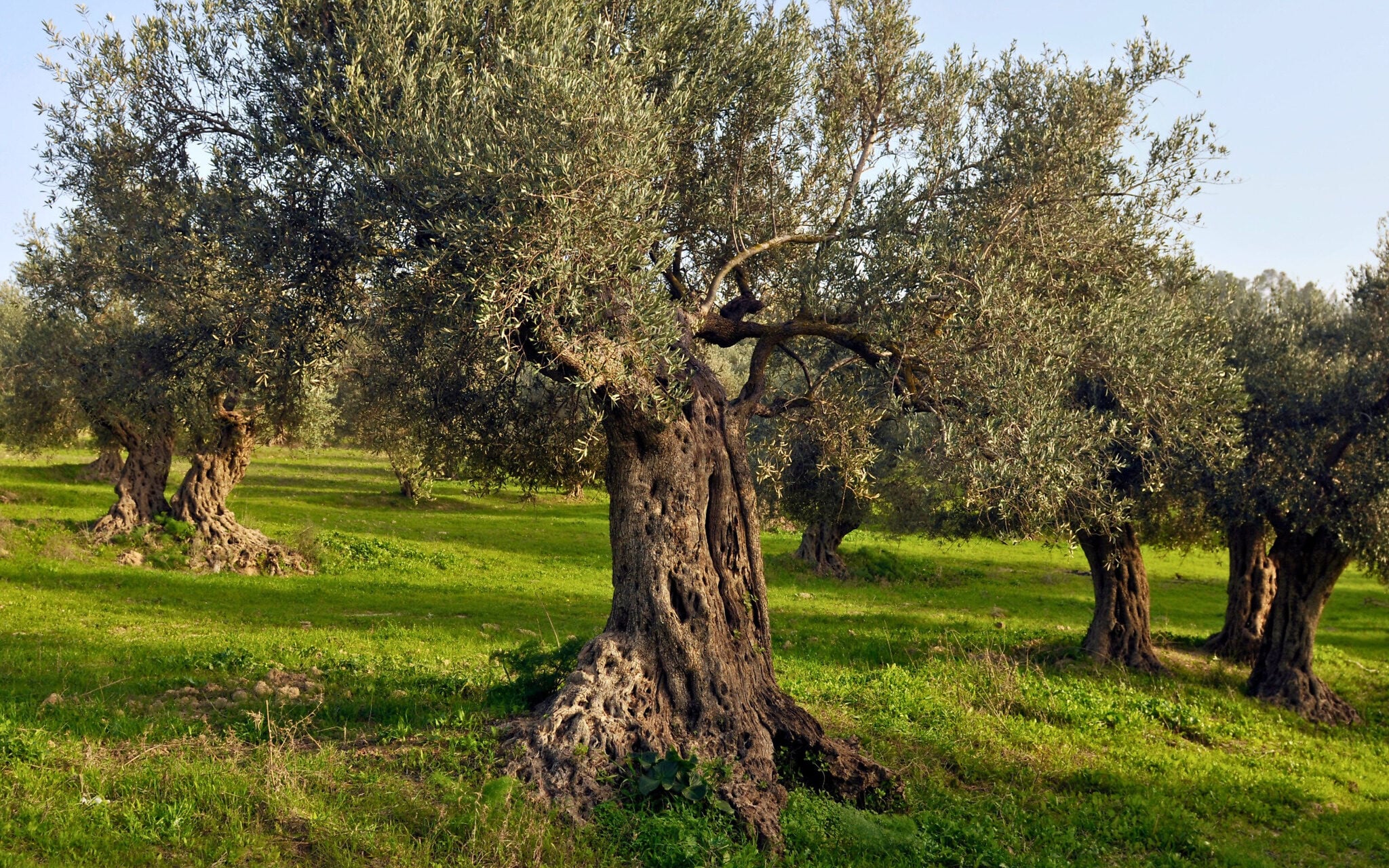
An olive grove in Judea Hills, Israel.
In my last essay, I took up two passages Christians have read as eviction notices served on Israel. Hebrews says the first covenant has been made obsolete. Jesus tells a story in Matthew about a vineyard taken from the men who were running it. Read quickly, both can sound as though God has decided the Jewish people no longer have a place in his plans. Hebrews, though, gets its new covenant from Jeremiah, who promises it to the house of Israel and stakes Israel’s permanence on the fixed order of the moon. Jesus borrows his vineyard from Isaiah, who promises that Jacob will take root and Israel will blossom. The Hebrew Scriptures underneath these passages tell a story different from the one Christians have made them tell.
Then comes Romans 11. Paul doesn’t ask his readers to work through a parable or puzzle over a Greek verb. He asks the question outright, answers it in three words, and spends the rest of the chapter warning Gentile Christians against the very conclusion the church went on to draw anyway.
I’m writing this as a Christian because I’ve seen the antisemitism the church has either caused or not stood against, and it’s wrong. Wrong morally, ethically, and factually. The church has not replaced Israel. That isn’t only a question of how we treat Jewish people. It’s a question of whether we’ve understood our own Scriptures. Paul addressed it nearly two thousand years ago, and he wasn’t offering a suggestion.
“I ask, then, has God rejected his people? By no means!” (Romans 11:1). Then he says something easy to read past: “For I myself am an Israelite, a descendant of Abraham, a member of the tribe of Benjamin.” Abraham is his ancestor. Benjamin is his tribe. The man answering is Jewish. He’s not ruling on somebody else’s standing. He’s talking about his own family.
The answer was older than Paul. Whether God had rejected his people was a question the Hebrew Bible had already settled, more than once. Samuel told Israel the Lord would not forsake his people, for his great name’s sake (1 Samuel 12:22). The psalmist put it plainly: “For the Lord will not forsake his people; he will not abandon his heritage” (Psalm 94:14). Paul asks the question in the form his own Scripture asks it, and then gives the answer his own Scripture gives.
Then Paul turns to the Gentile Christians in Rome, and his tone changes. He has something to say to people who might be tempted to congratulate themselves on belonging to God’s people, especially if they have begun to think the Jews no longer do.
He gives them a tree.
Some of its branches have been broken off, and wild olive shoots have been grafted in among the branches that remain. Those wild branches are the Gentile believers. They did not plant the tree, and they did not grow its roots. Then Paul tells them how they are to regard the branches that were broken off: “Do not be arrogant toward the branches” (Romans 11:18). The root supports you, he says. You do not support the root.
Paul is not finished warning them. The natural branches were broken off through unbelief, and you stand through faith. That should make you humble, not proud. “Do not become proud, but fear,” he writes (Romans 11:20). Then the sentence Christians skip: if God did not spare the natural branches, he will not spare you either (Romans 11:21).
The olive tree came from Jeremiah, centuries before Paul. The Lord once called you a green olive tree, beautiful with good fruit, he wrote, and then a great tempest set fire to it and its branches were consumed (Jeremiah 11:16). Broken branches on God’s olive tree is a prophet’s picture of Israel under judgment, and that is the tree Paul’s Gentile readers were being grafted into. Twenty chapters later in the same book, the same prophet stakes Israel’s permanence on the fixed order of the moon. Jeremiah is where Hebrews got its new covenant, and Paul’s olive tree echoes Jeremiah’s. The prophet is not the least bit ambiguous about whether God is finished with Israel.
He isn’t finished. The broken branches can go back. God has the power to graft them in again (Romans 11:23). Near the end of the argument, as regards election, they are beloved for the sake of their forefathers: “For the gifts and the calling of God are irrevocable” (Romans 11:28-29).
Irrevocable is not a soft word. Neither is the warning wrapped around it, and the warning is the part that should stop a Christian cold. Paul saw this coming. He was writing to Gentiles in Rome in the first century, and he already knew they would be tempted to believe they had replaced somebody. He told them that would be arrogance, and he told them to be afraid of it. The church did it anyway, for centuries, quoting the same letter.
All three passages are built on Hebrew Scripture, and that is most of the answer. Hebrews argues from Jeremiah. Jesus argues from Isaiah. Paul’s answer echoes Samuel and the Psalms. None of them says that God has rejected the Jewish people. Each of them is reading his own Bible and saying that what it promised has arrived. To get replacement theology out of any of them, you have to cut the passage loose from the Scripture underneath it. Put that Scripture back, and the reading falls apart every time.
The Man Who Asked the Church to Change
Jules Isaac was a French Jewish historian who had spent his working life on textbooks and curricula, and who was made Inspector General of Public Instruction in 1936.
Then France fell to Nazi Germany.
At the end of 1940, the Vichy government removed him from that post under its statutes against Jews. He was sixty-three. Within a year he and his family were in hiding. He had spent his career on how history gets taught to children, and he turned that training on the hatred that had just cost him his job and his home: he wanted to know where Christians had learned it. By 1942 he was reading the Gospels in Greek against the Christian commentary written on them.
In October 1943, the Gestapo came for his wife, his daughter, his son-in-law, and one of his sons. His wife Laure and his daughter Juliette were deported to Auschwitz and killed there. Before she died, Laure managed to get a message out to him, telling him to finish the work the world was waiting for from him. The work was already underway. He finished it.
What he found, and what he spent the rest of his life saying, was that the extermination had been made thinkable long before it was made possible. Generations of ordinary Christian instruction had taught ordinary Christians that Jews were cursed, rejected, and guilty of killing God. He gave that body of teaching a name: the teaching of contempt.
In 1947 he carried eighteen recommendations for Christian education to an emergency conference on antisemitism at Seelisberg, in Switzerland. The Christian delegates built their statement on them, and it became known as the Ten Points of Seelisberg. Do not present the passion in a way that brings the odium of killing Jesus on all Jews or on Jews alone. Remember that Jesus was born of a Jewish mother. Remember that the first disciples and the apostles were Jews. The document closes by invoking Romans 11:28-29, the verses I discussed a few paragraphs ago. Isaac was not asking Christians to be nicer to Jews. He was asking them to teach their own Scripture more carefully, beginning with the chapter Paul wrote to warn Gentiles against exactly this.
The verses had been there all along.
On June 13, 1960, he was given a private audience with Pope John XXIII. He was eighty-two. He handed over a portfolio summarizing his research and asked the Catholic Church to examine what it taught about Jews. At the end of the audience, he asked the pope whether he could carry away a bit of hope. The pope answered, “You have a right to more than hope.” Then he explained the limit: he was the chief, he said, but he had to consult and have his offices study the questions Isaac had raised, because this was not an absolute monarchy. He was telling Isaac to expect something to happen, and warning him it would move at the speed of an institution. On September 18, the pope and Cardinal Augustin Bea weighed Isaac’s proposals, and on Bea’s recommendation the pope put the question to the Secretariat for Promoting Christian Unity. The work that produced the declaration began there.
Isaac died in September 1963. Two years after that, the Second Vatican Council promulgated Nostra Aetate. It said that what happened in the Passion cannot be charged against all the Jews, without distinction, then alive, nor against the Jews of today. It said Jews must not be presented as “rejected or accursed by God” as though Scripture taught it. It told everyone responsible for catechesis and preaching to teach nothing that was not in keeping with the truth of the Gospel and the spirit of Christ. It deplored antisemitism against Jews at any time and by anyone.
That document could not undo what had already happened. The centuries were already spent, and the worst of it had happened twenty-two years earlier to people whose names Isaac knew. What it changed was the Catholic Church’s official teaching. A Jewish historian who had lost his wife and his daughter asked Christians to examine their own instruction, and after five years and a council, they did.
That is why I think an essay like this is worth writing. The teaching has changed before, and it can change again.
What Christians Can Actually Do
So what do I want from the Christians reading this? Not a disclaimer. A few things that cost almost nothing, and much of the church already does them.
Say the audience out loud. When Matthew 27 or John 8 is read in a service, whoever is reading can add one sentence naming who is speaking and to whom. In Matthew, a Jewish crowd answers a Roman governor. In John, a Jewish teacher argues with Jewish listeners. It takes five seconds, and it changes what a room full of people hears.
Teach what the church did with the verse, not only what the verse says. I had read Matthew 27 many times before anyone told me that verse 25 has a name, the blood curse, and that John Chrysostom was preaching it to Christians in Antioch in the 380s, to stop them going to the synagogue. Why wasn’t I taught that alongside the verse? That is a curriculum choice, and curriculum can be changed. A Christian who knows the verse and not what was done with it is carrying something loaded and has not been told.
Drop the reflex. When a Jewish person says a verse has been used against them, the answer is not a lecture on first-century context. The answer is: you’re right, here is what was done with it, and here is what I am doing about it. Context can come after that, if it comes at all.
Preach the hard verse with its context attached. If Hebrews 8:13 is read aloud on a Sunday morning, the congregation hears that the first covenant is obsolete and ready to vanish away, and then the service moves on. One more minute would fix it. The writer has just quoted Jeremiah’s promise to the house of Israel, and this verse does not mean God has abandoned the Jewish people.
None of that asks a Christian to give up faith in Jesus. I believe Jesus is the Messiah of Israel. I can hold that and still tell the truth about what my own people did with my own book.
Consider what it means to say that God has canceled his promises to Abraham, Isaac, and Jacob. Those were not casual promises, made for a season and then forgotten. They were covenants. God bound himself by his own word. The new covenant doesn’t act as an eraser of God’s word to Israel. Not at all! It comes out of those promises, and Jeremiah announces it to the very people Christians have claimed God rejected. If God can set aside what he swore to Abraham, Isaac, and Jacob, what does that tell you about the reliability of his promises? Every promise you are standing on comes from the same God. We cannot make him faithful when he speaks to us and unfaithful when he speaks to Israel. Paul said it to Gentiles in one sentence: if God did not spare the natural branches, he will not spare you either (Romans 11:21). A Christian who says Israel was canceled thinks he has made a point about Israel. The point he has made is about God: that God goes back on his word.
The hardest of the three is still ahead: whether the men who wrote the Gospels were hostile toward Jews, and whether that hostility deepened in the Gospels written later. That’s next.
A list of verses was never really the question. The question underneath it is whether Christians can worship a Jewish Messiah and be trusted around Jewish people. An essay doesn’t settle that one. What settles it is what we do the next time it counts.
Scripture quotations are from the ESV® Bible (The Holy Bible, English Standard Version®), © 2001 by Crossway, a publishing ministry of Good News Publishers. ESV Text Edition: 2025. The ESV text may not be quoted in any publication made available to the public by a Creative Commons license. The ESV may not be translated in whole or in part into any other language. Used by permission. All rights reserved. Biblical references appear in the text.
Related Topics
Related Posts