
The Mother of Israel
We often mistake the moment of rescue for the moment of completion. In the Jewish tradition, salvation is only the preface; the true work of covenantal life begins after the waters have parted.
(Judges 4:1–5:31).
Parashat Beshalach reaches its defining moment not through command or instruction, but through song. At the edge of the Sea, a newly freed people discover that redemption, once experienced, must be voiced—and that expression is inseparable from obligation. Faith that is celebrated but unexamined remains incomplete. Freedom that is unacknowledged cannot endure.
The Haftorah answers this moment not by repeating it, but by carrying it forward. The Song of Devorah, recorded in Judges chapter 5, is not born at the instant of rescue, but after its consequences have begun to unfold. It is a song shaped by memory, discernment, and responsibility—a form of leadership expressed not in command, but in reflection. From its opening verse to its closing line, it does not merely mark what has occurred; it asks what redemption now requires.
If the song at the Sea teaches Israel how to sing, Devorah’s song teaches Israel what a song must hold.
It asks not only: Have we been saved, but have we acted rightly in freedom. This distinction frames every movement and every line of her testimony. From its opening words, the song reveals the character of its voice: gratitude without flattery, praise without self-reference, moral clarity without severity, and empathy without hesitation. These qualities are never declared outright; they emerge gradually, carried by the rhythm and restraint of the song itself.
Devorah begins not with triumph, but with willingness. She blesses the moment when leaders stepped forward and the people chose to offer themselves:
The leaders took the lead in Israel,
The people offered themselves willingly.
(5:2)
Victory is not her starting point; moral obligation is. Chazal hear in this verse a principle of enduring leadership: redemption does not descend fully formed from above. It is released when fear loosens its grip and people move forward of their own accord. As the Maharal explains, this is leadership at its most refined. It does not coerce or overwhelm; it aligns. When a people acts willingly, redemption no longer needs to be forced. Song follows—not merely because salvation occurred, but because a moral threshold has been crossed.
Before turning to generals or battlefields, Devorah lifts her gaze outward—to earth and sky, to mountains and clouds:
Then the kings came, they fought;
Then the stars fought from heaven.
(5:20)
The world itself seems to respond to this shift in human will. This is not poetic excess; it signals that what has occurred in Israel is not confined to politics or power. The Zohar reads these verses as a moment of restored harmony between Heaven and earth. Devorah’s leadership reflects what the Zohar describes as a feminine mode of prophecy—a term signaling a methodology of leadership rather than gender. It is integrative, restorative, and relational, not forceful or dominating. It gathers what has been scattered and reestablishes balance rather than imposing control.
This restorative posture explains why the song does not rush toward conquest. Instead, it lingers on the conditions that once made life unlivable—the erosion of trust, the collapse of safety, the disappearance of ordinary passage:
Through the silent roads, through the village paths,
The people wandered without shelter.
(5:6–7)
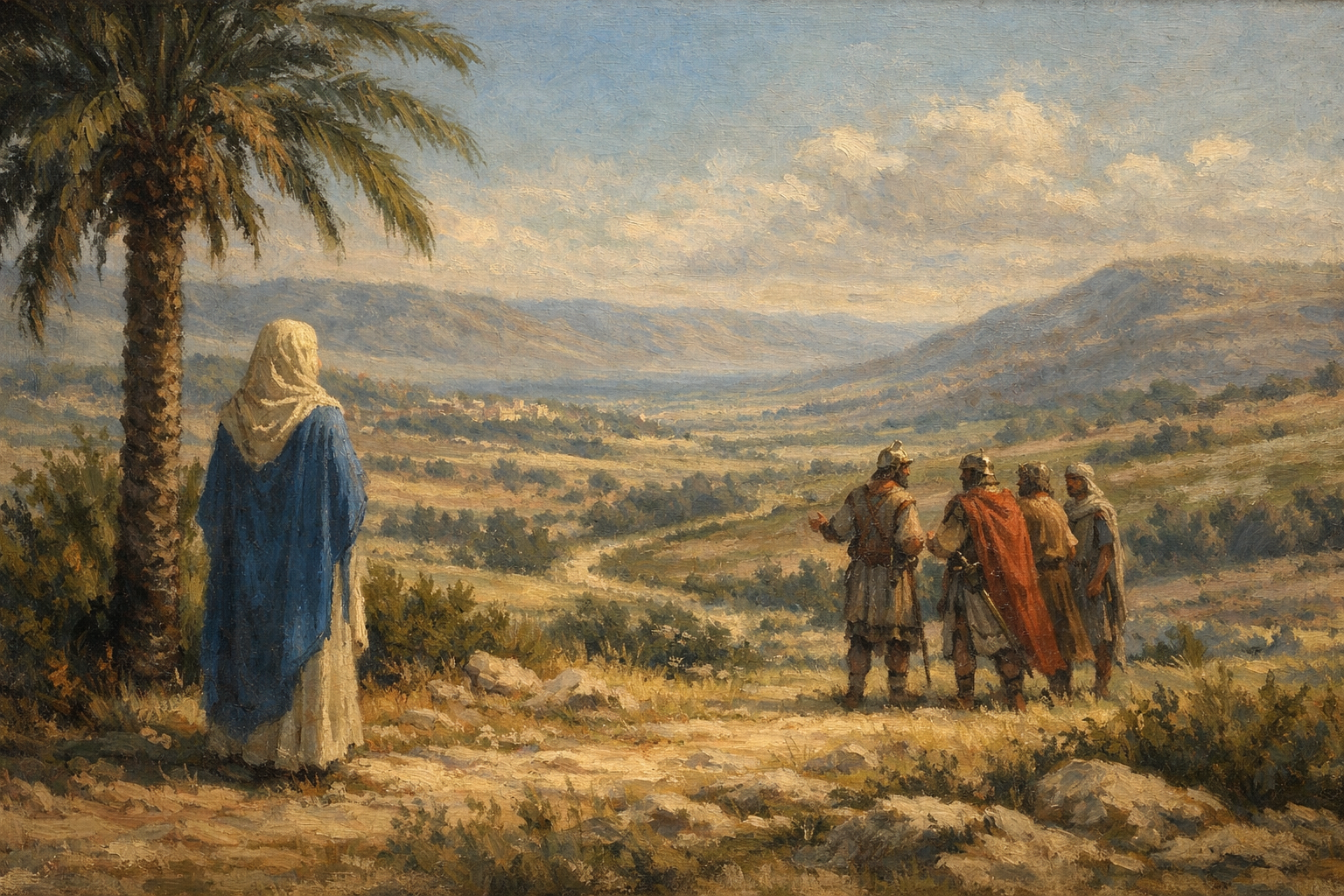
Here, Devorah names herself not by title or authority—not as prophetess, judge, or commander—but as a mother in Israel. The distinction is decisive: a ruler enforces order, but a mother restores life. Her motherhood repairs what fear had undone—reopening space for movement, habitation, and daily existence to resume without dread. The Maharal explains that motherhood represents continuity: leadership attentive not only to the present moment, but to what can endure beyond it. This is why Devorah could judge Israel with such clarity, and why her song steadies as much as it inspires.
Yet this nurturing vision is paired with a firm insistence on accountability. The song does something rare and deliberate: it names names. Tribes who came forward are remembered, while those who held back are questioned in lasting detail (5:14–18). Devorah understands that redemption not remembered with precision cannot be carried forward with integrity. As Abarbanel notes, gratitude without detail fades quickly. By recording participation and calling out indifference, Devorah transforms victory into memory, and memory into a binding communal charge.
That charge extends even to the final, quietest act of the war. Earlier, Devorah told Barak that the glory of the day would not belong to him (4:9); leadership delayed by reluctance would find its completion elsewhere. That decisive moment unfolds not on a battlefield, but in a tent—an act of fulfillment born from the readiness and accountability she instilled.
Yael enters the song from a different register entirely. She appears not as a public figure, nor as a bearer of institutional authority, but as someone fully present to the necessity of the moment (5:24–26). Her action is quiet, deliberate, and precise. She does not speak, explain, or seek recognition. Her stillness is not passivity; it is focus. What must be done is done, without spectacle, and without delay.
The Song of the Sea celebrates freedom found, but Devorah’s song asks whether that freedom can be sustained. It suggests that the answer lies in moral demand, in memory, and in the readiness to act when the moment requires it. The song ends as it began—not with the exercise of power, but with the acceptance of covenantal charge. It reminds us that while G-d opens the sea, it is the Mother in Israel—the leader who restores, remembers, and acts—who ensures that life itself can take root and flourish in the space that freedom has created.
So may all Your enemies perish, O L-rd,
But let those who love Him shine like the sun rising in its strength.
(5:31)
שבת שלום
שמואל