
Clear analysis of Israel's politics, security and history
The “Netanyahu Funded Hamas” Claim
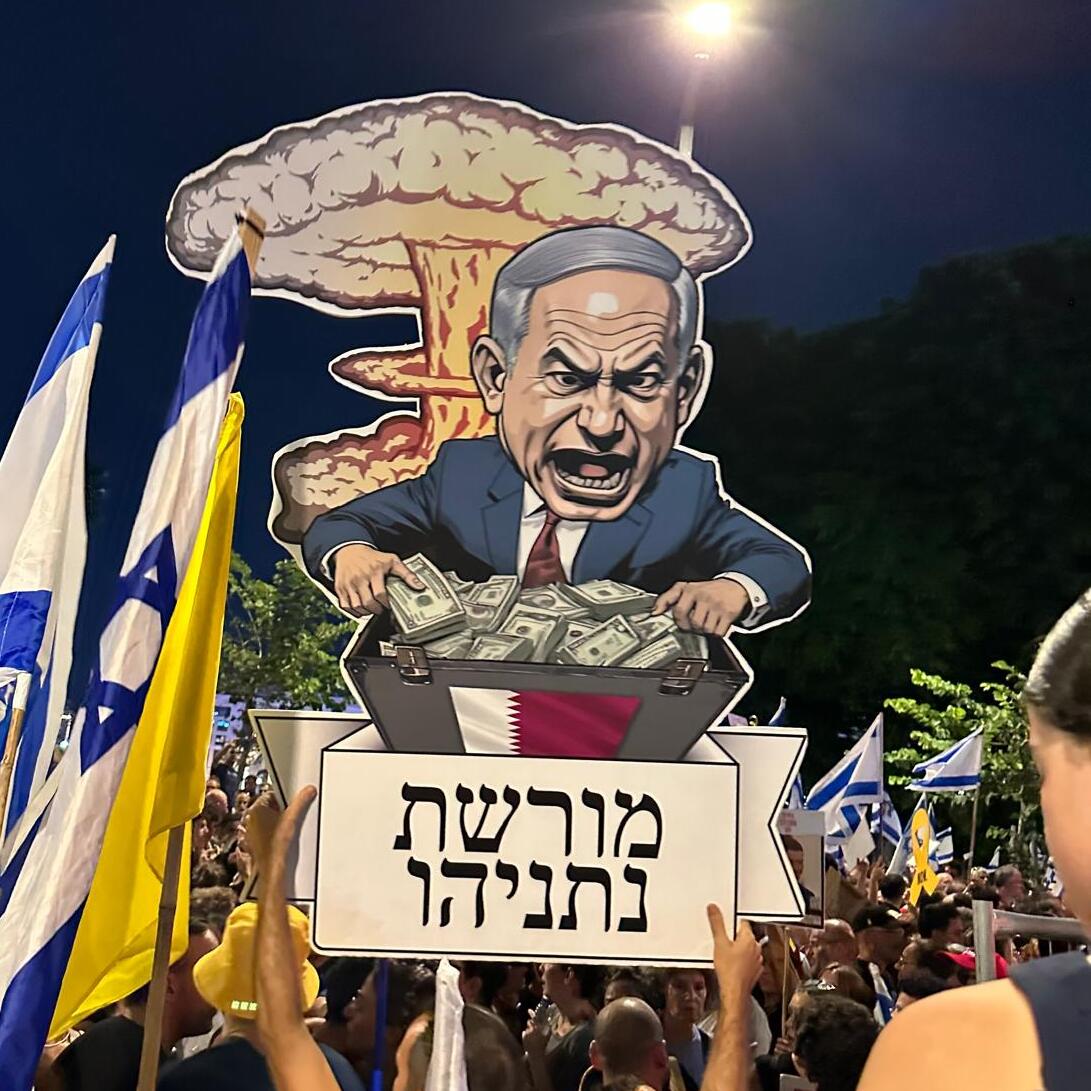
Protesters criticizing the transfer of Qatari funds to Gaza. Photo: Bar / Wikimedia Commons (CC BY-SA 4.0)
In recent years, a single accusation has been deliberately and consistently deployed as a political weapon by opposition figures and their supporters, and increasingly echoed abroad: “Netanyahu funded Hamas.” It has been repeated methodically in commentary, protests, and social media, until repetition itself began to turn the statement into an accepted fact.
First, the obvious should be clarified. Netanyahu did not directly finance Hamas. He gave Israeli approval for Qatari money to enter the Gaza Strip while Hamas governed it, money that inevitably ended up under Hamas’s control. In hindsight, it is easy to conclude that this policy was wrong. Given what followed, it can be described as a catastrophic failure, and Netanyahu deserves criticism for allowing it.
However, the narrative now being promoted bears little resemblance to how the funding policy emerged, how it functioned, who supported it, and who opposed it. Key facts have been ignored or denied, leaving much of the public with a slogan rather than an understanding of what actually happened.
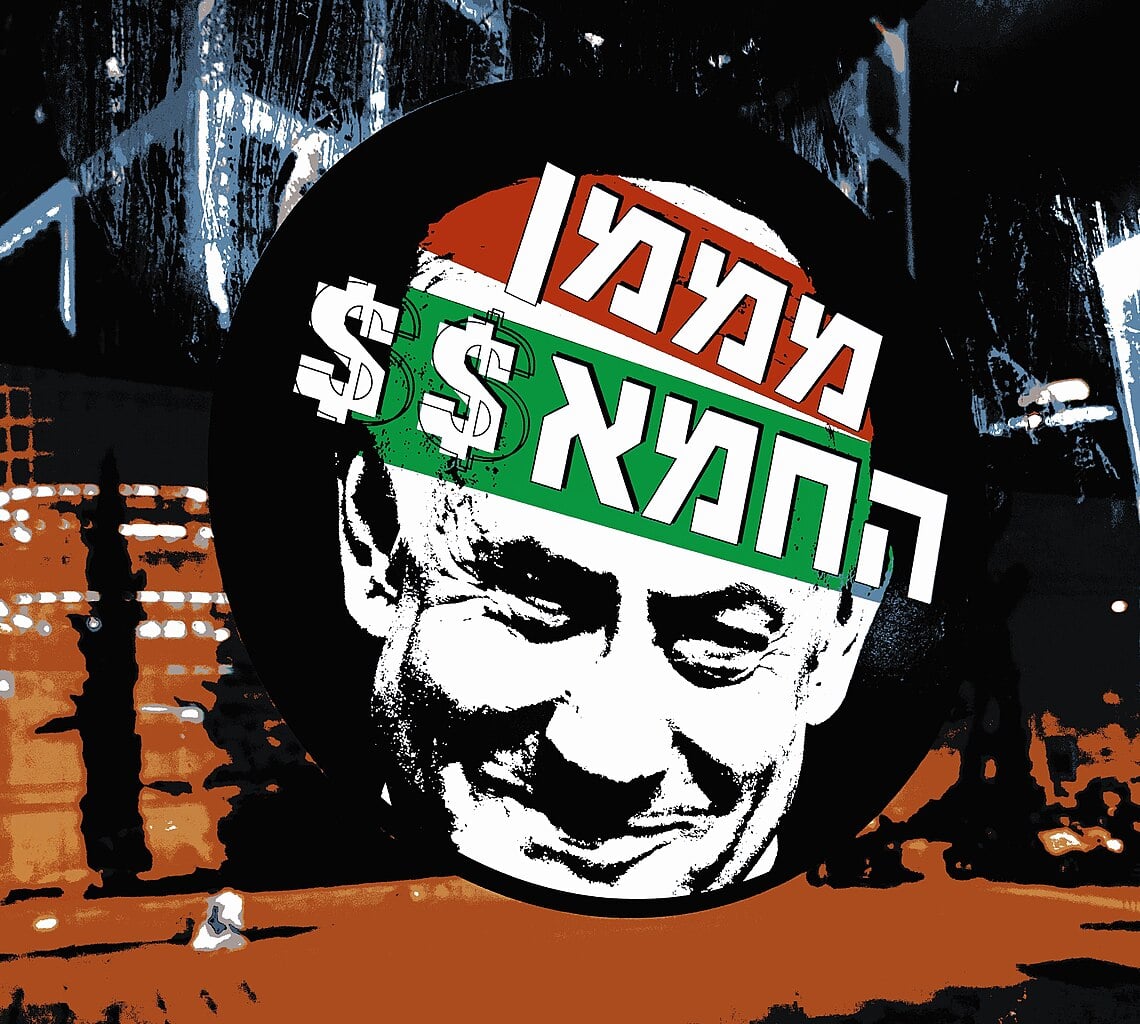
Photo: Chen Spec / Flash90, via Wikimedia Commons, CC BY-SA 4.0
When the Policy Began – And What It Originally Was
The first point usually omitted from claims that “Bibi funded Hamas” is timing. The policy of allowing funds to enter the Gaza Strip did not begin under Netanyahu. It was already in place before he returned to office, well before the Qatari mechanism ever existed.
In 2008, under the government of Ehud Olmert, Israel approved the transfer of Palestinian Authority funds into Gaza. These were tax revenues collected by Israel on behalf of the PA under existing economic agreements. The stated purpose was to pay salaries and maintain basic civilian services. This reflected assessments that a total cut-off would accelerate humanitarian collapse and increase the likelihood of escalation.
At that stage, Hamas was already firmly in control of the Gaza Strip, but the PA still continued to employ tens of thousands of people in Gaza such as teachers, doctors and nurses. Soon, the Palestinian Authority’s functional presence in Gaza began to erode as Hamas consolidated full administrative control, and Israel’s financial mechanisms began adjusting to that governing reality.
When Netanyahu returned to office in 2009, he inherited this framework. The practice of allowing funds to enter Gaza under supervision was already established, debated, and understood within the Israeli system. It evolved further over time, culminating in 2018 with the introduction of the Qatari funding mechanism, which openly acknowledged Hamas as the governing authority responsible for civilian administration in the Strip.
The Security Establishment Consensus
The policy of allowing funds to enter the Gaza Strip rested on a broad and consistent consensus across Israel’s security establishment. This included the IDF, Military Intelligence, Shin Bet, Mossad, and the National Security Council, and it persisted across multiple governments.
By the time the Qatari funding mechanism was formalised in 2018, senior security officials were deeply involved in shaping and sustaining the policy. When transfers were halted by the government following violence, they were reinstated after security assessments advised that continued funding better served Israel’s immediate security interests.
In March 2023, Brig. Gen. Dror Shalom, head of the Political–Security Bureau at the Ministry of Defense, confirmed that the 2018 decision to approve the Qatari cash transfers followed a recommendation of the National Security Council, aimed at maintaining calm in Gaza.
In January 2019, Israeli media reported that the Shin Bet, under Nadav Argaman, supported the continuation of Qatari aid transfers even after violent incidents along the Gaza border. A Ynet report from January 24, 2019, described a cabinet decision to resume the transfer after all security bodies, including the Shin Bet, IDF, Mossad, and National Security Council, advised against further delay.

Photo: Olivier Fitoussi / Flash90, via Wikimedia Commons, CC BY-SA 4.0
In June 2022, Mossad director Yossi Cohen went as far as saying that the Qatari funding was “a blessing” and praised Qatar for helping to maintain peace with the suitcases of cash. More recently in September 2023, weeks before Oct 7, his replacement David Barnea said he “agreed” with the policy when questioned about it.
Senior IDF leadership supported the policy throughout, with IDF assessments aligning with Military Intelligence evaluations that a sudden financial cut-off would increase the likelihood of escalation. Herzi Halevi, as IDF Head of Southern Command, flew to Qatar with Yossi Cohen in 2020 for a meeting with officials to request that the funds continue.
Across Israel’s security establishment, there was a widely shared strategic assumption: sustained economic relief was essential to managing Gaza and preventing escalation.
Broad Political Support
Several senior political figures who are now in the opposition held executive authority while funds were being transferred to Hamas via Qatar.
During the Lapid–Bennett government in 2021–2022, the mechanism shifted from cash deliveries to bank transfers, alongside increased involvement of international bodies such as the United Nations. There is little indication that these adjustments materially reduced the portion of funds that ultimately reached Hamas. In September 2021, Lapid publicly described Israel’s approach toward Gaza as a “security-economic” policy. Bennett stated that if quiet was maintained, Israel would be prepared to “give more than before,” while a deterioration would prompt a harsher response.
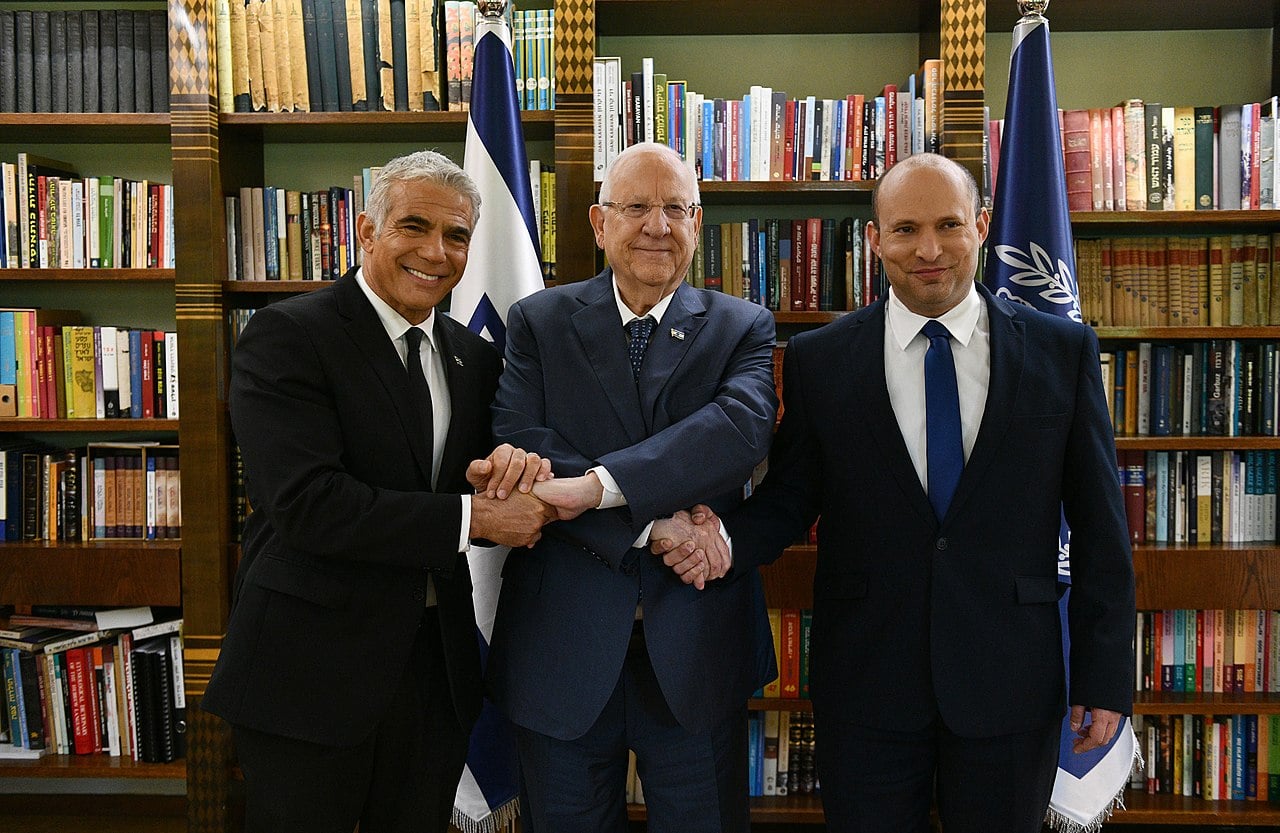
Photo: Kobi Gideon / Government Press Office (Israel), via Wikimedia Commons, CC BY-SA 3.0
The Defense Minister at that time, responsible for dealing with the mechanism for transferring Qatari funds, was Benny Gantz. He met directly with Qatari officials to ensure the continuation of these transfers, and thanked them ‘for understanding Israel’s needs’.
Avigdor Liberman is a partial exception. He repeatedly stated that he opposed the transfer of Qatari funds to Gaza, and claimed that in a meeting in 2018 he was the only cabinet member to do so. At the same time, Liberman held senior and influential positions in government, including Minister of Defense, and cannot be fully separated from responsibility for a policy that continued on his watch. When questioned about why it continued while he held those positions, Lieberman attributed this to constraints imposed by coalition partners. That explanation raises a broader political question about the practical capacity of a right-wing leader to implement policy within such a coalition.
Gadi Eisenkot, former IDF Chief of Staff, publicly supported the transfer of Qatari funds into Gaza as part of a security approach aimed at maintaining stability and reducing escalation. “It’s for our shared interest,” he was quoted as saying.
In a recent public statement in Doha, Qatar’s prime minister, Mohammed bin Abdulrahman Al Than,i addressed the Gaza funding arrangements directly. He stated that the payments were coordinated with the knowledge and support of multiple Israeli governments, including Netanyahu, Bennett, and Lapid, as well as Israel’s security establishment.
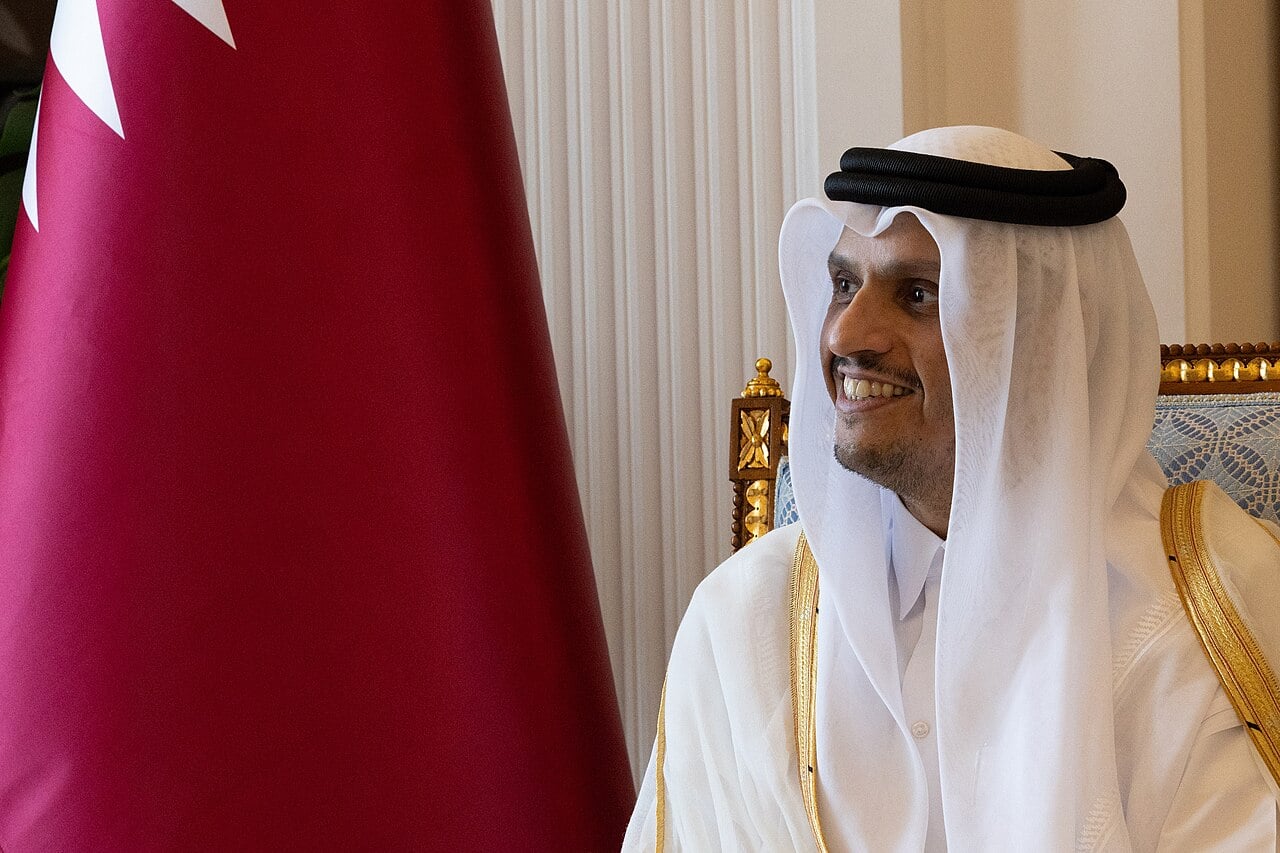
Photo: U.S. Department of State photo by Chuck Kennedy, Public Domain, via Wikimedia Commons
Netanyahu’s Decision and the Alternatives
Beyond the question of who else besides Netanyahu supported the policy, another question that is systematically avoided in political and media debate concerns what rejecting it would have meant.
Ending the funding framework would have led rapidly to war, a conclusion shared repeatedly across Israel’s security establishment. Such a move would have placed Netanyahu in direct opposition to the IDF, Military Intelligence, Shin Bet, Mossad, and the National Security Council.
A decision to wage war with Hamas before October 7 would have struggled to garner domestic support, and even more so internationally. Even after the worst massacre of Israeli civilians in the state’s history, international pressure to halt military operations emerged within weeks. A sustained campaign to dismantle Hamas without such a trigger would have been politically and diplomatically untenable.
The reaction of Israel’s opposition and much of the media after October 7 reinforces this reality. Netanyahu insisted that any outcome must include not just the return of all hostages, but also Hamas’s removal from power. Meanwhile, every major opposition leader supported ending the war much earlier, through a hostage deal that offered no credible path to seeing Hamas displaced as the governing power.
The same political and media voices that accuse Netanyahu of funding Hamas pressed for outcomes during the war that would have preserved Hamas’s rule in Gaza.
Scale and Proportion
One reason the slogan “Bibi funded Hamas” has gained traction among his political opponents is that it serves as a direct attribution of blame for October 7, in addition to the fact that he was prime minister at the time. A look at the numbers puts that claim in perspective.
At its peak, the Qatari funding mechanism approved by Israel amounted to roughly $30 million per month, or up to $360 million annually in periods of full operation. There were periods when those monthly payments were paused or delayed by cabinet decisions.
Estimates of international governmental aid flowing into Gaza, by contrast, place the annual figure at around $3 billion.
Most of the funding reaching Gaza came from the United States, the European Union, and government-backed international bodies. This funding was usually channeled through UN agencies and reported under broad categories such as “the Palestinian territories,” rather than broken down clearly by Gaza alone. This made it harder to determine Gaza-specific allocations, but the practical result is that funding streams from the US and EU almost certainly exceeded the Israeli-approved Qatari channel. Ironically, accusations that “the US funded Hamas” or “the EU funded Hamas” are virtually never heard.
All the payment streams mentioned above exclude other major Hamas funding sources, including Iranian support, private charities, internal taxation and crypto-based fundraising. That’s why even on conservative assumptions, analysts have estimated that the funds transferred with Israeli approval accounted for less than 5% of Hamas’s total financial base. Treating these payments as decisive, particularly in relation to October 7, replaces serious analysis with a convenient narrative.
Conclusion
The persistence of the slogan “Bibi funded Hamas” says less about what actually happened than about how responsibility is being contested in Israeli politics. In an election-bound atmosphere, reducing a long-running policy into a personal accusation offers simplicity and a convenient target. It also obscures the deeper failure.
As recently as December 26, Naftali Bennett publicly apologised to Liberman for wrongly attributing responsibility for initiating the Qatari funding – a reminder of how assigning individual blame for political gain overshadows confronting the broader misjudgement that enabled the policy in the first place.
The policy of allowing funds into Gaza cannot be attributed to one man alone. It emerged from a broad political and security consensus that spanned successive governments, the security establishment, and much of Israel’s political and media establishment. Responsibility therefore rests with a system and a mindset, often described in Israel as the conceptzia – the belief that economic incentives and managed containment could substitute for confronting a Jihadist ideology.
This explains why Netanyahu has argued that when a commission of inquiry is finally agreed upon, it must examine the deeply entrenched assumptions that shaped policy over decades, including decisions taken during the Oslo Accords and the 2005 Gaza disengagement. That approach addresses the roots of the failure. If the goal is truth rather than political attribution, it is precisely this broader examination that deserves support.
After the catastrophe of October 7, Israel cannot afford slogans or political point-scoring. It must confront the root causes honestly in order to learn from them and ensure such a failure is repeated never again.
Related Topics
Related Posts