Political analysis, conflict dynamics & human rights
The Night Islamabad Went Dark: The Massacre Pakistan Still Won’t Admit
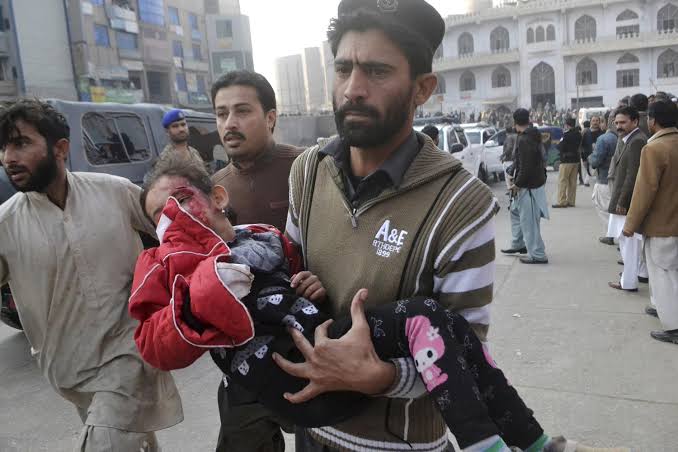
Source X - day of Horror
When thousands of exhausted, unarmed demonstrators finally entered Islamabad’s D-Chowk on November 26, 2024, after breaking through roadblocks that had held them back for days, few imagined they were walking into one of the darkest nights in Pakistan’s contemporary history. What followed was not a chaotic confrontation between protesters and police. It was a strategic act of state violence, staged in the heart of the capital, in full view of the world, against Pakistan’s largest political movement.
One year later, the massacre remains untouched by any formal investigation. It is absent from parliamentary debate, ignored by the courts, and largely unspoken in the country’s own media. Yet the events of that night demand scrutiny, because they reveal not only the brutality of the moment but the direction in which Pakistan has been drifting.
To understand how Islamabad reached this point, it is necessary to revisit the political fracture that preceded the bloodshed. Imran Khan, removed as prime minister in April 2022, became Pakistan’s most prominent detainee by mid-2023. The growing stack of charges—ranging from corruption to violations of the Official Secrets Act—was criticised as politically motivated by Amnesty International and the International Commission of Jurists. The general election in February 2024 widened the crisis further. Despite demonstrable grassroots support, Khan’s party was stripped of its election symbol and was prevented from campaigning. International media organisations including Deutsche Welle and Al Jazeera documented systematic interference before and during the vote.
The rupture deepened in October 2024 with the passage of the 26th Constitutional Amendment, which expanded executive and military influence over judicial appointments and dismissals. Leading constitutional experts inside Pakistan described the amendment as a structural threat to judicial independence itself. Former chief justice Jawwad S. Khawaja warned that the change risked creating a judiciary subordinated to the state rather than balanced against it.
From his cell in Adiala Jail, Khan issued a final call for a march on Islamabad. It was a last resort at a moment when lawful political avenues had been blocked. The government, already weakened by economic turmoil and public distrust, responded with overwhelming force. Highways were sealed with shipping containers, trains were cancelled, and mobile networks were shut across three provinces. More than four thousand PTI workers were arrested. Courts declared the march illegal. The authorities believed that pressure and logistics alone would extinguish the movement.
They misjudged the resolve behind it. Vast convoys forced their way through, led by elected officials, family members of senior PTI figures, and thousands of ordinary citizens who refused to turn back. By the afternoon of November 26, demonstrators had occupied D-Chowk, just steps from the Parliament.
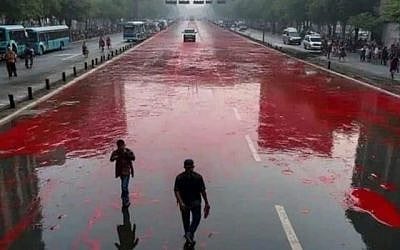
The descent into violence came swiftly. Tear gas, rubber bullets and baton charges were followed by live ammunition. International journalists captured clear evidence of snipers positioned on rooftops and automatic rifle fire directed towards unarmed demonstrators. Hospitals across Islamabad, including PIMS and Polyclinic, began reporting casualties with gunshot wounds to the head, chest and abdomen. Among the victims were twenty-year-old Anees Shehzad, thirty-one-year-old Sardar Ali and twenty-four-year-old Mobeen Aurangzeb.
Doctors later disclosed pressure to alter medical records, echoing patterns of concealment seen in earlier episodes of Pakistani state violence, including the 2014 Model Town killings. The official government narrative claimed six deaths and denied the use of live ammunition—even as video evidence and medical documentation contradicted it.
Shortly after midnight on November 27, Islamabad’s Red Zone went dark. Every streetlight was cut simultaneously. In Pakistan’s political lexicon, such blackouts are not accidental. For forty-five minutes, tracer rounds and sustained bursts of automatic fire illuminated the night sky. Protesters recorded the sounds of gunfire coming from multiple directions while they sought refuge behind concrete barriers. By dawn, the square was cleared. Based on hospital records and witness testimony, the real death toll was at least twelve to seventeen, possibly higher.
One year later, the most striking aspect of the tragedy is not simply the absence of accountability. It is the complete absence of any effort to pursue the truth. The Parliament has not debated the event. The judiciary has not demanded an inquiry. The military’s public relations wing dismissed reports of live fire as “foreign-sponsored disinformation.”
International responses were limited and measured. Western governments, wary of destabilising a nuclear-armed state already facing severe economic pressures, confined themselves to generic statements urging restraint. For Pakistan’s ruling establishment, the silence was interpreted as an indirect endorsement that the consequences would be minimal.
The Islamabad massacre was not just another episode in Pakistan’s long history of political violence. It was a demonstration of how far the state has drifted from democratic norms. The judiciary is being reshaped to accommodate executive power. Electoral credibility has eroded. Political opposition is increasingly framed as a national-security threat. The country appears to be governed less by civilian authority and more by a hybrid system in which constitutional language is used to legitimise extra-constitutional control.
For the international community, particularly states grappling with rising authoritarian impulses at home, the events in Islamabad offer a stark warning. When courts are weakened, when elections lose legitimacy, and when constitutional frameworks are altered to consolidate power, political violence becomes not an exception but an inevitability. What happened in Islamabad is not a uniquely Pakistani story. It is an illustration of how institutions erode long before a crisis becomes visible.
One year on, the memory of November 26–27 survives only through the testimonies of victims’ families, a handful of independent journalists, and diaspora communities determined not to let the dead be forgotten. There has been no truth commission. No judicial review. No parliamentary process. But silence is itself a political act, and Pakistan’s silence speaks with devastating clarity about the country’s direction.
If the massacre remains unexamined, it risks becoming a template. If confronted honestly, it could be a long-overdue turning point. A year later, the essential question remains unanswered: are Pakistan’s institutions, and the international actors observing them, willing to confront what happened—or will this night of darkness be allowed to define the future?
Related Topics
Related Posts