
The Nine Days Are Not Only a Ritual. They Are a Mirror
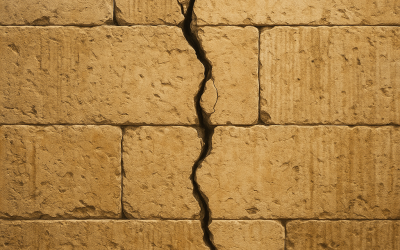 In the summer of 2018, the morning after Tisha B’Av, a 220-pound stone dislodged from the Western Wall and crashed into the egalitarian section below. Engineers offered explanations — erosion, age, rainwater. But I couldn’t see it as just physics. On the very day we mourn the Temples, one of the Wall’s own stones broke away.
In another time, the elders of the community might have gathered to interpret its meaning. But we live in a world of news cycles, social media, and relentless urgency. The moment passed.
But in hindsight, that fallen stone feels less like an isolated event and more like the first visible sign of something deeper — a crack we chose not to see. It felt like more than coincidence. It felt, to me, like a whisper of warning. Not in superstition, but in sacred memory.
Our sages taught that the Nine Days are a season of danger, when the Jewish story seems to bend toward tragedy. And history has given the warnings teeth.
That fallen stone has never left my mind, because we are now living with stones falling all around us — not physical ones, but the foundational stones of Israeli society. Some are cracked. Some are loose. And some, painfully, may already be corroding.
The stone fell three years before COVID, before Oct. 7, before the war in Gaza. But already by 2018, Israel’s foundations were straining.
Electoral paralysis gripped the country — five elections in four years, endless coalition horse-trading, cynicism calcifying into despair. The seeds of judicial overhaul were being quietly planted. Institutions that once steadied the state were hollowing out.
It continued with the weaponization of language, our members of Knesset sewing epithets and insults that normalized vulgarity, turning vitriol into vernacular. Demonization of political opponents became daily sport. The press — once a pillar of democratic accountability — was cast as traitors and enemies. It was followed by the demonization and harassment of protesters, political opponents, and attacking families at military cemeteries on Yom HaZikaron.
Some cracks happen on their own. Rainwater seeps in. Time wears stone. But other cracks are carved deliberately.
Law and order weren’t just failing; they were being bent. Extreme broadcasters became mainstream. Conspiracy theorists became pundits. Broadcast standards crumbled. Social media, once a forum, became a weapon. Government-aligned “attack dogs” swarmed and shredded dissent, blurring the line between propaganda and journalism.
Even the final guardrail — the High Court — buckled. When it ruled that a prime minister under multiple criminal indictments could stand for re-election, it greenlit not just one man, but a precedent. The brakes were off. The wheels were coming loose.
From Sinat Chinam to ‘Hitbahamut’
Every year on Tisha B’Av, we’re told the Temple fell because of sinat chinam — baseless hatred. But we’ve gone further now.
We’ve reached hitbahamut — animalization. Boundaries of civility, discourse, and restraint have been trampled. Political enemies aren’t just disagreed with; they’re degraded.
And when contempt becomes culture, anarchy follows.
Then came Oct. 7 — the worst calamity in a generation — and the war in Gaza. The shock forged real unity, but only briefly sealed the fissures. Underneath, the cracks deepened.
Unity forged in blood is still fragile when the foundation beneath it is hollow.
Many of us ignored the Jeremiahs who warned of this. Jurists, former justices, civic leaders — voices who said this course would erode the rule of law. But most didn’t listen. Many shrugged. Others jeered.
The prophet Jeremiah speaks of hope and healing after desolation. But consolation requires acknowledgment. We cannot balm over wounds we pretend not to see. Judaism is a faith of tikun (repair) and refuah (healing). But repair starts with naming what’s broken — and deciding if we have the courage to reset the stones that can’t simply be patched.
If the Nine Days are merely symbolic, why does history continue to scream through them? And if they are real — spiritually, emotionally, existentially — then the question isn’t just what we mourn. It’s how we live.
That stone on Tisha B’Av wasn’t just a geological event. It was an omen — not in the mystical sense, but in the forensic one. It told us: something is loose.
But it’s also a mirror. And the question is whether we have the honesty — and the will — to see what else might fall if we don’t act.