


Middle East Analyst
The Number That May Be the Best Lead in the Trump–Mossad–Epstein Files
by author
The Department of Justice’s release of the so-called “Full Epstein Library” has produced a familiar paradox: an extraordinary volume of material, and very little immediate clarity. Millions of pages are now public, yet most are poorly indexed, inconsistently labeled, and difficult to search. Journalists are overwhelmed, volunteers are combing through massive PDFs, page by page, and the public is left asking whether anything genuinely new will emerge from the deluge.
Most of the material will not. Much of it is administrative, duplicative, or long known: records from the 2006–2008 Florida case, documents tied to Epstein’s 2019 arrest, victim statements, civil litigation, and the routine bureaucratic churn that surrounded all of it. Important, yes—but not revelatory.
One document in the release stands apart. Not because it is verified—it is not. Not because it resolves the major questions—it does not. But because it appears to be the only Epstein files document that has been published that directly addresses them.
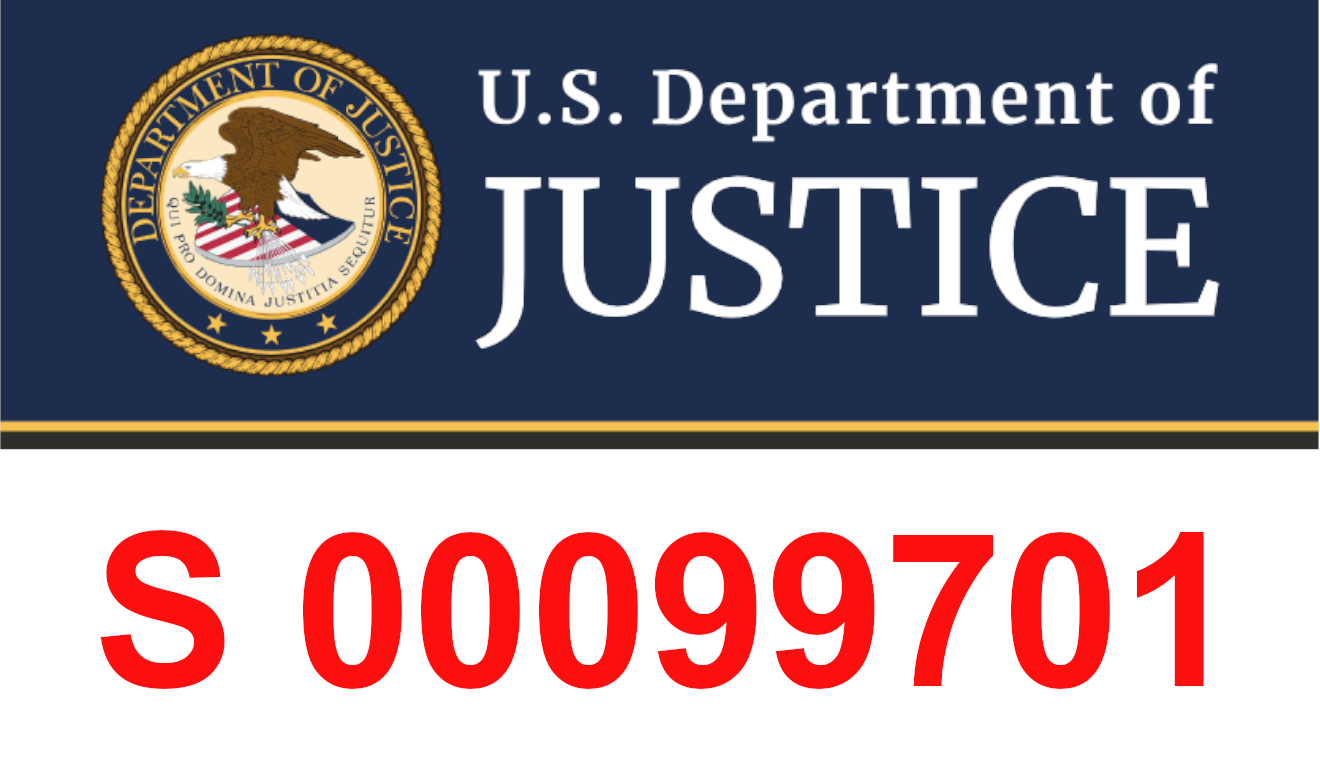
That document is an FBI FD-1023 Confidential Human Source report dated October 19, 2020, tied to Source ID S 00099701.
If one cares about two unresolved questions that have hovered over the Epstein case for years—whether Epstein had intelligence affiliations, and whether Donald Trump was ever vulnerable to foreign leverage—this CHS report appears to be the only currently published document from the released Epstein files that speaks to both. For that reason alone, it constitutes the most important lead in the entire document dump.
What the CHS Actually Claimed
The FD-1023 is unverified raw reporting. It is not evidence. It is not corroborated. It does not represent the views of the FBI or the Department of Justice. None of this can be stated too clearly.
That said, the content is not trivial.
According to the report, the confidential human source asserted, among other things:
- that Jeffrey Epstein had relationships with foreign intelligence services
- that certain well-known intermediaries played roles in those relationships
- that Donald Trump was “compromised” in ways the source believed were connected to those networks
- that these claims reflected information circulating within elite social and political circles, not media reporting
- and that the source had previously provided related information to the FBI, prompting follow-up interest within the Intelligence Community
- A link to the original memo is provided so readers can review the source reporting directly and draw their own conclusions.
None of these assertions are verified. But the analytic significance of the report lies less in what was claimed than in how the reporting is described.
This is a source reporting from within high-status social networks—relaying information circulating among people with proximity to power, wealth, and influence. In intelligence terms, this is not conspiracy rhetoric or internet rumor. It is socially embedded reporting: claims moving through elite networks before they ever appear in public discourse.
If even partially grounded in real conversations, allegations of this type would almost certainly have triggered follow-up inside any professional intelligence or law-enforcement environment.
And that brings us to the key point.
The FD-1023 explicitly states that the CHS had previously provided related reporting. Those earlier reports have either not yet been released or perhaps released but not yet identified. It is also possible that they have been identified but not yet published.
Why This Source Is a Red Flag for Follow-Up
Nearly everything else in the Epstein release looks backward. The S 00099701 report does not.
It is the only document in the public release that:
- directly links Epstein to intelligence services
- directly asserts Trump’s vulnerability to compromise
- references earlier CHS reporting that remains unreleased
- contains claims that cannot be explained as recycled media narratives
- reflects socially proximate reporting rather than ideological or conspiratorial language
- and appears to originate from someone with access to elite networks
Whether the source is correct is not the point. The point is that this is apparently the only published reporting that touches the core unresolved questions of the Epstein case at all.
If there is more to learn, this is where the trail begins.
Why Journalists Should Focus on the Source ID
The DOJ’s “Full Epstein Library” is not a curated archive. It is a bulk dump. Many documents are scanned images. Many are mislabeled. Many are only partially searchable. The DOJ itself warns that its search function may not work reliably.
Traditional keyword searches—“Epstein,” “intelligence,” “Trump,” “compromised”—will miss much of what matters.
But CHS reporting has one crucial feature that cuts through this chaos: each confidential source is assigned a unique Source ID.
In this case: S 00099701.
If earlier reports from this source exist—and the FD-1023 says they do—they will carry that same identifier. Even if the text is poorly scanned. Even if the document is mislabeled. Even if the metadata is broken.
The Source ID is the breadcrumb.
And because the release is so poorly indexed, searching for that exact string across the bulk PDFs may be the only practical way to locate additional reporting tied to this source.
This is precisely the kind of task that distributed volunteers, investigative journalists, and open-source researchers excel at—if they know what to look for.
Where to Look Inside the DOJ Release
Anyone searching the Epstein files should focus on:
- bulk PDF files, not just pre-indexed items
- administrative pages inside those PDFs, including routing slips and cover sheets
- FD-1023 forms from 2019–2020 that reference political or foreign intelligence angles
- cross-references to earlier serials or attachments
- any document containing the string “S 00099701”, even if surrounding text is unreadable
Because the DOJ warns that many documents are not fully searchable, researchers should expect OCR errors, partial hits, or instances where the Source ID appears only in margins or headers.
But if additional reporting from this source exists, it is findable.
Why This Matters
The Epstein story has always had two layers.
One is criminal, and it is extensively documented.
The other involves intelligence, influence, and leverage—and it has never been resolved.
The S 00099701 CHS report appears to be the only published Epstein file that directly touches that second layer. It proves nothing. It settles nothing. But it clearly signals that additional reporting may exist—earlier interviews, follow-on claims, or internal assessments—that as of yet, have either not been identified or published.
And the search begins with one number.
S 00099701.
Related Topics
Related Posts
