
The Ordinary Conversations About Jews
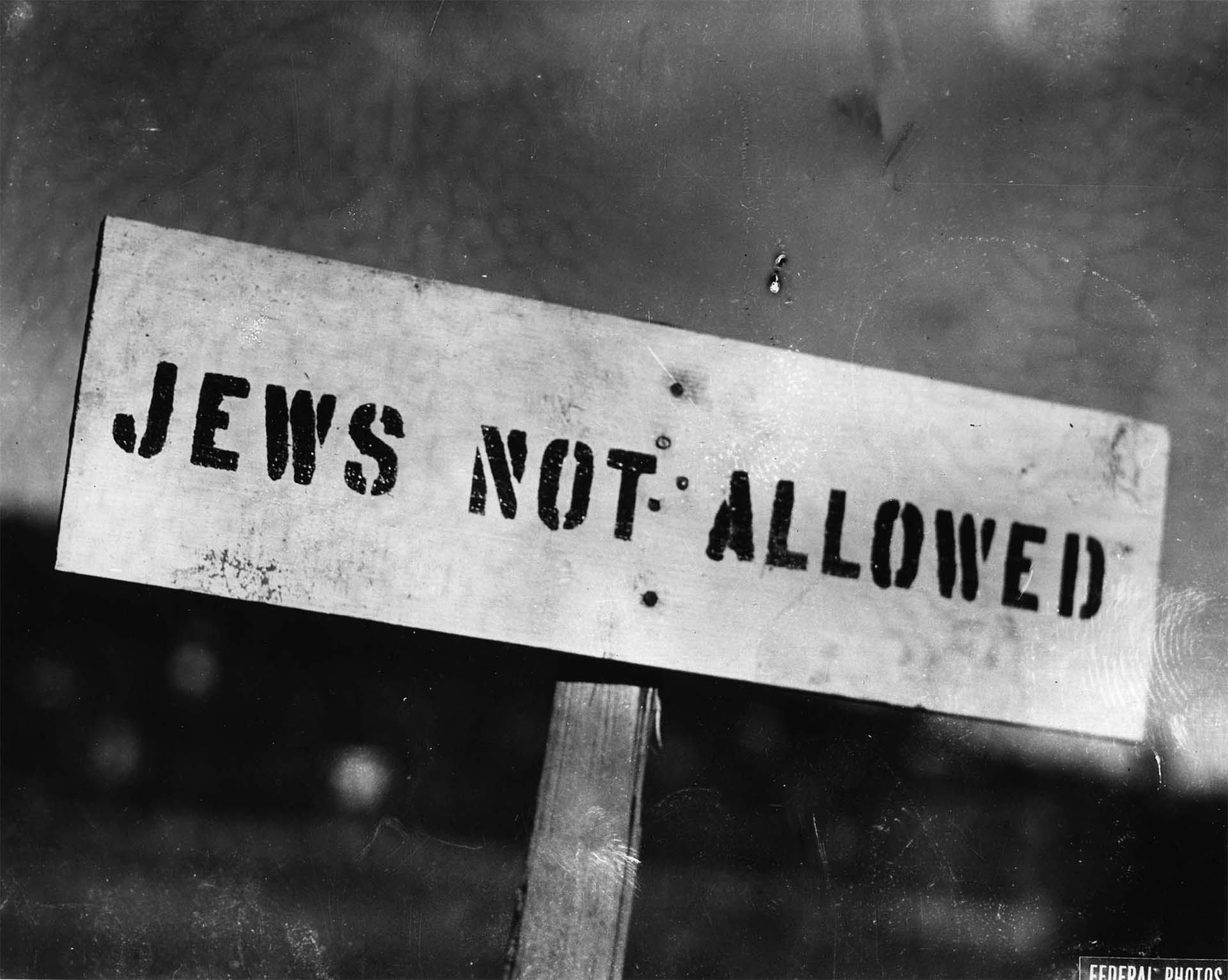
Over the past year, my work has carried me back and forth across the Atlantic, through Europe, and into parts of the Middle East. The trips were separated only by short pauses, and in each place I met people from every political, social, and cultural background. No matter what conversation we began with, many of them ultimately turned toward the same subject: Jews. How people speak about Jews today—casually, instinctively, and often without hesitation—has left me genuinely alarmed.
I am not referring to fringe movements or extremist circles. I am talking about ordinary people. Those on the right and left. Atheists. Individuals who claim to work against antisemitism. Others who openly support Jewish causes. And, perhaps most revealingly, my own Jewish friends, who navigate these conversations with a level of caution that should concern anyone who believes in safe, pluralistic societies.
During a recent stay in Washington, I found myself overwhelmed by the heaviness of these discussions. Jews, Judaism, Israel, the Arab–Israeli conflict, the history of Arab–Israeli relations, American political dynamics, and even the question of Jewish loyalty to the United States—all of it seemed to converge into one endless debate. In these conversations, the idea of the “good Jew” versus the “bad Jew” resurfaced constantly. Coming from Iraq, I recognized this distinction: the “good Jew” was the one who denounced Israel unconditionally, while the “bad Jew” was branded a Zionist. I was unsettled to find similar language and attitudes emerging in the United States and parts of Europe.
Since October 7, one pattern has become increasingly common: Jews are treated as collectively responsible for whatever is happening in Israel—before and after that day. Even friendships have started functioning like political checkpoints. People reconnect after years and immediately probe one another’s positions, deciding the fate of their relationship based on a single stance. Beneath this is a deeper dynamic: Jews are again being positioned as the central measure of political and moral judgment.
In the United States, this has taken an especially troubling turn. American Jews are asked, implicitly or explicitly, to prove their loyalty. “Do you choose America?” The reappearance of such a question in contemporary American life should itself be a warning.
Victor Klemperer, whose diaries captured the shifting cultural language of pre-Nazi Germany, taught us that catastrophic events never erupt spontaneously. They accumulate quietly through minor fractures—changes in speech, shifts in perception—until a society becomes accustomed to exclusion. What I am observing today is not equivalent to the world Klemperer documented, but the echoes are too familiar to ignore.
A moment in Vienna crystallized this for me. I was walking with an Orthodox Jewish friend, easily recognizable by his clothing. We tried to get a taxi. Driver after driver turned us away the moment they saw him. No questions, no ambiguity—just a reflexive refusal. That kind of instant rejection reveals something more profound: the ease with which a stranger can assign blame, political meaning, or guilt to someone they have never spoken to simply because of their appearance.
In the United States, many of my Jewish friends describe their growing fear. They carefully assess whom they can trust. They feel unable to speak openly. Their anxieties are not abstract; they come from experience. Across political and ideological lines—Islamist, right-wing, and left-wing—I have observed what feels like a quiet convergence. These groups violently disagree on almost everything, yet they share an unsettling common ground in their hostility toward Jews.
Some Israelis I met in Europe and America now rush to say, “I’m Israeli, but I oppose the government,” as if it were a shield. This instinct is not about proclaiming one’s values but about self-protection. The burden of constant clarification is itself a form of pressure, one that many non-Jews do not grasp.
Elsewhere, I encountered a different but related phenomenon. A German scholar once told me about what he called “positive antisemitism”—migrants seeking Jewish lawyers because they supposedly know “how to infiltrate the system.” The language echoes old conspiracies about Jewish power, dressed as admiration but rooted in the same dehumanizing myths. I also heard people say they should pivot their academic work toward Jewish history or antisemitism because “Jewish funders have money.”
These were not fringe statements. They surfaced in ordinary conversations. Publicly, people speak of justice and equality. Privately, many still default to holding Jews responsible for problems that have nothing to do with them. This split between public posture and private conviction is one of the most evident signs that old prejudices have not disappeared; they have adapted.
Christian antisemitism is resurfacing in parts of Europe. Islamist antisemitism continues to shape attitudes across the Middle East. In Arabic, the word “Jew” still often carries projective, conspiratorial undertones. These patterns are not isolated—they span countries, languages, and ideologies.
As someone originally from Iraq who now works on antisemitism, I have been advised more than once to avoid using the term “antisemitism” in my research titles, as if the word itself threatens to provoke hostility. But avoiding the term strengthens the stigma. What we need is the opposite: serious academic engagement. Universities should teach about antisemitism, Judaism, and Jewish history. Students should learn not only about the Holocaust but about the mechanisms of conspiracy thinking, the psychology of scapegoating, and the long history of myths surrounding Jews.
What I have witnessed over the past year is exhausting and, at times, devastating. These attitudes—casual, unexamined, and pervasive—are the earliest seeds of social fragmentation. I know what it looks like when a society begins to break apart; I have seen it with my own eyes. The process always starts long before the collapse becomes visible.
Antisemitism is not fundamentally about Israel. It is about the right of Jews to live without suspicion, stigma, or fear. It is about the moral obligation to defend their existence and dignity without hesitation.
There is something profoundly frightening about living in a society where people must constantly insist they are not responsible for actions they never took, for conflicts they did not cause, for crimes they did not commit—simply because they are Jewish. That burden is impossible to describe unless you carry it.
These are my personal observations. They may reflect only the people I met or the places I visited. But they are real. And if we fail to take them seriously, we risk allowing the world’s oldest hatred to shape our future more than we realize.