Founder of ALLMEP
‘The People Want It’: The Data Behind Trump’s 20-Point Peace Plan
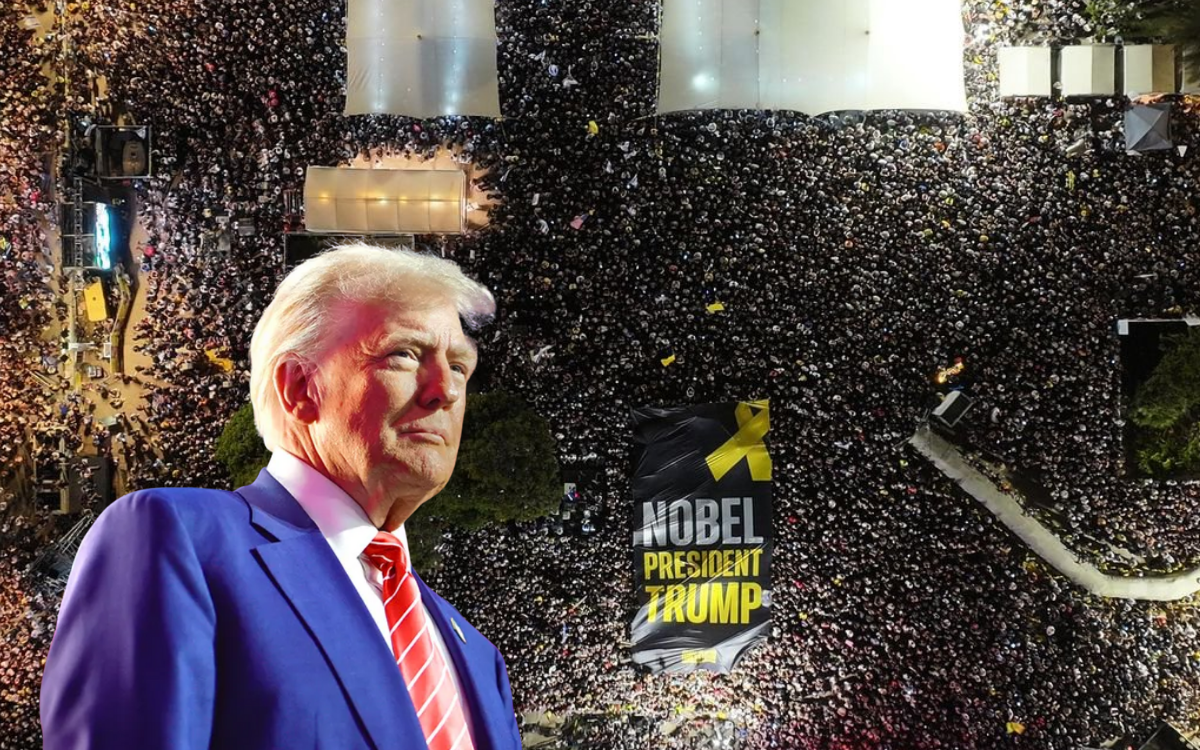
Scene of popular support for Trump's plan at Hostages Square. Credit: Hostages and Missing Families Forum.
As Air Force One takes off for the Middle East, Donald Trump’s peace plan is moving from proposal to reality. The clock is ticking — not just to launch the deal’s first phase but to keep momentum alive. To succeed where two previous ceasefires failed, Trump must push through to the “day after” — the political and security arrangements that could finally end the conflict.
What gives him the confidence to try? He knows something most people don’t: New public opinion data reveal a surprising global consensus around the core ideas of his plan. Across Israel, Palestine, the US, and much of the world, people are exhausted by the war — and the underlying conflict — and they’re remarkably aligned on how to end both.
“Not about Gaza alone”
Conventional wisdom says Israelis and Palestinians might agree to stop fighting but could never agree on the deeper political compromises needed for lasting peace. Trump knows that assumption is wrong.
He’s said from the start that his initiative is “not about Gaza alone” but about “PEACE in the Middle East.” And the data back him up. According to new AI Pulse polling, 73% of Israelis and 83% of Palestinians say they would support or accept a deal that combines mutual recognition of Israel and a Palestinian state with full diplomatic, economic, and security integration into the region.
As Trump put it, “many, many” Palestinians want it, “the people of Israel want it. And the people of the Middle East want it.” That alignment is worth diplomatic gold. Peace processes often rise and fall with public support.
Americans want it, too
Trump surely knows this consensus reaches America, too. A parallel AI Pulse survey found that 81% of American voters — including three-quarters of the MAGA base — want the US to help end the Gaza war and secure peace, knowing the stakes for America’s security.
And they don’t just want to stop this round of fighting. They want to finish the job and the conflict. Three in four Americans say success means going beyond a ceasefire to tangible progress toward lasting peace — like a transitional government and reconstruction in Gaza.
Eighty-eight percent of MAGA voters think it’s important for the US to continue leading even if there are setbacks or disagreements. The vast majority would support or accept the same kind of regional peace agreement as Israelis and Palestinians.
With Hamas and Netanyahu already casting doubts on the next steps in Trump’s plan, that public backing gives the president wind at his back. Americans across the spectrum want him to keep pushing.
The world is behind him
Trump also knows he has broad international support. His plan closely aligns with the New York Declaration, the French–Saudi-led framework endorsed by 142 countries, including the EU and Arab League.
He was able to use key building blocks secured by that effort, including: Arab states calling to disarm Hamas and recognize Israel, Palestinian Authority commitments for long-sought elections and reforms, and multinational support for a stabilization force.
At his White House press conference, Trump thanked “the leaders of many Arab and Muslim nations… along with many of our allies in Europe” for their input and support. Days later, he proudly shared on social media statements of support from around the world. “The world has come together around this deal,” he told Sean Hannity. “Without that, it wouldn’t have happened.”
When he lands in Cairo tomorrow for a signing ceremony, many of those same countries will be there to seal the deal — and their shared commitment to its success.
A test of persistence and engagement
At such a fragile moment, this alignment of interests and attitudes is critical — and promising. The plan’s success or failure will depend heavily on whether Trump stays personally engaged, as he was in driving the parties to this point.
As chair of the new “Board of Peace” and an international coalition, he’ll have both leverage and responsibility to keep negotiations and implementation on track when it inevitably wobbles.
Importantly, he seems to grasp something many past negotiators missed: peace depends not only on agreements but on attitudes. Ending this conflict will mean undoing decades of fear, mistrust, and dehumanization — and replacing zero-sum narratives with an understanding that everyone’s security and freedom are intertwined.
That’s no doubt why Point 18 of Trump’s plan calls for work to change mindsets and narratives, building reconciliation, and fostering coexistence. Americans, it turns out, are ready to invest in that kind of peace. Nine out of ten voters, including most of Trump’s base, say the US should spend the same or more on peacebuilding as on weapons. That’s a lot of peacebuilding.
If Trump follows through, he can turn today’s broad public support into lasting momentum. And if he can channel that public will into political courage — his own and others’ — he could do what generations of leaders before him could not: not only end the war, but also end the conflict behind it.
Related Topics
Related Posts