The People Who Did Not Look Away
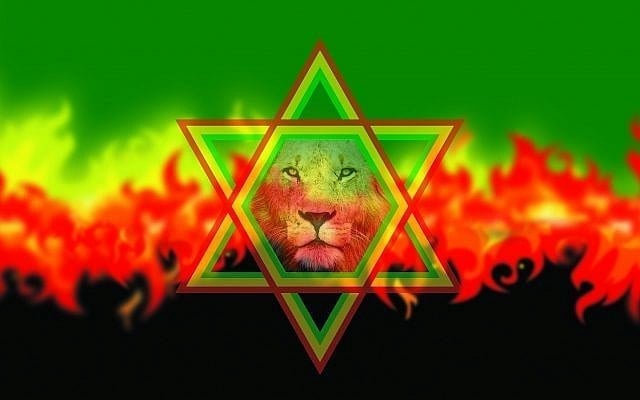
An African liberation movement did something many governments, universities, newspapers, and feminist organizations refused to do. It read the evidence of October 7 sexual terror and did not look away.
On May 13, 2026, the Mthwakazi Republic Party issued a statement titled “MRP: Sexual Terror, From Matabeleland to Israel.” It responded to the Civil Commission report Silenced No More: Sexual Terror Unveiled — The Untold Atrocities of October 7 and Against Hostages in Captivity. The statement was not written as cheap analogy. It was written as recognition by a people who say they have endured state-organized sexual violence, mass killing, and international denial. Its simplest sentence was also its most important: “We have read every page. We do not look away.”
Israel should notice.
Mthwakazi is not part of the usual diplomatic theater around Israel. It is not a major state, not a donor bloc, not a university department, not a government that issues carefully neutral language after counting votes at the United Nations. It is a stateless political community in southern Africa, centered on Matabeleland, speaking from its own record of injury and denial.
That is precisely why its statement matters.
The question raised by Mthwakazi is not only whether the world will acknowledge October 7. It is whether the world will acknowledge peoples who have been told that their suffering is inconvenient, their identity is disruptive, and their demand to be heard is itself a threat.
That is the link between Israel and Mthwakazi. Not sameness. Not equivalence. Recognition.
The Civil Commission’s full report has now been covered internationally as finding that sexual violence was systematic, widespread, and integral to the Hamas-led October 7 attacks and the captivity that followed. AP reported that the report drew on more than 400 testimonies and nearly 2,000 hours of visual analysis, while also noting that AP had not independently verified every finding. The Mthwakazi statement reads that report through another history: the Gukurahundi massacres in Matabeleland, where Zimbabwe’s Fifth Brigade targeted Ndebele civilians and where survivors have long described sexual violence, forced public humiliation, family destruction, and terror as instruments of state power.
The important point for an Israeli audience is not that Matabeleland and Israel are the same. They are not. The important point is that a people outside the Jewish world recognized the method. They recognized denial as part of the crime. They recognized that sexual terror is not merely violence against bodies. It is violence against continuity, family, identity, memory, and future generations.
That recognition deserves a response.
This was not a one-off statement. It sits inside a public MRP record: on January 8, MRP issued MRP Commends International Legal Advocacy Highlighting Self-Determination and Gukurahundi Accountability; on January 10, it issued Statement on Somaliland, Israel, and Africa’s Strategic Future; on March 16, it issued South Africa’s Implied Recognition; on May 12, it issued Bougainville and New Caledonia Prove Self-Determination Cannot Be Frozen by Colonial Borders; and on May 13, it answered Israel’s Civil Commission report in MRP: Sexual Terror, From Matabeleland to Israel. The through-line is not opportunism. It is a consistent African case that self-determination, recognition, sexual-terror denial, and Israel’s security are linked by the same question: which peoples are allowed to be seen?
At the same time, the world has just supplied six fresh reminders that self-determination remains a live political question everywhere except where states find it most convenient to suppress it.
In Alberta, Canada, separatists gathered more than 300,000 signatures for an independence referendum initiative. A court has now rejected the bid, not because separatist speech is criminal, but because Alberta failed to consult First Nations whose treaty rights could be affected by secession. The court treated the matter as constitutional, electoral, and legal; Alberta’s premier said she would appeal; First Nations leaders welcomed the ruling as protection of treaty obligations.
That is the first lesson for Mthwakazi. A democratic state does not need to agree with secession in order to permit the question. It may reject it. Courts may limit it. Indigenous treaty rights may override it. But the people raising the question are not treated as criminals merely for asking.
In Britain, pro-independence parties have surged across the devolved nations. Reuters reported that three of the United Kingdom’s four nations were set to be governed by pro-independence parties after recent elections, even while noting that the breakup of the UK is not imminent and voters were motivated by more than independence alone. The House of Commons Library has also published a briefing on how the UK is constituted and the mechanisms by which a part of it could secede.
That is the second lesson. In mature political systems, independence is not always immediate, popular, or successful. But it is discussable. It has vocabulary. It has legal pathways. It has parliamentary mechanisms. It is not erased by calling it taboo.
In New Caledonia, a United Nations anti-racism committee warned France that reforms affecting the territory’s self-determination process must proceed only with effective participation of the Indigenous Kanak people. The committee urged transparent and good-faith consultation with Kanak representatives.
That is the third lesson. Autonomy imposed from above is not self-determination. Constitutional redesign without the affected people is not consent. If the Kanak must be consulted about New Caledonia’s political future, why should Mthwakazi be told that its future was settled forever by borders inherited from empire and preserved by force?
In Somaliland, the recognition question remains alive precisely because effective self-government has outlasted diplomatic refusal. Israel’s recognition of Somaliland, reported by Reuters in December 2025, made Israel the first state to formally recognize Somaliland as independent and sovereign. The Atlantic Council has since argued that recognition elevates Israel-Somaliland ties into institutional state-to-state channels while leaving the diplomatic constraints of contested status intact. Regional reporting now says the UAE is pressing additional states to consider recognition.
That is the fourth lesson, and it is especially relevant for Israel. Recognition is not only a legal act. It is a political judgment that an inherited map no longer explains reality. Somaliland shows that de facto governance, historical identity, institutional continuity, and strategic legitimacy can keep a national claim alive even when the parent state objects.
In Moldova, the European Union is moving toward accession discussions while refusing to let the breakaway region of Transnistria become an absolute veto. Reuters reported that EU foreign policy chief Kaja Kallas said in Chisinau that Transnistria would not become an obstacle to Moldova’s European future.
That is the fifth lesson. Unresolved territorial disputes do not disappear because governments prefer clean maps. International institutions manage them, bracket them, negotiate around them, and sometimes proceed despite them. The existence of a contested region is not proof that the region has no political meaning. It is proof that the question has not been honestly resolved.
And in Bougainville, the post-referendum question is coming to a head. The island voted overwhelmingly for independence from Papua New Guinea in 2019. ABC reported this month that negotiations have become tense and that a parliamentary vote is expected soon; if Bougainville becomes independent, it would become one of the largest Pacific island states.
That is the sixth lesson. Even a landslide referendum does not automatically produce independence. Self-determination requires more than moral claim. It requires institutions, diplomacy, economic planning, legal strategy, international attention, and persistence after the vote.
Taken together, these cases expose the double standard that Mthwakazi confronts. Alberta may ask. Scotland and Wales may campaign. Kanaks must be consulted. Somaliland may seek recognition. Moldova may move forward despite Transnistria. Bougainville may press its referendum result toward statehood.
But when Mthwakazi asks to be heard, the demand is too easily dismissed as dangerous, unrealistic, tribal, or destabilizing.
That dismissal is not abstract. Southern Eye reported that MRP submitted a September 2023 SADC petition for self-determination for Matabeleland and parts of the Midlands, carrying 25,880 signatures and registered by the SADC Secretariat under reference number 3951863. The same report states that President Emmerson Mnangagwa has since threatened the MRP, saying those who advocate for secession are “shortening their lives.” That sentence is the argument: Alberta separatists go to court; New Caledonia goes to the UN; Bougainville goes to negotiations; Mthwakazi hears a threat from Zimbabwe’s president.
Israel should be the last country to accept that dismissal.
The Jewish people know what it means when other powers decide that a people’s claim is inconvenient. Israel knows that recognition is often delayed until after catastrophe. Israel knows that statehood is not granted by moral sympathy alone, but built through memory, institutions, diplomacy, law, defense, and endurance.
Mthwakazi’s statement on October 7 was not a request for pity. It was an act of moral alignment. It said to Israel: we recognize what was done to you because we recognize the method from what was done to us.
That deserves more than gratitude. It deserves seriousness.
Nobody has to endorse every Mthwakazi demand to defend the right of Mthwakazi to ask the question. Nobody has to predetermine the answer to insist that speech, assembly, publication, advocacy, and lawful political organization must not be treated as crimes. Nobody has to collapse Israel, Somaliland, Bougainville, Alberta, New Caledonia, Scotland, Wales, Transnistria, and Mthwakazi into one story to see the shared principle.
The principle is consent.
States that fear consent usually call it disorder. Movements that seek consent usually call it democracy.
Mthwakazi has now spoken to Israel in the language of recognition. Israel, and Jews who understand the cost of delayed recognition, should hear it.
The world does not need another people told to wait quietly until its suffering becomes useful to someone else’s diplomacy. It does not need another record of violence acknowledged only after the perpetrators are dead, the archives are closed, and the victims have been converted into abstractions.
Mthwakazi read Israel’s evidence and did not look away.
Now the question is whether Israel, and those who speak seriously about self-determination, will look back.