Researching Antisemitism. Building Allyship. Refusing Silence.
The Person Across the Table
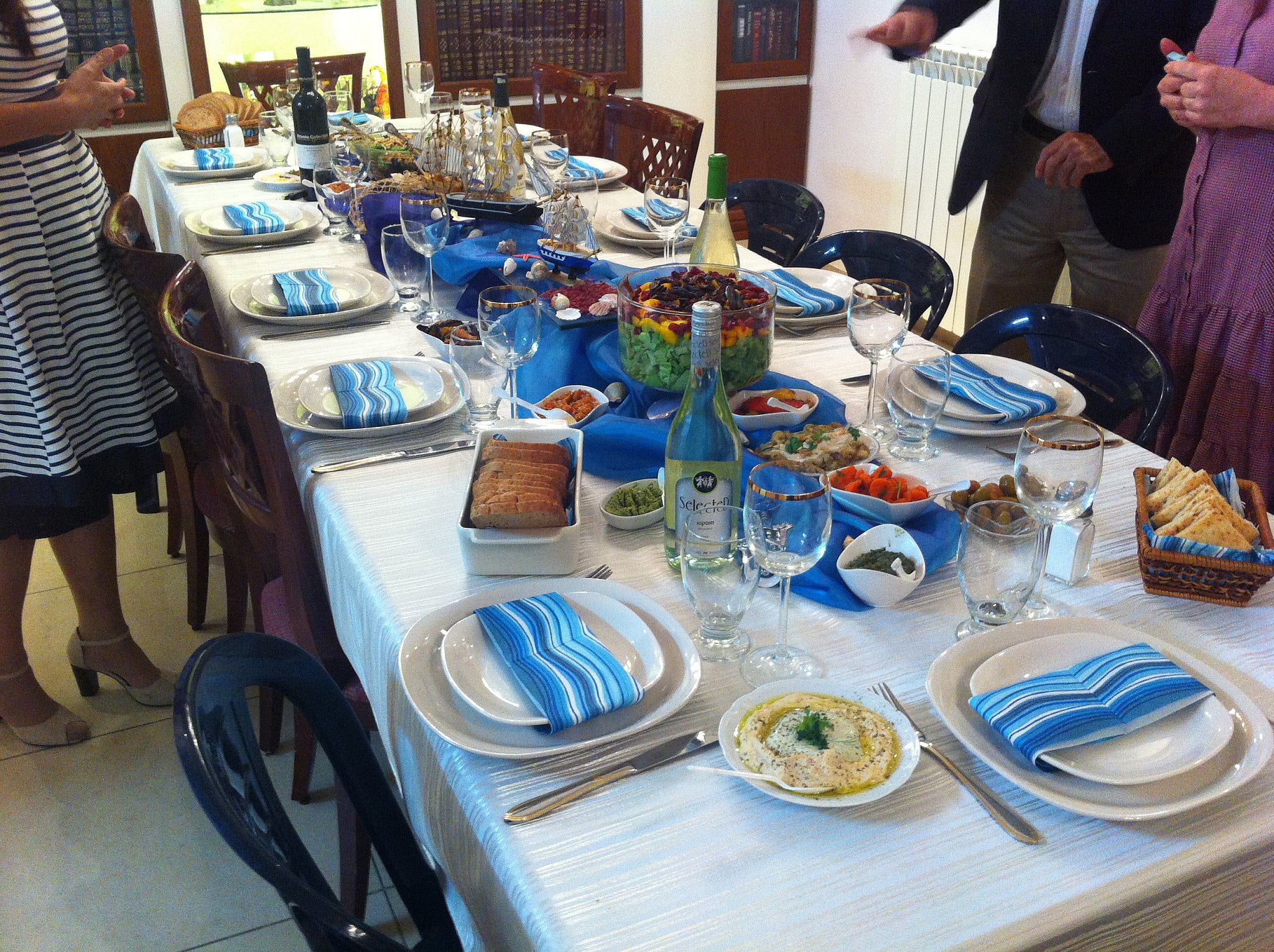
A Special Dinner Table in Jerusalem
Twelve years ago I was welcomed at tables in Jerusalem. It changed what I study.
There are tables you remember long after the meal is over.
Every September I remember two of them, both in Jerusalem, both in 2014: one set for Shabbat, one set for a roomful of conference speakers.
I had arrived to speak at an academic conference on imagination, spirituality, and creativity in early childhood. My research looked at how young children read picturebooks: how they respond through art, and how their ideas about spirituality open up as their creativity is nurtured.
The college arranged for me to stay with one of its faculty members, her husband, and their three boys. At their Shabbat table, textured with colorful dishes, symbolic elements, and the chatter of children, I experienced the joy of being welcomed into a family’s home in Israel.
Then, on the last night of the conference, all of us speakers gathered for a beautiful dinner at a faculty member’s home. There were tiny sailing ships down the middle of the table. I’ve never learned why, and I’ve never forgotten them. Around them: hummus slicked with olive oil, a layered salad in a tall glass bowl, bread, olives, wine, and enough small dishes that we kept passing things all evening.
The conversation flowed so easily it felt as if we had known one another for years rather than days. I’ve never forgotten that evening: the passion I carried for my area of study was alive in everyone at the table.
Then, my birthday was only a few days away, and it didn’t feel right to leave before it. My Jerusalem celebration featured old and new friends gathered for dinner, a surprise cake, and singing. I felt deeply grounded: being in a country whose land I had first touched only a year earlier, and yet it already felt like home.
I’ve thought about that trip every September since, and this year I recognized a common thread. In each of those rooms, someone had gone to the trouble of setting a place for me, a person they hardly knew.
And it wasn’t just that I was welcomed. I was celebrated.
I wish everyone knew what that feels like, because it is true of every one of us: there is no one like you and never will be again.
You are a unique delivery of something extraordinary, a gift to the world unlike any other. The joy of you being you illuminates God’s immensity.
I try to meet each person with curiosity, wondering what unique way of seeing the world they might reveal, because every life is a gem and I never know which facet will catch the light.
Rachel Joyce expresses this in her novel about Harold Fry, a man who walks the length of England and wakes up to the strangers along the way. What fills him with wonder, she writes, is the discovery that everyone is “the same, and also unique,” which she calls the dilemma of being human.
That conviction is part of what drew me to children’s literature and spirituality. The research was never about children in general. It was about sitting beside one child while he explained his drawing, discovering he had an interior life more textured than any adult had assumed.
I didn’t know it then, but that second trip to Israel was a threshold, maybe the moment when I gave myself permission to go further than I’d planned. Today my work centers on educating and equipping allies to identify and confront antisemitism within their areas of influence, and to contribute to the thriving of the Jewish people.
At first, this work looks like a sharp turn from what I was doing.
But that’s not quite true.
One way of understanding antisemitism is as a refusal to recognize the inherent value in a person. It replaces the Jewish person across the table with a symbol, a suspicion, an abstraction convenient to whoever needs it. It cannot survive close attention to an actual human being.
My work didn’t change direction when I left picturebooks behind. I went from nurturing the capacity to see a particular person and his spirituality to confronting what happens when that capacity fails.
Sukkot begins Friday at sundown. Many of my Jewish friends will spend time in temporary shelters with roofs open enough to see the stars. I learned there is a tradition of inviting ushpizin, spiritual guests drawn from the ancestors of Israel, into the sukkah. There is also an invitation to make room for actual guests, especially those who might otherwise have no place at the table.
I was that kind of guest once, in a house in Jerusalem, at a table where I did not expect to sit. Years later, I understand a little better what I was given. Someone prepared for a stranger, and set a place for her.
In my town, though I’m not Jewish, the local synagogue regularly opens its doors to me for gatherings, celebrations, and services. I can tell this hospitality is simply who they are, not a courtesy extended because of the work I do.
The community so practiced at welcoming strangers is one that now asks police to cover its services and events.
They set the table anyway.
It’s the same act every time: someone looks at a person and decides she is worth preparing for. The faculty member in Jerusalem. The people who hold the door open in my town. The adult who sits down beside a six-year-old and asks him to explain his drawing.
That’s the work, and I’m thankful to spend my life doing it.
Related Topics