
Professional Indian author and strategic affairs writer.
The Petrodollar Loses Ground in New Delhi
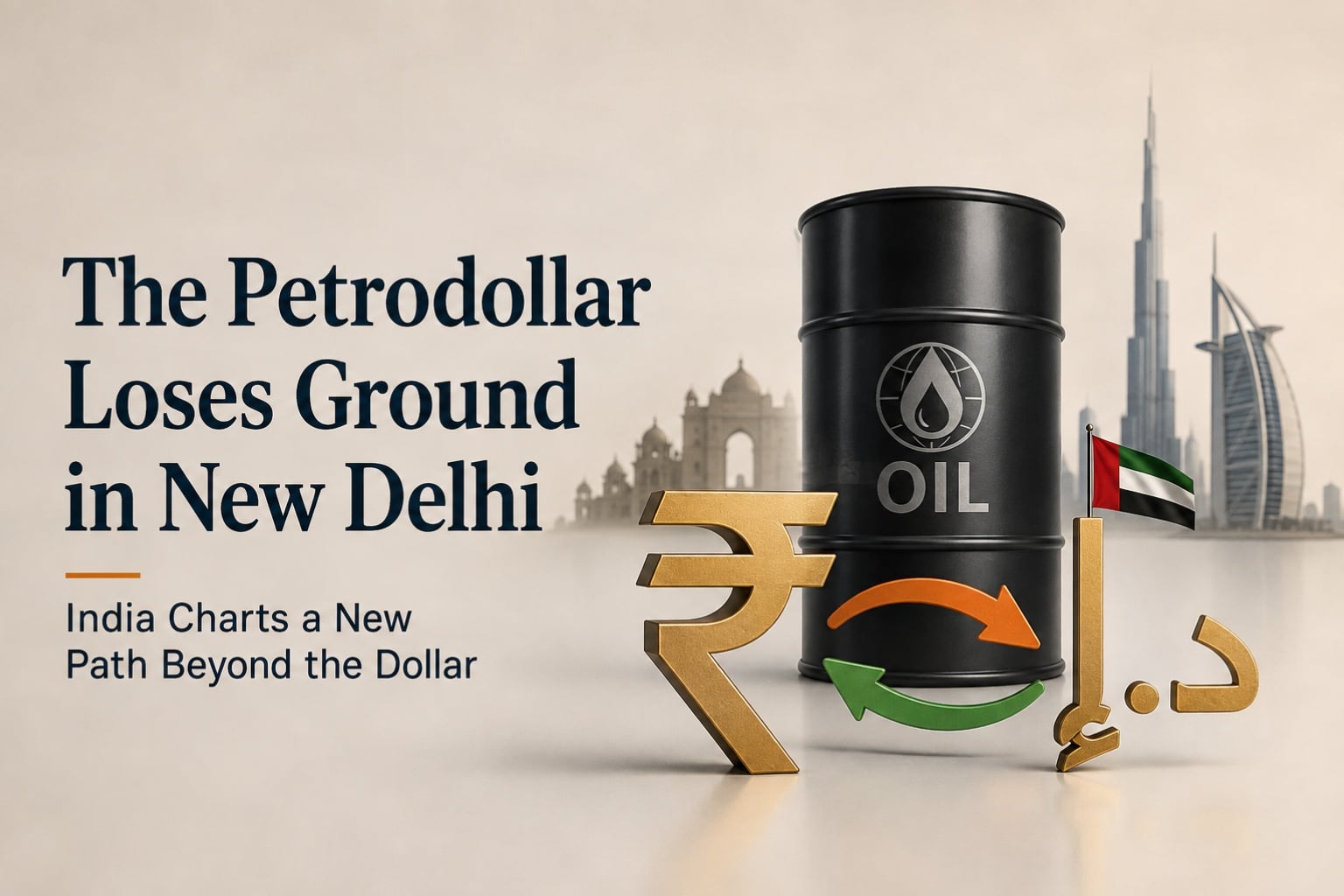
Conceptual illustration: An oil barrel surrounded by the Indian rupee and UAE dirham symbolizes the growing shift toward local currency settlement in India-UAE energy trade, reflecting New Delhi's effort to reduce dependence on the US dollar and strengthen financial resilience. Image: AI-generated (free for commercial use).
The crisis in West Asia forces a major financial shift. Attacks in the Red Sea disrupt global shipping routes. India buys massive amounts of oil from the Gulf to keep its economy running, and buyers rely on the US dollar for these energy trades. Regional instability turns that old habit into a serious risk. Sudden currency changes and geopolitical fights threaten Indian financial security.
India demands a strong defense. The government pushes for local currency deals across the energy market. The Reserve Bank of India and the Central Bank of the United Arab Emirates took a major step by integrating their domestic payment networks. They created a direct way to settle cross-border trade using rupees and dirhams.
Indian refiners buy UAE crude oil with Indian rupees. They skip the US dollar. This move removes the danger of volatile exchange rate swings. It cuts down transaction costs and accelerates payments.
Avoiding the US dollar works as financial armor. The dollar rules global trade, giving Washington deep control over foreign markets. India values its own financial independence. Buying essential energy with a foreign currency leaves a country open to sudden shocks.
Paying for oil with rupees and dirhams protects both India and the UAE from the chaos spreading across the Middle East. The partnership between New Delhi and Abu Dhabi offers a clear guide for other countries. Regional leaders watch this move. They see a real way to protect their supply chains without relying on Western banks.
The petrodollar is losing its tight grip on New Delhi. True independence requires control over physical trade routes and the money used to pay for the cargo. India secures its energy future on its own terms.
Related Topics
Related Posts