
The Pit of Victimhood
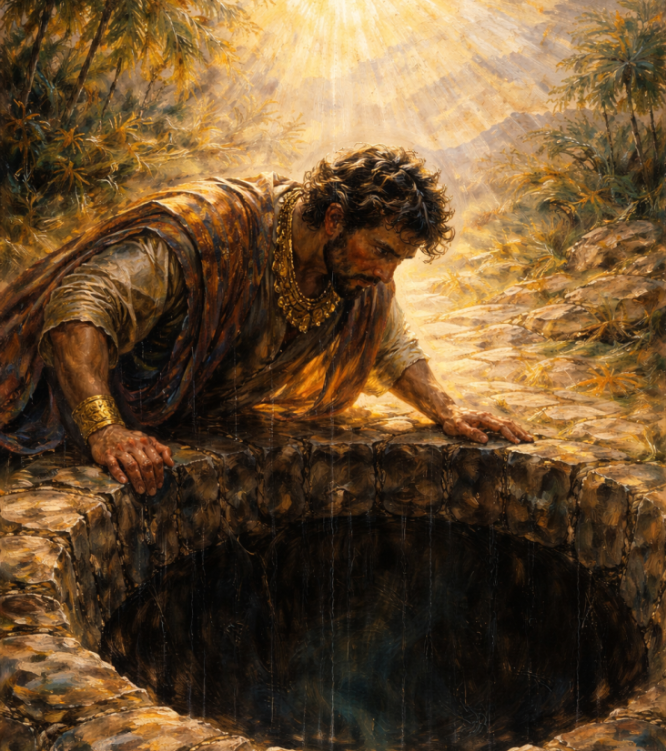
Imprisoned in the dungeons of Egypt, Yoseph says something very strange. Eleven long years have passed since his brothers sold him into slavery. He is in prison following false accusations of assault from the wife of his owner. Yoseph’s fellow prisoner, Pharaoh’s Butler has a dream that, if Yoseph interprets it correctly, will see him returned to the palace. Yoseph spots an opportunity. He appeals to the butler to remember him and put in a word for him with Pharaoh, because:
כִּֽי־גֻנֹּ֣ב גֻּנַּ֔בְתִּי מֵאֶ֖רֶץ הָעִבְרִ֑ים וְגַם־פֹּה֙ לֹא־עָשִׂ֣יתִֽי מְא֔וּמָה כִּֽי־שָׂמ֥וּ אֹתִ֖י בַּבּֽוֹר: (בראשית מ:יד-טו)
For I was stolen away from the land of the Hebrews, and also here I did nothing, yet they cast me in a pit. (Bereishit 40:15)
This is most odd. Yoseph is in a prison, not a pit. Indeed, he was put in a pit by his brothers, but that was over a decade ago. A little earlier, The Torah says that Yoseph was put in a “בית סהר, a prison” (ibid 39:20). Somehow, Yoseph was put in prison but found himself in a pit. Strictly speaking, this need not be contradictory. Prisons were in dungeons, dungeons are dug deep into the ground. They could be, and were, referred to as pits (see Yirmiyahu 38:6). Yet, in this story, the Torah changes its expression mid narrative deliberately: It seeks to connect these two episodes in Yoseph’s life: Yoseph is once again in a pit.
Look closely, and you can see that this idea was lurking in the text all along: First, Yoseph says that he was “stolen away from the land of the Hebrews” despite that not being the immediate cause of his current predicament. He then protests his innocence during his time in Egypt, before concluding with the pit. It is not a singular individual but a “they” (plural) who threw him in a pit. Yoseph, consciously or unconsciously, has connected these two events. These two separate incidents have the same ending: In a pit.
If we look back at the original story of the pit, we might see why:
Now let us (the brothers) kill him (Yoseph) and throw him into one of these pits. We will say a wild animal ate him, and we will see what comes of his dreams! Reuven heard and saved him from their hands. He said, “Let’s not strike him fatally.” Reuven said, “Don’t shed blood! Throw him into this pit in the desert, and don’t raise your hands against him.” (Reuven did this) to save him from their hands and return him to his father… They took him (Yoseph) and threw him in the pit… They pulled Yoseph up from the pit and sold him to the Ishmaelites for twenty pieces of silver, and they brought Yoseph to Egypt. (Bereishit 37:20-28)
Let’s ask an overly simplistic question: Was the pit a good thing or a bad thing for Yoseph? On the one hand, it was terrible: He was thrown into a pit, left to fate. On the other hand, in context, it could have been worse. Originally, they wanted to kill him; Reuven negotiated him a stay of execution and he was thrown into the pit.
Curiously, the second of Yoseph’s “pits” is also a reprieve. Yoseph was a slave accused of attempting to rape his master’s wife. It is hard to imagine that the punishment for such a crime, a lowly slave assaulting his owner, would be anything less than death. Somehow, he was only given a prison sentence. Perhaps Potifar suspected that Yoseph was not truly the guilty party in that story. This would explain the lesser punishment. Nonetheless, in this second story, the pit is yet again a glass half full. It could have been worse.
I originally heard this idea from Professor Yoni Grossman, who used this idea to show how the pits in Yoseph’s life were the very cause of his rise. The nadirs of our lives can also serve as springboards for our successes. The pit is the constant reference point across Yoseph’s life because it had the dialectical nature of Yoseph’s life. Events across his life could be viewed as either periods of great suffering or milestones on his path to salvation. He chose the latter.
We can take this idea further in this week’s parasha. Two years later, Yoseph’s liberation arrives. Pharoah needs someone to interpret his dreams and the best and brightest of Egypt do not manage. The Butler, now remembers Yoseph, and recommends his former fellow inmate. Pharoah instructs his men to bring Yoseph from prison, but the Torah calls it something slightly different:
וַיִּשְׁלַ֤ח פַּרְעֹה֙ וַיִּקְרָ֣א אֶת־יוֹסֵ֔ף וַיְרִיצֻ֖הוּ מִן־הַבּ֑וֹר (בראשית מא:טו)
Pharaoh sent and summoned Yoseph, so they rushed him out of the pit. (Bereishit 41:15)
Yoseph was put in a prison, but he was liberated from a pit.
Yoseph himself took this idea a step further. At the climax of the story, when Yoseph reveals himself to his brothers, Yoseph delivers one of the most amazing moments of magnanimity in the Torah:
Then Yoseph said to his brothers, “Come forward to me.” And when they came forward, he said, “I am your brother Yoseph, whom you sold into Egypt. Now, do not be distressed or angry with yourselves because you sold me here; it was to save life that God sent me ahead of you. It is now two years that there has been famine in the land, and there are still five years to come in which there shall be no yield from tilling. God has sent me ahead of you to ensure your survival on earth and to save your lives in an extraordinary deliverance.” (Bereishit 45:4-7))
Yoseph was always a visionary and never a victim. He would not even allow the perpetrators of his victimhood to be imprisoned by it.
Nelson Mandela famously invited his former jailers to his inauguration as President of South Africa. Years later, when eulogizing Mandela, Barack Obama used a profound expression to describe this gesture. With it, he said, Mandela managed to “free not just the prisoner, but the jailer as well.” Yoseph was thrown into a pit but never let himself wallow in a pit of victimhood. He even spared his brothers that sliver of victimhood that is reserved for the perpetrator.
Fast forward seventeen years. The family of Yaakov is reunited and living in harmony in Egypt. Yaakov dies; his sons carry out his final wish to be buried in Israel. The Midrash tells of an extraordinary event that occurred:
Whilst they were returning from their father’s burial, they saw that Yoseph went to make a blessing on the pit that they had thrown him in. He made the blessing that everyone is obligated to make at a place where a miracle was done for them. “Blessed is God, who made a miracle for me in this place.” (Midrash Tanchuma, Vayechi 17)
Yoseph could look at a pit and see a miracle.