


The Politics of Evil
At one level, the phenomenon is unsurprising. Jeffrey Epstein has become the ultimate symbol of elite impunity. A wealthy man with extraordinary social connections exploited vulnerable girls for years whilst apparently evading meaningful accountability. For those who view society primarily through the lens of class struggle, Epstein represents the corrupting influence of wealth. The “Epstein class” becomes shorthand for a system in which billionaires, politicians and those with access to power operate according to different rules from everyone else.
Yet the prominence of Epstein within these movements raises an uncomfortable question. Why has this particular scandal become such a potent symbol of evil, whilst Britain’s own grooming gang scandals occupy a markedly different place within the moral imagination of the same activist spaces?
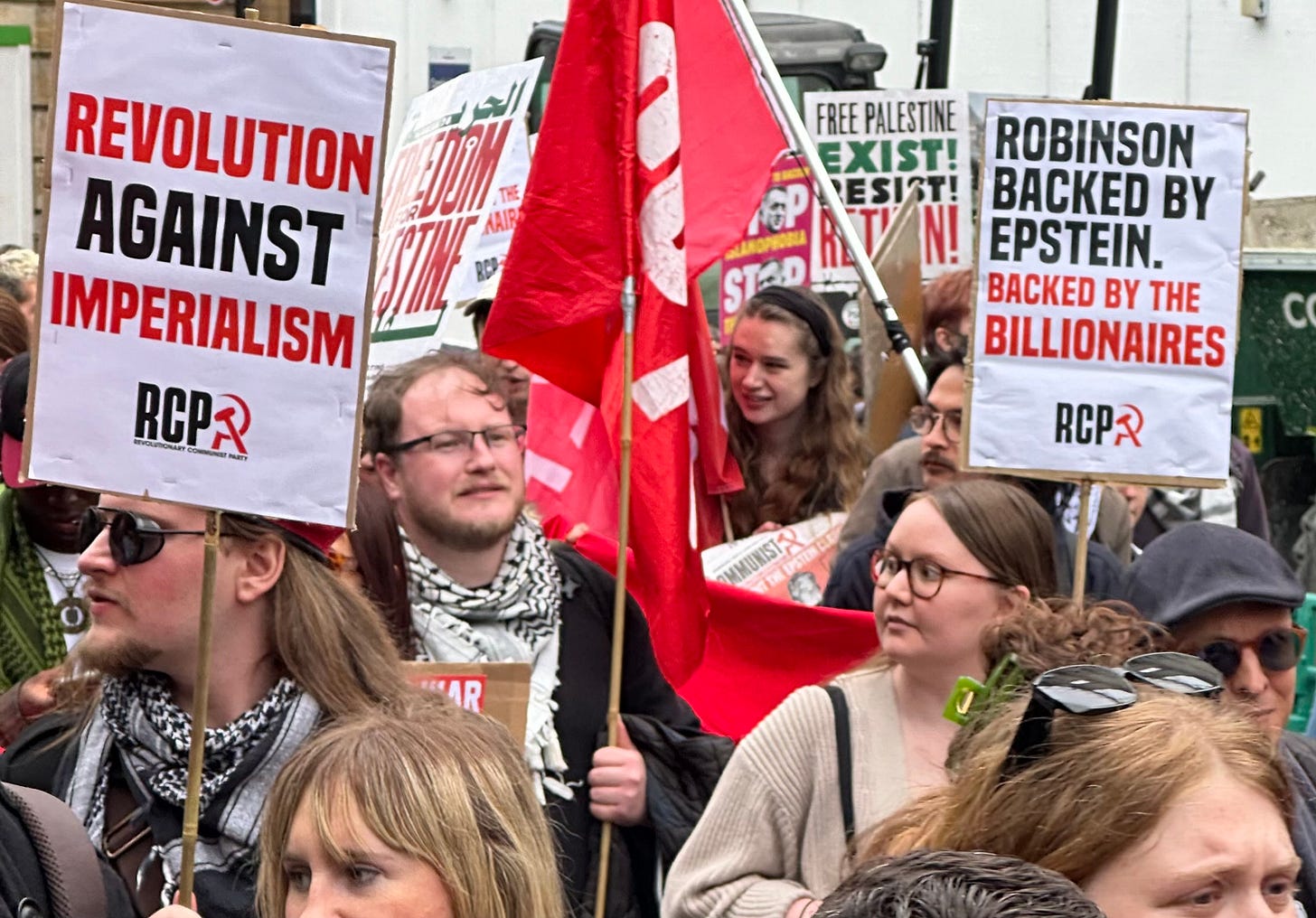
The contrast is striking. By conservative estimates, the number of identified victims connected to Epstein’s offending network stands at around one thousand. Rotherham alone is estimated to have involved approximately 1,400 victims between 1997 and 2013. Rotherham was far from unique. Similar scandals emerged in Rochdale, Telford, Oxford, Oldham and elsewhere, suggesting that the number of victims affected by Britain’s grooming gang scandals runs into several thousands. Yet these scandals have not generated anything approaching the same symbolic importance within Britain’s protest culture.
Nor were the experiences of victims necessarily comparable. The exploitation associated with Epstein was devastating and lifelong in its effects. However, many victims of Britain’s grooming gang scandals were subjected to abuse by multiple perpetrators over prolonged periods. Some were trafficked between locations and effectively passed from offender to offender. Others were threatened with violence or physically assaulted if they attempted to escape. Many encountered institutions that dismissed them as troublesome adolescents making “lifestyle choices” rather than recognising them as children being systematically raped and exploited. Research into child sexual exploitation consistently identifies repeated abuse by multiple perpetrators, trafficking, prolonged victimisation and institutional betrayal as factors associated with more severe and enduring psychological harm. By those measures, many victims of Britain’s grooming gang scandals suffered extraordinarily complex trauma.
This disparity in emphasis raises difficult questions. Why has one scandal become a recurring motif within contemporary protest movements, whilst the other often occupies a more ambiguous and politically awkward position?
Part of the answer may lie in the ideological frameworks through which many activist movements increasingly understand the world. Society becomes divided into categories of oppressor and oppressed. Israel becomes a settler-colonial state. Zionists become representatives of imperial power. The West becomes a force for exploitation. Palestinians, people of colour and the economically disadvantaged become symbols of resistance and innocence. Once such categories are established, morality itself risks becoming tribal.
Those categorised as oppressed are often afforded a degree of moral grace. Their wrongdoing is contextualised, explained or understood as the product of circumstance. Violence becomes resistance. Criminality becomes desperation. Extremism becomes frustration. Those categorised as oppressors are treated differently. Their actions are not simply wrong; they become evidence of inherent corruption. Their crimes confirm wider narratives about exploitation and domination. Their wrongdoing ceases to be individual and instead becomes collective.
It is within this framework that Epstein assumes such symbolic importance. He is no longer merely a sex offender. He becomes the embodiment of elite depravity. If Zionists have already been positioned within the activist imagination as representatives of wealth, power and oppression, the rhetorical leap becomes surprisingly short. Epstein becomes a metaphor through which existing hostility towards Zionists, Israelis and, at times, Jews can be intensified. The emergence of phrases such as “Epstein pedos” at demonstrations cannot therefore be dismissed simply as criticism of a convicted sex offender. The context in which such language appears matters.

This is particularly significant given the long history of antisemitism. Antisemitic movements have frequently portrayed Jews as possessing hidden wealth, secret influence and undue control over political institutions. The “Protocols of the Elders of Zion” did not accuse Jews merely of being different; it accused them of manipulating governments, economies and societies from behind the scenes. That does not mean that everyone invoking the “Epstein class” is consciously engaging in antisemitism. Many are undoubtedly motivated by sincere opposition to inequality and elite impunity. However, when references to Epstein become intertwined with claims about Zionist control of governments, financial institutions or public discourse, it becomes increasingly difficult to ignore the possibility that older prejudices are finding new forms of expression.
This principle of consistency matters here too. Jeffrey Epstein was Jewish. He also identified as a Zionist and maintained connections to Israel. These facts are part of the historical record. Yet one of the central principles of anti-racism is that the wrongdoing of an individual should not be imputed to an entire group with whom they share an identity. Society rightly rejects the idea that Muslims should be collectively blamed for Islamist terrorism, that Christians should answer for the crimes of Christian extremists, or that entire ethnic communities should bear responsibility for the actions of a handful of offenders. The same principle must apply to Jews and Zionists.
To label Jews or Zionists collectively as members of the “Epstein class”, or to describe Zionists more broadly as “Epstein pedos”, is therefore not merely inflammatory rhetoric. It risks collapsing the distinction between individual culpability and collective guilt, especially considering there is no evidence demonstrating a Jewish or Zionist ‘coverup’ or any form of community support for the actions of Epstein. Such labels therefore invoke precisely the kind of essentialist thinking that anti-racist principles were designed to resist. Opposition to prejudice requires consistency. If it is wrong to generalise from the actions of a few to condemn an entire community in one context, it remains wrong when the community in question is Jewish.
Indeed, one of the most enduring features of antisemitism has been the tendency to take the behaviour of individual Jews and present it as evidence of collective Jewish characteristics. The dishonest financier becomes proof of Jewish greed. The politically connected individual becomes evidence of Jewish control. The criminal offender becomes representative of Jewish morality. Such reasoning has historically provided the foundation for exclusion, discrimination and persecution. It should have no place in movements that claim to stand for equality and social justice.
The treatment of Britain’s grooming gang scandals reveals a different side of the same problem. The overwhelming majority of identified perpetrators in several of the major grooming gang investigations were men of Pakistani Muslim heritage. To acknowledge this reality is not to engage in collective blame, any more than acknowledging that Jeffrey Epstein was Jewish is to condemn Jews collectively. Serious analysis requires the courage to confront observable reality without collapsing into prejudice.
The difficulty is that observable reality is often politically inconvenient. The Jay Report documented profound institutional failures but concluded that it found no evidence that concerns about ethnicity influenced individual safeguarding decisions. Later, however, the Casey Review criticised authorities for their reluctance to engage openly with difficult questions concerning ethnicity and community tensions. Casey argued that institutions had become fearful of causing offence or attracting accusations of racism. Whatever one’s interpretation of the relative merits of these reports, they point towards a broader truth: ideology can distort judgement. The desire to maintain social harmony can become an obstacle to confronting uncomfortable facts.
Evidence also emerged that, in some instances, individuals within affected communities possessed knowledge or suspicions regarding offending behaviour but failed to report those concerns to authorities. Such observations are difficult and sensitive, but difficult subjects do not cease to exist because discussing them is uncomfortable. One should not hide from observable reality.
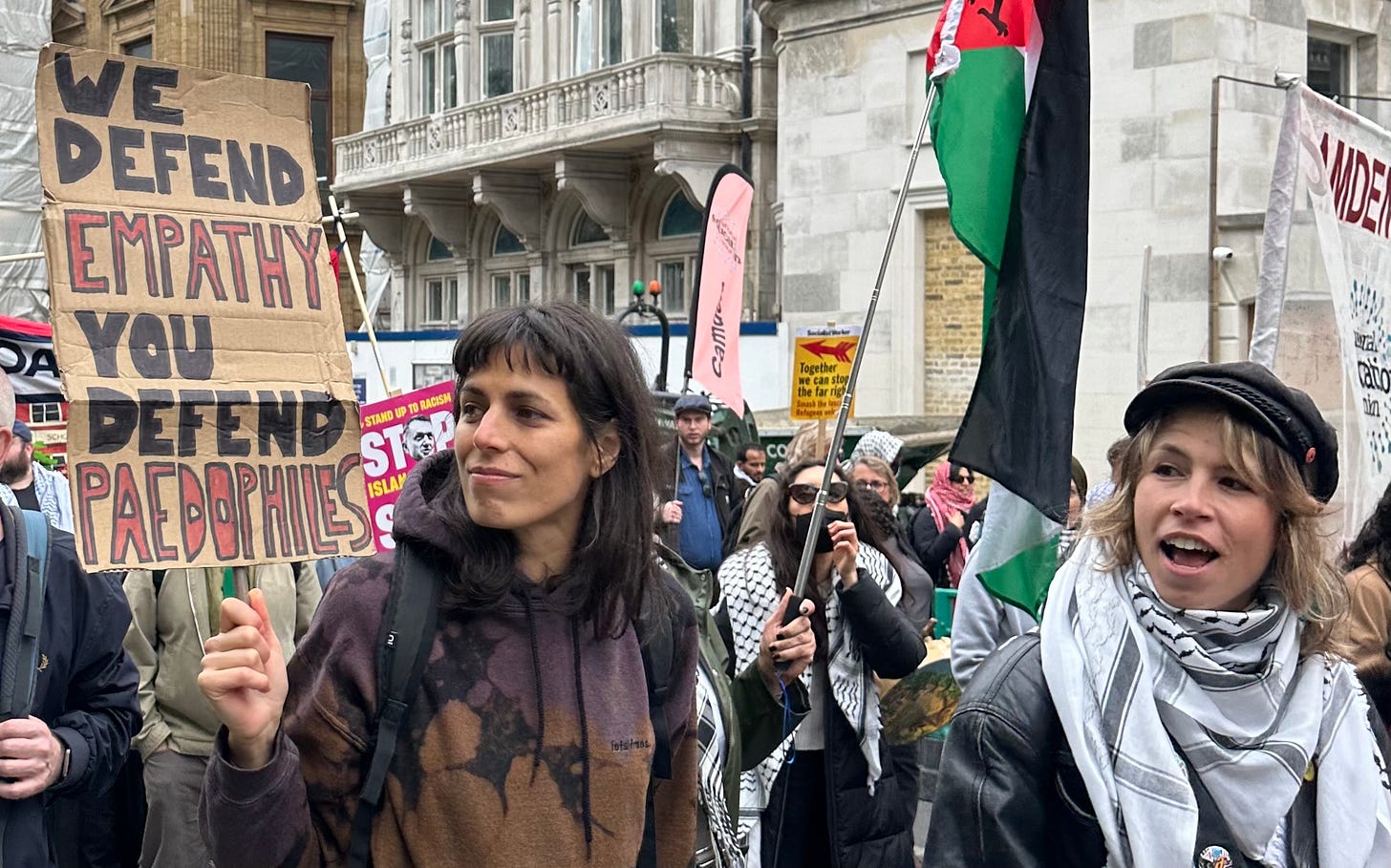
This broader tendency extends beyond safeguarding failures. Once people are assigned fixed moral identities, facts become secondary. The oppressor is dangerous by definition. The oppressed are sympathetic by default. The consequences extend far beyond debates about the Middle East. They influence whose fears are believed, whose crimes become symbols of systemic evil and whose crimes are interpreted as unfortunate exceptions.
None of this diminishes the horror of Jeffrey Epstein’s crimes. Nor does it minimise the suffering endured by the victims of Britain’s grooming gang scandals. The opposite is true. Sexual exploitation should remind us of the dangers of abandoning moral consistency. Children deserve protection regardless of who harms them. Victims deserve justice regardless of the background, religion, ethnicity or social status of perpetrators. Institutions should pursue truth regardless of political inconvenience.
Yet increasingly, our public discourse appears incapable of maintaining such consistency. Scandals become ideological weapons. Victims become symbols. Perpetrators become avatars for pre-existing political narratives. The political utility of suffering begins to determine the intensity of outrage.
The disparity in the treatment of these two scandals therefore raises important questions. Why has Epstein become such a potent symbol within sections of pro-Palestinian and socialist activism, whilst the grooming gang scandals have not generated equivalent levels of rhetorical intensity? Why are some forms of exploitation elevated into universal symbols of oppression whilst others remain politically awkward topics? It may simply reflect differing political priorities. But it may also reveal something deeper about the moral frameworks through which contemporary protest movements increasingly interpret the world.
If suffering is filtered through rigid categories of oppressor and oppressed, consistency becomes impossible. Scandals associated with groups perceived as powerful are amplified because they reinforce existing narratives. Scandals associated with groups perceived as marginalised are more likely to be contextualised, downplayed or treated as exceptional. The result is not justice. It is hierarchy: a hierarchy of suffering, a hierarchy of empathy, a hierarchy in which some victims become symbols of universal concern whilst others become inconvenient reminders that reality rarely conforms to ideology.
The true test of moral seriousness is consistency. If society is prepared to confront elite abuse when it is associated with wealth and power, it must be equally prepared to confront abuse when doing so is politically inconvenient. If protest movements wish to claim the mantle of social justice, they cannot allow ideological commitments to determine which victims matter more.
Children exploited by billionaires and children exploited in provincial English towns share one essential characteristic. They were failed by adults who should have protected them. Their suffering should unite us in outrage, not divide us according to the political utility of their pain.

