
Author and Global Affairs Commentator
The Politics of Manufactured Legitimacy
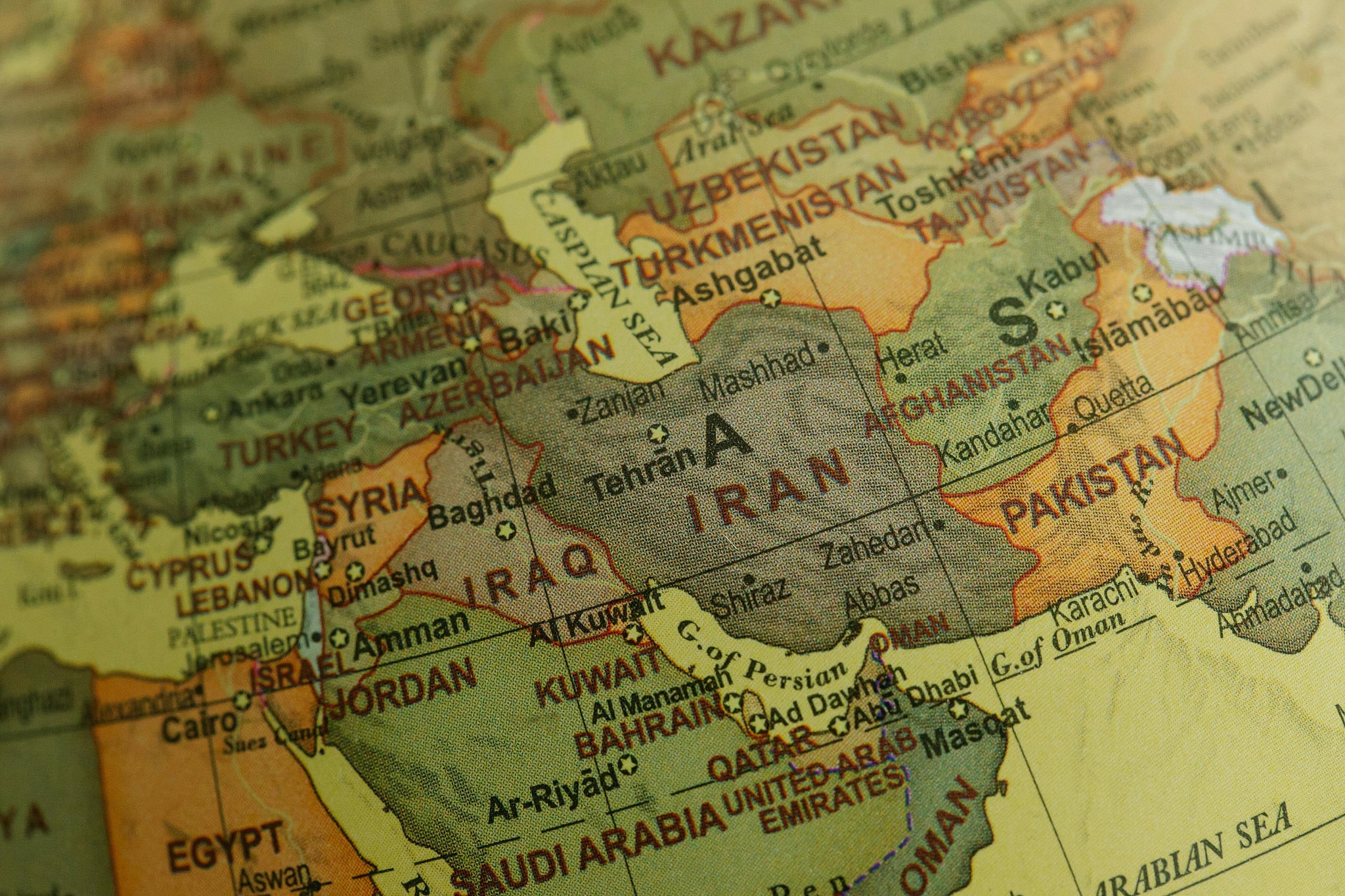
Iran now enters a period in which the symbolism of succession will gradually give way to the realities of governance (Pexels)
The death of a long-serving authoritarian leader often exposes the vulnerabilities of the political order left behind. In Iran, the elaborate public mourning surrounding Supreme Leader Ali Khamenei’s funeral has become not merely an act of remembrance but a test of regime resilience, illustrating how modern autocracies deploy ritual, symbolism, and state-controlled narratives to project continuity amid profound uncertainty.
The passing of a dominant authoritarian ruler often presents regimes with their greatest political challenge. Beyond the question of succession lies a more fundamental concern: whether the institutions built around a single individual possess sufficient legitimacy to survive his absence. In Iran, the carefully choreographed funeral ceremonies following the death of Supreme Leader Ali Khamenei have highlighted this dilemma, illustrating how political theater can become an instrument of statecraft during periods of uncertainty.
Authoritarian governments have long relied on symbolic displays to reinforce political authority. Public mourning, mass processions, and carefully scripted demonstrations of loyalty serve not only domestic audiences but also foreign observers, projecting an image of cohesion at moments when internal divisions may be widening. Such spectacles seek to transform a potentially destabilizing transition into a reaffirmation of continuity.
Iran’s political establishment has embraced this approach with considerable sophistication. State media, religious institutions, and security agencies have worked in concert to present the funeral as a moment of national unity, emphasizing religious symbolism alongside patriotic imagery. The objective extends beyond commemorating a deceased leader; it is to reaffirm the legitimacy of the political system itself.
Yet the effectiveness of such performances depends on public acceptance. Where governments rely increasingly on carefully managed narratives rather than broad political consent, symbolic demonstrations can expose, rather than conceal, underlying vulnerabilities. The greater the effort devoted to projecting unanimity, the more attention is often drawn to the political uncertainties such displays are intended to suppress.
The succession process has inevitably intensified scrutiny of Iran’s governing institutions. Leadership transitions within highly centralized political systems rarely concern personalities alone; they test the resilience of the constitutional, religious, and security structures that have sustained the regime for decades. Questions surrounding elite cohesion, institutional balance, and future policymaking become more consequential precisely because political authority has historically been concentrated in the office of the Supreme Leader.
The funeral ceremonies also illustrate the central role of political symbolism within the Islamic Republic. Since the 1979 Revolution, revolutionary ideology and Shiite religious tradition have been closely intertwined with state authority. Public rituals have therefore served not simply as expressions of faith but as instruments for reinforcing political legitimacy. The boundary between religious observance and state messaging has become increasingly difficult to distinguish.
This strategy, however, faces mounting demographic and political pressures. Iran’s younger population has grown up amid economic stagnation, international isolation, and recurring episodes of domestic unrest. Many analysts argue that generational change has weakened the emotional resonance of revolutionary narratives that once commanded broad public support. For these citizens, highly orchestrated displays of official mourning may carry less political weight than they did in previous decades.
The funeral also unfolded against the backdrop of heightened regional tensions and sustained international pressure on Tehran’s nuclear program. In such an environment, projecting institutional stability serves both domestic and geopolitical objectives. Demonstrating an orderly transfer of authority reassures allies, deters adversaries, and signals that the state’s core institutions remain functional despite the loss of their central figure.
Whether these efforts ultimately strengthen the regime remains uncertain. History suggests that symbolic displays can temporarily reinforce political authority, but they cannot substitute indefinitely for institutional legitimacy or public confidence. Durable political systems derive resilience from effective governance, economic performance, and social consent as much as from carefully managed public ceremonies.
Iran now enters a period in which the symbolism of succession will gradually give way to the realities of governance. The country’s future will depend less on the scale of commemorative events than on the capacity of its leadership to address mounting economic, political, and social challenges. The funeral may have demonstrated the state’s ability to choreograph an image of continuity, but the durability of that image will ultimately be measured by events that unfold long after the ceremonies have ended.
Related Topics