
The Power of Love on Sukkos
The Sages teach that there is a subtle but profound difference between the effect of teshuvah which is motivated by fear of God (teshuva mi’yirah) and teshuvah which is motivated by love for God (teshuva me’ahava). Fear-driven teshuvah can bring forgiveness and the nullification of sin. But teshuvah from love can transform sins to merits (Yoma 86a).
In other words, when one sincerely regrets his transgressions and asks God for forgiveness in order that he not be punished, God will forgive him and wipe away his misdeeds.
Yet when one considers how much God loves him and he cries out in deep sorrow for any of his actions that have caused a distance or blemish in his relationship with his beloved Father, his past mistakes are not merely erased, but they are counted as mitzvos. This is because the distancing acts have helped the person to understand how valuable the relationship really is, and they have thus motivated him to draw even closer to God than he had been before.
The Alter Rebbe applies this dynamic to the difference between Rosh Hashana and Yom Kippur on the one hand, and Sukkos on the other. The teshuvah that was performed during the 10 days of teshuvah from Rosh Hashana to Yom Kippur is often motivated by fear in order that one will not suffer negative consequences in the year ahead. The effect is that the person is forgiven and his transgressions are nullified.
But as a result of this divine mercy and grace, we recognize God’s infinite love for us, and this stimulates a reciprocal love to well from deep within us. Therefore, we burst forth in celebration and joy, and this is the holiday of Sukkos, Zman Simchaseinu/the time of our joy. This ecstatic reuniting with God is Teshuva me’ahava/teshuva from love, and the effect is that our past misdeeds are not merely forgotten, but they are accounted for us as mitzvos.
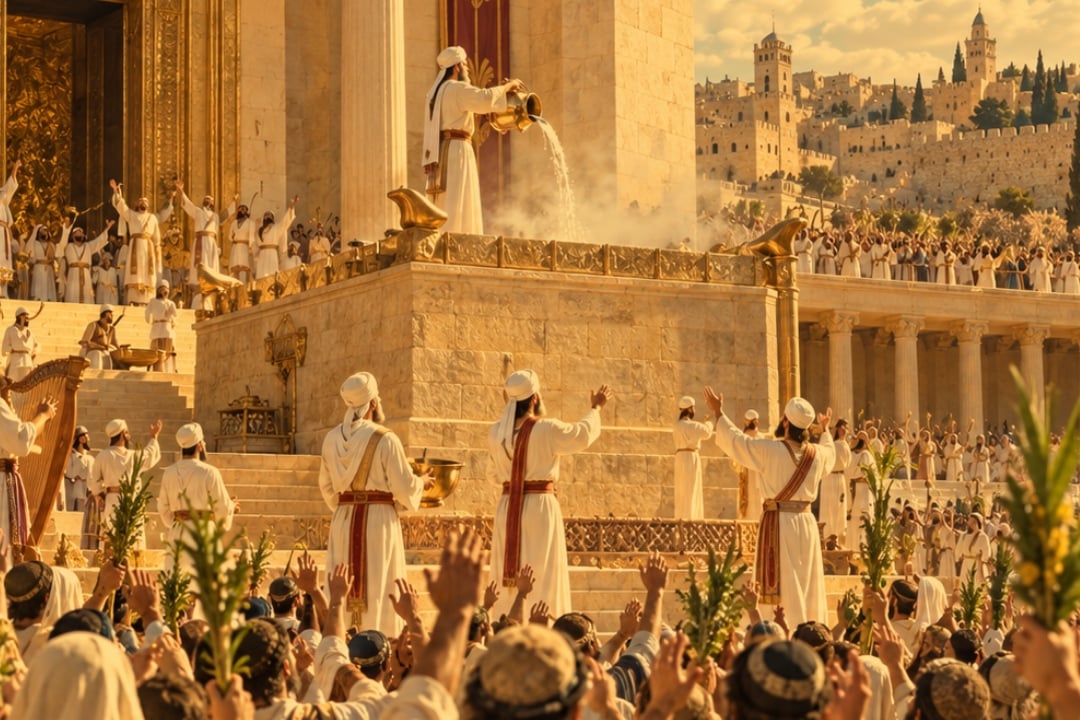
The mystics thus explain the deeper meaning of the water drawing service on Sukkos when water was drawn from the well of Shiloach and poured on the altar. On Rosh Hashana, we perform tashlich and symbolically cast our sins into the water. But then on Sukkos, when we do teshuva me’ahava, we go back to the water and regather those sins so to speak, because now they are counted as merits. Our former transgressions are now able to be brought as an offering in the temple. They fortify us, and they accentuate the essential bond between us and our beloved Creator.
Chag Sameach!
–
Pnei Hashem is an introduction to the deepest depths of the human experience based on the esoteric teachings of Torah. www.pneihashem.com