The Price of a Political Deal: What Yaakov Avinu Teaches Us About Negotiation
A lesson from Parashat Vayishlach for Israel’s political leadership
There is an important lesson in Parashat Vayishlach about the difference between negotiating an agreement and knowing what must never be given up in order to reach one.
Yaakov Avinu is preparing to meet his brother Esav after many years of separation.
The circumstances are worrying. Esav is approaching with four hundred men, and Yaakov has no way of knowing whether their meeting will end in reconciliation or confrontation.
The Torah tells us how Yaakov prepares. Chazal describe his approach in three words: “Ledoron, latefillah u’lemilchamah” – gifts, prayer and preparation for war.
Yaakov tries to make peace. He sends gifts, prays to Hashem and prepares for the possibility that his efforts may fail.
There is no contradiction here. This is what responsible leadership requires.
Yaakov understands that everything possible must be done to avoid conflict, but he also recognises the limits of goodwill. An agreement cannot be based on hope alone. It requires careful preparation, sound judgement and a clear understanding of what is at stake.
That lesson has particular relevance to Israel’s political situation today.
One of the most difficult questions facing the country’s leadership concerns the status of yeshiva students and the future of Torah study. For the Torah-observant community, the possibility that students may be arrested or prevented from continuing their studies is a matter of profound concern. Finding a workable and lasting solution is both legitimate and important.
Those representing this community have every right, and indeed a responsibility, to negotiate firmly on its behalf.
But there is a basic difference between a promise and a firm commitment. An assurance that a problem will be resolved once a government has been formed is not a solution. A general political understanding offers little protection to a student who may face arrest tomorrow.
Before giving political support, representatives must know precisely what has been agreed, how it will be put into practice and whether the commitments are clear enough to provide real protection. Good intentions are no substitute for an arrangement that actually works.
But there is another question, one that deserves just as much attention: what might be given away in return?
The understandable determination to secure the future of yeshiva students must not lead to concessions on other fundamental matters. The character of Shabbat in Israel’s public life, the education of Jewish children, conversion according to Jewish law and the Jewish character of the State of Israel are not ordinary political bargaining points.
These are matters that affect the identity of the country and the lives of generations to come.
If a political arrangement secures one important objective but weakens other foundations of Jewish life, it cannot simply be called a success.
In particular, representatives must think carefully about the consequences of giving decisive political influence to partners who do not share their commitment to Israel’s Jewish character. The question is not only whether such an arrangement can produce an immediate political advantage. It is also what wider consequences may follow.
We must not protect one essential part of Jewish life by putting another in danger. Securing an arrangement for yeshiva students cannot justify placing Shabbat, Jewish education, conversion or the Jewish character of Israel at risk.
This is not a call to avoid compromise. Democratic politics requires negotiation, practical arrangements and, at times, concessions. No political representative can expect to obtain everything.
But not everything is negotiable.
There is a fundamental difference between compromising over the details of how a policy is carried out and giving up the principles that give that policy its meaning. Those entrusted with public responsibility must understand that difference.
The lesson of Yaakov becomes even clearer when we consider another episode in the parashah.
After their reconciliation, Esav proposes that they travel together. Yaakov declines, explaining that the children are young and the flocks require a slower pace. He says:
“Adoni yodea ki hayeladim rakim vehatzon vehabakar alos alai” – “My lord knows that the children are tender and that the flocks and cattle are nursing.”
Yaakov does not reject peace. He simply recognises that an arrangement which may appear reasonable to one party is not necessarily suitable for those whose welfare is his responsibility.
He judges the proposal by its practical consequences, not by how attractive it sounds.
This is an essential test of political leadership. An agreement must be judged not only by what it promises today, but also by what it may cost tomorrow. Leaders must ask who will bear the consequences, which interests have been protected and which may have been overlooked.
There is also a wider responsibility that cannot be ignored.
Representatives of the Torah-observant community must protect the interests of the yeshivot and those who study in them. But their responsibility does not end there. They are also representatives of the Jewish people.
Israel is living through a difficult period. Families have lost loved ones, soldiers and their families continue to carry heavy burdens, people have lost their livelihoods, and many citizens are struggling with the consequences of war.
These concerns cannot be dismissed or treated as secondary.
There should be no competition between the future of Torah learning and concern for the wider public. A commitment to Torah should deepen our sense of responsibility towards all of Klal Yisrael, not narrow it.
Yaakov Avinu gives us another important indication of the attitude required of a leader. Before meeting Esav, he prays:
“Katonti mikol hachasadim umikol ha’emet asher asita et avdecha” – “I am unworthy of all the kindness and faithfulness You have shown Your servant.”
He does not approach the coming encounter with a sense of entitlement. He recognises how much he has received and how much responsibility rests upon him.
Political power should be approached in the same spirit. It is not something to be used solely for the benefit of one’s own constituency. It is a trust, carrying obligations towards the wider society and future generations.
Israel’s political leaders, whatever their political or religious affiliation, would do well to remember this distinction. Successful negotiation is not simply a matter of obtaining concessions from the other side. It is also knowing which concessions one has no right to make.
The immediate problem facing yeshiva students must be addressed. Their ability to continue learning Torah without fear of arrest deserves a serious and lasting solution. But that solution must not come at the expense of other foundations of Jewish life or the interests of the wider public.
Yaakov Avinu teaches us that peace is worth pursuing, agreements are worth seeking and negotiation is often necessary. But he also teaches us that responsibility does not end when an agreement is reached.
The real test of leadership is not simply what one succeeds in obtaining at the negotiating table. It is what one protects, what one refuses to surrender and what one leaves for the next generation.
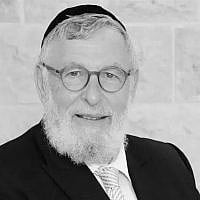
Rabbi Eliezer Simcha Weisz