
The promise of ‘Together,’ the pattern of before
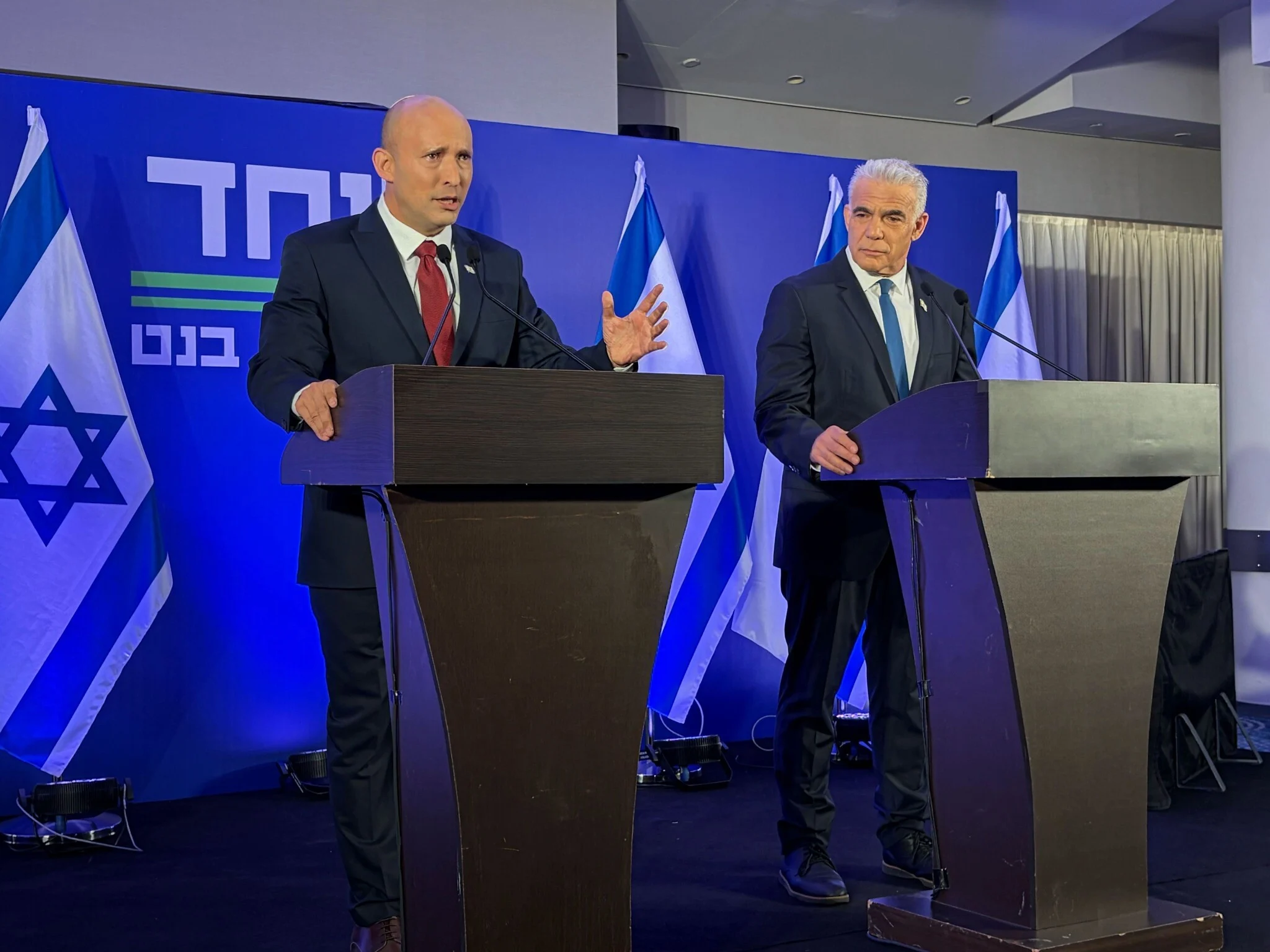
The announcement of a reunion between Naftali Bennett and Yair Lapid under the banner of “Together” brings a not-so-distant memories jolt in Israeli politics, one that recalls the churn and instability of recent election cycles. On the surface, it looks like a classic political maneuver of consolidating a fractured bloc, recreating a past coalition formula, and attempt once more to unseat Benjamin Netanyahu. That reading misses the deeper shift that has taken place in how political power is constructed and exercised.
What appears to be a front-end realignment is better understood as a kind of “system refresh”, a recycling of political forms within a fundamentally transformed environment. The language of unity and partnership may resonate with voters, but the democratic procedure itself will determine success operate far beyond the performance they do best. The contest is no longer ideological or personal now, as it is much more infrastructural and digital. In that sense, this reunion risks repeating the ambitions of the past, but also its limitations.
Modern campaigns are no longer anchored primarily in speeches, rallies, or even traditional media coverage, but in the quiet, continuous processing of data. Voter registries have evolved into sophisticated digital systems capable of tracking preferences, behaviors, and subtle shifts in political alignment with much precision. The merger of “Together” is also about integrating databases and the analytical capacities that come with them.
The decisive factor in the next election cycle may well be the ability to identify and mobilize narrow slices of the electorate, specifically those voters who are not firmly anchored to any one camp. The micro-targeted engagements are where elections are mostly won or lost. Now, shaped by algorithms and behavioral insights, the question is whether Bennett and Lapid can effectively merge both their political brands and their digital infrastructures. Without that integration, unity on paper will not translate into traction on the ground.
At the same time, the electorate itself has changed in ways that complicate any attempt at message control. Citizens today function as participants in a constant feedback loop, consuming, interpreting, and redistributing political content across platforms at a relentless pace. This “prosumer” practice means that political meaning is no longer stable or centrally managed, yet it is fragmented, contested, and rapidly reconfigured.
A policy proposal can be reframed into a meme within minutes, and a carefully made message can be overshadowed by a viral moment that distorts its intent. This creates a tension between depth and adaptability for the “Together” bloc, between the need to communicate serious reform and the pressure to preserve reach among publics on the digital arena. Ignoring this tension would be a mistake but overcorrecting toward virality risks hollowing out the matter of the project. The projected challenge will be to sustain coherence on media environments that constantly erodes it, rather the ‘traditional’ challenge to speak.
The digital arena also introduces a layer of vulnerability that previous political generations did not have to confront at this scale. Campaigns are now exposed to misinformation, coordinated disinformation efforts, and forms of cyber interference that can disrupt communication channels and undermine public trust. Past election cycles have already shown how external actors, including hostile groups, can exploit digital platforms to inject noise and confusion into political processes. The ability to maintain message integrity becomes as important as the message itself. For Bennett and Lapid, the task is to defend that narrative against distortion and sabotage. Even a well-designed campaign can be overwhelmed by the sheer volume of digital interference.
Overall, the reunion under the “Together” banner raises a more fundamental question about the nature of political change in this era of constant crisis. Is this an effort to produce a genuine shift, or is it another iteration of a familiar cycle repackaged for a new moment? Political initiatives are judged by their immediate resonance rather than their long-term impact, creating incentives that favor wide reach over substance. If that happens, the outcome will likely resemble previous cycles, full of high expectations followed by limited transformation.