Lawyer & Law Professor
The Question the Storm Asks
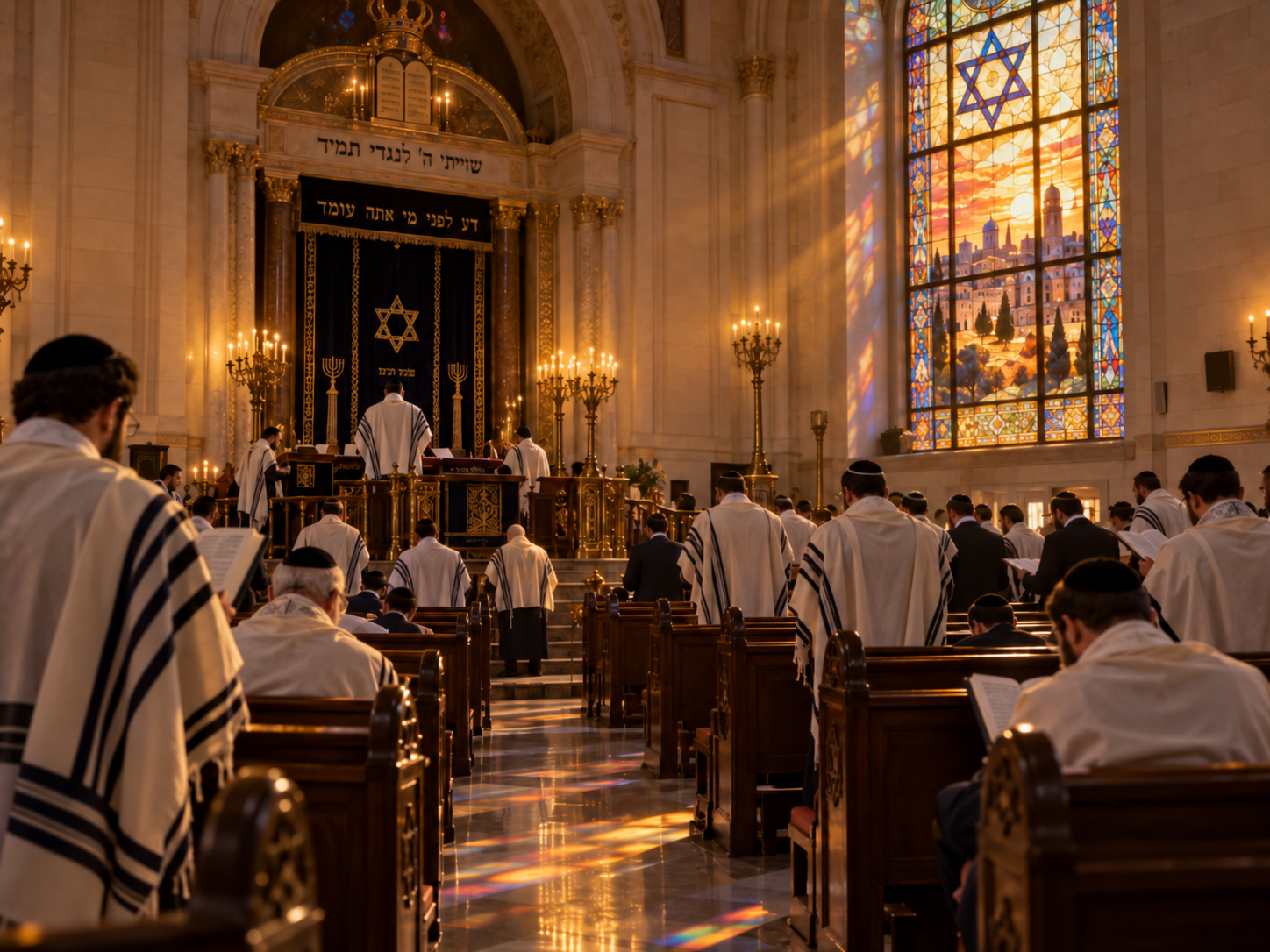
Image Created by ChatGPT with GPT Image 2, 2026.
A man is asleep in the hold of a ship breaking apart in a violent storm. On deck, the sailors throw the cargo overboard to lighten the vessel. Each prays to his own god with the disordered urgency of men who have tried everything else. The captain goes below, shakes him, and reproaches him for sleeping. Above, the crew casts lots to learn whose fault the disaster is. The lot falls on the sleeping man. They throw four questions at him at once: what is your occupation, where do you come from, what is your country, what is your people.
You may wonder how he got there. The man is Yonah, son of Amitai, the prophet the world knows as Jonah. The Creator handed him a nearly impossible assignment: to walk into Nineveh, capital of the Assyrian empire that threatened his People, and tell it to correct its conduct. One comparison makes the scale clear. Picture a stranger walking into the White House, standing before the president of the United States, and demanding, in the name of a G-d that man does not recognize, that he change his ways. The scene borders on the absurd. Such was the job. I do not blame him for reacting the way he did.
Warning an empire means offering it a chance to save itself. Yonah refused to hand that chance to that one. The haftarah tells us he went down to the port of Jaffa, paid his fare, and boarded a ship bound for Tarshish, in the opposite direction, believing that a man can outrun a Divine decree. He put an ocean between himself and the task. Once aboard, in one more escape from reality, he went below and fell asleep.
The storm reached him anyway. Questioned on deck, Yonah answers all four questions with two words: ivri anochi, I am a Hebrew. He skips the occupation. He skips the country. Under a storm, the first thing he says about himself is that he belongs to the Jewish People. He then asks the sailors to throw him into the water so the sea will calm. They resist, row toward shore with all their strength, and finally obey. The sea goes still the instant Yonah hits the water, and the crew is saved.
This story is read on the afternoon of Yom Kippur as the haftarah, the prophetic reading that accompanies the Mincha service. It comes at the hour when the fast is audible in the chazzan‘s voice and the light falls sideways through the windows, with the tallit heavy on the shoulders and the Congregation held up by a shared weakness. It is the most honest moment of the calendar. This year, pay attention to that reading. It is worth it. On Monday we will hear it again. I confess that I have spent days thinking about those two words.
I think about them because the sea rose fast this year, and it is still rising. On Friday, September 11, hours before Rosh Hashanah, a contingent marched down Presidente Masaryk in Mexico City, steps away from a synagogue of the Maguen David community, calling for a boycott of “Jewish businesses” and shouting for Jews to get out of Mexico, as if the year were 1939. Six days later, in Wuppertal, a man poured flammable liquid on a synagogue entrance and set it on fire, causing modest material damage and a fear that damage reports do not measure. In December, in Sydney, a Chanukah celebration by the sea ended in funerals. In these three cases, drawn from a regrettably longer list, the attackers knew one thing about their victims: they were Jews. Their occupations, their addresses, and their politics were irrelevant. Of the four questions put to Yonah on that deck, the storm of antisemitism repeats only one: what is your people.
Within that framework, I understand Yonah’s temptation to run, to sleep, to ignore the call of the Almighty. Tarshish was the edge of the known world, the farthest port a ticket could buy, where nobody knew him or expected anything of him. Tarshish is not a port any more. It is a habit. During these Yamim Noraim, the Days of Awe, and all year long, the route stays open in comfortable, domestic versions: lowering the voice when explaining where the surname comes from, slipping the kippah into a pocket on the way out of the synagogue, clarifying one’s position on Israel before anyone grants the right to speak. Each is a ticket to Tarshish, with air conditioning and very good arguments for staying below deck.
Being Jewish is hard. Whoever stays in the hold deserves respect too, above all when the choice is made out of fear, and even more with a family waiting at home. Arguing about decisions of the Israeli government, or about how our own Community reacts, is healthy, and we do it at the Shabbat table every week. Here is the hard part. The people who marched down Masaryk did not know the opinions of a single person praying inside, and they do not care. The enemies of Am Israel do not ask before they shoot. They are indifferent to the answer, and yes, they also come down into the hold to look for whoever hides there. This is how they see us, and how they will keep seeing us, whatever we do.
On that basis rests the lesson I take from Yonah. The prophet spends the entire book running from his assignment and from the essence of who he is. At the decisive moment he understands it and claims his identity in full, with pride, in front of strangers. Everything else followed from that answer.
So what becomes of Yonah? He falls into the water, a great fish swallows him and keeps him three days and three nights, long enough to pray from the bottom of the sea, and then delivers him to dry land. Yonah walks to Nineveh, speaks in the name of G-d, says what he has to say, and the entire city listens and corrects its conduct.
Note what that means. The man who agreed to say who he was became the only prophet an entire empire obeyed. They repented and were forgiven. Our Rabbis chose this text for Kippur afternoon for that reason.
The invitation of this Yom Kippur is to carry that example into Yiddishkeit, the Jewish way of being in the world; to answer for ourselves the question put to Yonah; and to hold that answer up with small things: the candles lit on Friday, the mezuzah visible on the door of the house, the Hebrew name said in full, the child who learns where he comes from, the synagogue full.
Taken together, the obvious deserves saying, however uncomfortable: we are already in the storm. The question was asked several times this year, and it reached us awake and asleep alike. To those still in the hold, my wish is that the shofar wakes them and brings them up on deck, with us, to show their faces. For those of us already above, what remains in our hands is the tone of the answer. Say it with pride. Stop explaining yourselves. Embrace our identity and defend it at whatever price.
On Monday, when the voice barely comes out and the legs tremble while we wait for Ne’ilah, the closing prayer said standing as the gates of Heaven begin to shut, we will hear those two words again. Say them with your head high, with the confidence of someone who already knows how the story ends: the sea did calm, Yonah did reach dry land, and an empire listened. Ivri anochi.
Shabbat shalom. Gmar chatimah tovah, shanah tovah u’metukah. Am Israel Chai.
Related Topics
Related Posts