
The Radical Slope: Channel 14 After Netanyahu
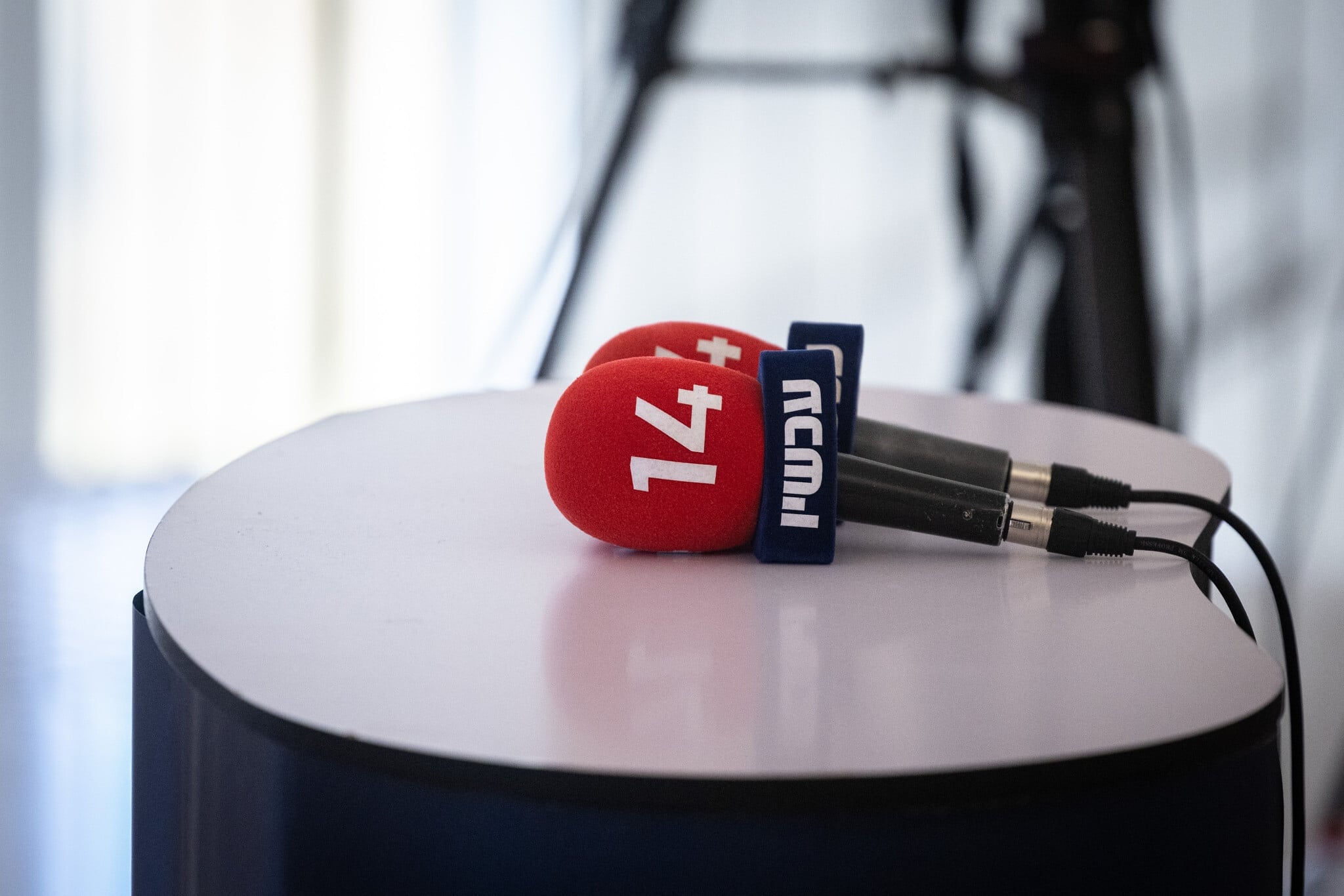
Governments fall, but the media institutions that defend them do not necessarily disappear. They retain audiences, familiar personalities and the capacity to define political reality for their viewers. This matters particularly in Israel, where Channel 14 has made its identification with Benjamin Netanyahu a central feature of its public identity. Should Netanyahu lose power, the channel would face a choice between adapting to opposition and intensifying the grievances that sustain its audience. The latter possibility deserves more attention than it currently receives.
Some opponents of Netanyahu assume his departure would bring Channel 14 down with him. They anticipate declining influence, financial instability or regulatory intervention that might eventually force the broadcaster off the air. Yet this expectation confuses the loss of a political patron with the disappearance of a political constituency. Channel 14 already possesses an identifiable audience and a repertoire of narratives through which political loyalty can be maintained. Defeat could therefore supply its programming with a renewed sense of mission.
The American experience following the 2020 presidential election offers a noteworthy warning, although not a prediction. Donald Trump and his allies promoted baseless claims of electoral fraud, recasting defeat as the theft of legitimate power. Conservative media helped circulate these narratives, contributing to widespread distrust of the result. On 6 January 2021, Trump supporters attacked the Capitol as Congress met to certify Joe Biden’s victory. The congressional investigation documented how political falsehoods and institutional delegitimization helped create the conditions for violence, without establishing that any single broadcaster caused the attack.
Fox News illustrated the incentives behind this process. After the election, the network aired false allegations concerning voting technology, even as internal communications revealed doubts among prominent figures about the claims. In 2023, Fox agreed to a $787.5 million settlement with Dominion Voting Systems. This indicates a structural danger in partisan broadcasting, when audience loyalty becomes commercially indispensable, contradicting viewers may seem costlier than misleading them. A broadcaster can consequently find itself rewarding the very suspicions it ought to scrutinise.
Research on Channel 14 suggests that this tension already extends beyond ordinary ideological journalism. In a 2026 study, Ayala Panievsky, Shuki Tausig and Chen Egri examined 275 broadcast items from 2024 through the framework of anti media media. They found uncritical amplification of government propaganda in 40.4% of sampled items and verifiably false claims in 34%. Their findings concern a defined sample, not every program the channel broadcasts. Nevertheless, they suggest an editorial culture in which political allegiance can supersede verification and scrutiny.
Recent broadcasts illustrate the human consequences of such a culture. In June 2025, Israel’s Second Authority described remarks by presenter Yinon Magal about Arab residents of Tamra as racist and offensive. On 17 October 2026, Magal repeatedly called opposition politician Gadi Eisenkot a monkey in comments concerning his Moroccan background. The following evening, panellist Yotam Zimri repeated the slur, drawing laughter in the studio. Such episodes show how rhetoric that demeans individuals can become normalized as televised political entertainment.
None of this proves the existence of a coordinated plan to incite unrest after Netanyahu leaves office. The concern is more structural, because radicalization does not require a written strategy. A future government’s appointments could be framed as institutional capture, adverse court decisions as persecution and routine policy disputes as threats to national survival. Repetition could turn these interpretations into the audience’s default political vocabulary. What begins as opposition journalism may then become a sustained challenge to the legitimacy of democratic competition.
The dynamics of attention could accelerate that shift. Confrontational presenters attract publicity, controversy generates engagement and each successful provocation changes expectations for the next broadcast. Moderation becomes a competitive disadvantage when viewers are accustomed to indignation. Under these conditions, extreme commentary need not be ordered from above to become an editorial norm. The radical slope is the accumulation of small incentives that make each escalation seem ordinary.
Nor is the channel’s survival necessarily determined by immediate profitability. Its controlling owner, Yitzchak Mirilashvili, has business interests beyond broadcasting, giving him potential sources of financial resilience. In September 2026, the Second Authority withdrew Channel 14’s special regulatory status after finding that relevant revenues had exceeded NIS 80 million in 2025, exposing it to additional obligations. These developments complicate any confident forecast of its finances. Yet they provide no basis for assuming that a change of government would automatically end its operations.
Indeed, opposition may increase the channel’s political importance. A governing coalition can rely on official institutions to disseminate its messages, while a defeated movement depends more heavily on sympathetic media to sustain cohesion and mobilise supporters. There is nothing inherently undemocratic about that role. The danger emerges if criticism of the new government becomes a systematic assertion that its very authority is illegitimate. At that point, the broadcaster ceases merely to contest decisions and begins contesting the democratic process itself.
The answer cannot be partisan censorship. Channel 14, like any broadcaster, must remain free to challenge governments and articulate views many citizens reject. Its conduct should be judged through consistent law, transparent regulation and enforceable professional obligations, rather than ideological preference. Attempts to silence it because of its politics would supply precisely the persecution narrative on which a more radical opposition might thrive. Democratic accountability requires scrutiny without granting the channel the martyrdom it could turn into a political asset.
Those expecting Channel 14 to fade with Netanyahu may be looking in the wrong direction. Political defeat could weaken the broadcaster, but it could also intensify the incentives that already shape its output. The decisive question is whether it would accept the legitimacy of an elected successor while opposing its policies. If it chooses to portray defeat as dispossession instead, the morning after Netanyahu may mark the beginning of Channel 14’s most radical chapter.