The Republic on Its Knees
I have lived in Paris all my life and witnessed more demonstrations than I care to remember. The French have a remarkable talent for turning political anger into historical theatre. The revolutionary vocabulary remains impressive, and the targets increasingly seem to include anything within reach that happens to have windows.
The demonstrations on 17 October brought together students, trade unions, Yellow Vest activists and people protesting against the rising cost of living and the deterioration of public services. Figures attributed to the Interior Ministry put participation at approximately 550,000 nationwide, including 110,000 in Paris, while organisers claimed 800,000. Around 400 arrests were reported by Saturday evening. Most people had come to demonstrate peacefully. Groups of masked individuals, however, used the gatherings to attack public buildings, confront police officers and loot businesses. The authorities attributed much of the organised violence to groups from the radical far left.
In Paris, the revolutionary struggle acquired a distinctly commercial character. Clothing shops and mobile phone outlets were attacked, their windows smashed and merchandise carried away. Police used tear gas to disperse violent groups. Shopkeepers who had spent the morning worrying about their sales were left to spend the evening calculating their losses.
I am still trying to establish what stealing a mobile phone contributes to the reform of French education. Perhaps the explanation will emerge during the next parliamentary debate on school funding.
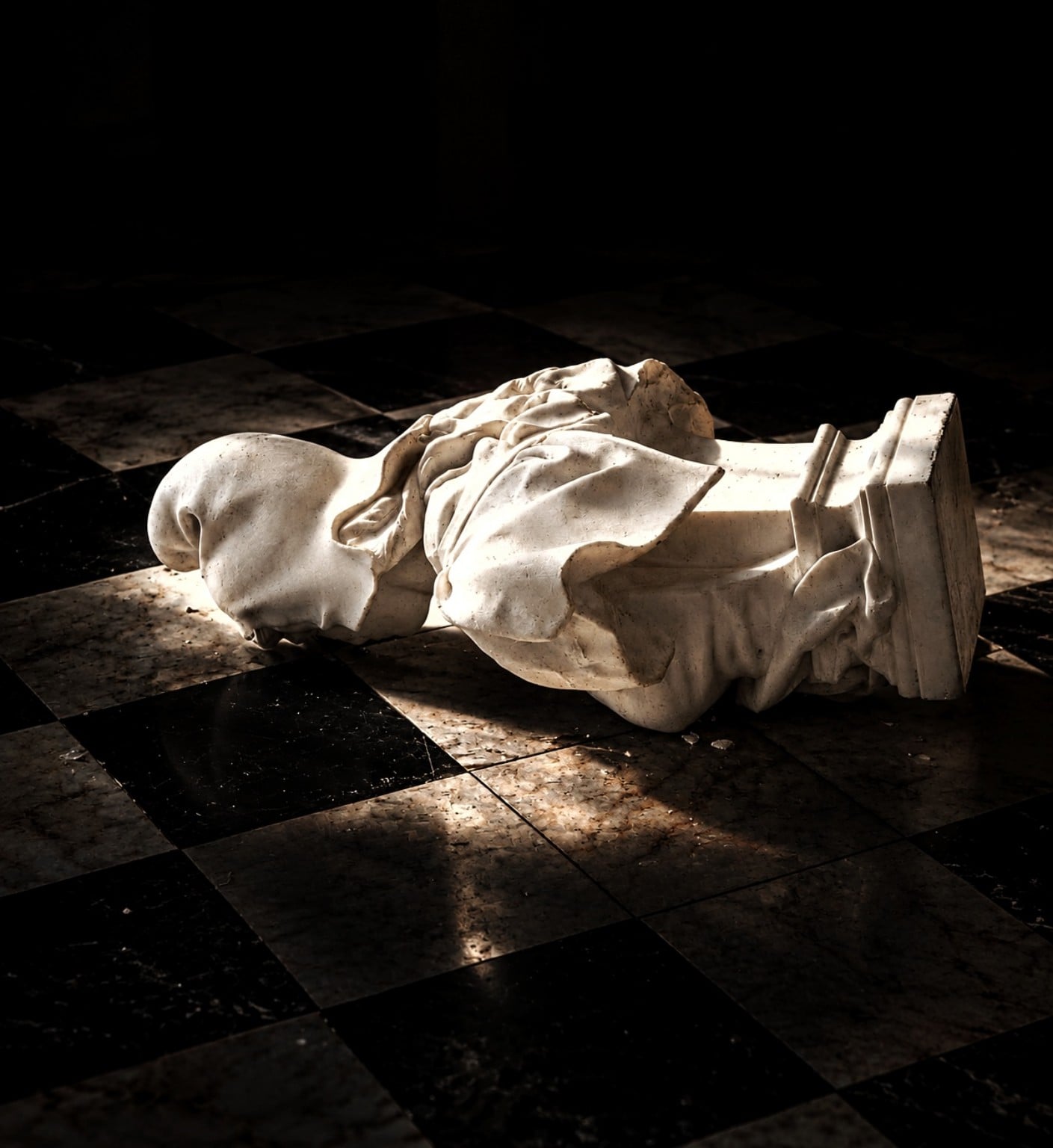
Marseille offered a particularly revealing spectacle. According to accounts of the unrest, several dozen demonstrators entered City Hall shouting revolutionary slogans, damaged equipment and sent Marianne, the female figure representing the Republic, crashing to the floor. Some participants carried Palestinian flags. The scene might have been comical had it not involved the vandalism of a public building. The Bastille had been replaced by an office where municipal employees were expected to turn up for work the following morning.
In Lille, an attack on City Hall reportedly unfolded while other demonstrators marched peacefully nearby. Accounts from Lyon described damage to the tourist information office. In Limoges, masked individuals were reported to have set a municipal police vehicle alight before breaking into City Hall and starting a fire. The blaze caused extensive damage to the historic building, including its roof. The prefect described the destruction as a catastrophe for the city’s heritage.
There were people inside the building when the fire began. Municipal employees, elected officials and police officers were working in a place that, until that evening, had presumably seemed considerably less dangerous than the streets outside.
The grievances that brought people onto those streets were real, particularly those concerning education. France has schools where pupils and teachers work in conditions that ought to embarrass successive governments. Buildings deteriorate, basic maintenance is neglected, equipment is missing and staff shortages disrupt teaching. Families are increasingly obliged to fight for services that should be routine.
France is an expensive country to govern. We pay some of the highest taxes in Europe, yet schools are deteriorating, hospitals are struggling and public services increasingly fail to meet the expectations of the people who finance them. I would like somebody to explain where the money goes, and why asking that question has become almost an act of political provocation.
There is also the question of immigration, which much of the French left seems incapable of discussing without immediately reaching for accusations of racism or fascism. I come from the left myself, and I am thoroughly tired of being told which questions I am allowed to ask.
France needs foreign workers. There are sectors of the economy that depend on them, and many immigrants contribute through their labour and taxes. Immigration also places demands on housing, schools, healthcare and administrative services, particularly when the arrival of new residents is not matched by adequate investment. Some newcomers require financial assistance while establishing themselves. The costs of reception and integration deserve the same scrutiny as any other public expenditure.
The French state has no money of its own. It spends what it collects from those who work, produce and pay taxes, including immigrants who do exactly that. When politicians announce new commitments, they are deciding how to use resources supplied by the population. I would like them to remember this rather more often.
How many additional people can our public services accommodate in their present condition? What does reception and integration actually cost, and how effectively is that money being spent? What happens in areas where housing is already scarce, schools are overcrowded and families struggle to obtain medical appointments? The answers will differ according to employment, local circumstances and the policies adopted. That is why I want figures rather than another sermon about the moral failings of anyone who asks for them.
French households are already under considerable financial pressure. Housing costs, taxation, stagnant purchasing power and the declining quality of certain public services have consequences for everyday life. Immigration policy belongs in that discussion. A government unable to explain its own spending priorities should hardly be surprised when taxpayers begin asking uncomfortable questions.
I find it intolerable that a woman who has spent her life identifying with the left should risk being labelled a fascist because she believes a country must examine its financial capacity before making further commitments. I have no intention of allowing Mélenchon or anyone else to decide which economic questions a person of the left may legitimately ask.
Successive French governments have allowed problems in public administration and essential services to accumulate. Emmanuel Macron inherited institutions already under strain and has failed to restore confidence in their effectiveness. His predecessors contributed to the deterioration. Meanwhile, political debate remains saturated with declarations of principle, while the practical questions of spending, maintenance and management receive remarkably little sustained attention.
And then there is Jean-Luc Mélenchon.
I have listened to him for years. I know his vocabulary, his talent for mobilising resentment and his extraordinary ability to transform political disagreement into a confrontation between the virtuous and their supposed enemies. He has made hostility towards republican institutions, particularly the police, a prominent feature of his political language.
On 3 October, Mélenchon reportedly called on parents and other adults to wear white helmets or armbands and surround student demonstrations. He presented the initiative as a way of protecting young people from the police. Days later, he appeared at a Paris demonstration wearing a white armband, while some young participants chanted his name and called for him to become president.
There had been serious allegations of excessive police force during student protests, including reports of severe injuries. Parents had reason to be concerned, and the conduct of officers involved in such incidents required investigation.
But consider the political message delivered by a man who wants to become president of the French Republic. He was encouraging adults to place themselves physically between children and the police, presenting the officers responsible for public order as a danger against which families needed to organise.
Mélenchon may call that protection. I see a politician reinforcing a division he has spent years cultivating.
He subsequently urged demonstrators to remain peaceful and reportedly condemned looting and vandalism after Saturday’s violence. Those statements deserve to be recorded accurately. They do not erase the political significance of his earlier rhetoric.
Prime Minister Sébastien Lecornu has now entered the argument. He accused radical far-left groups of organising violence in several French cities and directly challenged Mélenchon’s attempt to shift responsibility onto police commanders. Lecornu described that reversal of responsibility as dangerous and cynical, arguing that one cannot call for an end to violence while finding excuses for those who commit it. He placed political responsibility at Mélenchon’s door.
That is a serious accusation from the head of government. It does not establish that La France insoumise organised the attacks, and I would be the first to demand evidence before making such a claim. But it is striking that the argument has reached the highest level of government. The question of political responsibility can no longer be dismissed as the obsession of a few commentators who dislike Mélenchon.
I want to know who made the matches.
The person who sets fire to a building is responsible for that act. Politicians bear responsibility for the ideas they circulate, the enemies they designate and the attitudes they encourage among those who trust them. Years of presenting the police as an adversary and republican institutions as inherently suspect leave their mark.
That is the responsibility I attribute to Mélenchon and La France insoumise. His movement has helped cultivate an atmosphere in which confrontation with public authority is treated as a sign of commitment. He does not have to instruct somebody to burn a town hall for his rhetoric to deserve serious scrutiny.
Reports that masked demonstrators shouted slogans supporting LFI would, if confirmed, offer a further indication of political identification among some of those present. They would tell us something about the atmosphere of the protests, though nothing conclusive about who directed individual acts of violence.
I remember a French left that took secularism seriously, spoke about education and emancipation, defended the dignity of work and understood the importance of public institutions. It wanted to improve the lives of people who had too little. Its ambitions extended beyond the next demonstration. That was the left in which I recognised myself, and today I find myself mourning it.
I look at Mélenchon and the political culture that has developed around LFI, and I struggle to recognise the tradition to which I once belonged. The appetite for confrontation seems inexhaustible, as does the readiness to explain away conduct that would be condemned without hesitation if it came from the opposite political camp.
An offensive remark by a right-wing politician can provoke days of moral outrage. A smashed shop window, if the person responsible claims to oppose capitalism, may inspire an elaborate explanation of social exclusion and the failures of the state.
Sometimes a thief is simply a thief, however flattering the political vocabulary available to him.
The shopkeeper whose premises have been ransacked may be struggling with the same rising costs and economic uncertainty as the people who attacked his business. He has employees to pay, insurance claims to submit and perhaps a loan that will still be due at the end of the month. A lecture about revolutionary anger will be of little assistance.
I have become equally weary of the habit of dragging Israel into almost every political mobilisation associated with the radical left. Anti-Zionism has become such a convenient reflex in these circles that virtually any subject can eventually be made to accommodate it.
Palestinian flags were visible during the unrest in Marseille. I have also heard television reports of demonstrators shouting “Free Palestine” during disturbances at a Carrefour store, although I have not yet been able to establish the precise circumstances of that incident. The slogan is familiar enough. Its relevance to the cost of living in France is rather less obvious.
I would genuinely like to know what the Israeli-Palestinian conflict has to do with the price of groceries in a French supermarket. Perhaps somebody could explain how chanting about Palestine improves the working conditions of a teacher in Marseille or repairs a leaking school roof in Lille.
I am waiting for the day when Parisians demonstrate against parking charges and somebody explains that Zionism is responsible. I wouldn’t put it past them.
French schools have problems serious enough to deserve sustained attention. Their buildings need maintenance, teachers need adequate resources and pupils deserve an education that equips them for adult life. The ideological obsessions of political activists have done little to improve the conditions in which children are expected to learn.
The atmosphere surrounding public authority also affects the people who work in our institutions. Teachers, police officers, municipal employees and civil servants increasingly find themselves treated as representatives of everything that has gone wrong with the state. The person standing in front of a classroom or working behind a counter becomes an accessible target for frustrations accumulated over years.
I think about the schools I attended and the teachers I knew. We complained about them, disliked certain lessons and resented rules we considered pointless. I doubt our teachers regarded us as models of discipline. Yet we understood that the person standing in front of the classroom was there to teach us something, and that this carried a certain authority. The school itself meant something.
I find it difficult to recognise that relationship in a political atmosphere where contempt for authority is so readily encouraged. Teachers already face enormous difficulties, and their work becomes harder when adults themselves teach young people to regard institutions with habitual suspicion.
Police officers exercise different powers and must answer for their use. Serious injuries suffered by demonstrators, including a devastating hand injury reported in Saint-Étienne, require thorough investigation. An officer who abuses those powers must face the consequences. But the increasingly poisonous language directed at the police has made even the ordinary enforcement of the law a subject of ideological hostility.
What is happening in France should concern the rest of Europe. Similar frustrations over living costs, public services and political representation have already brought people onto the streets elsewhere. In several European countries, political movements have discovered how effectively anger can be channelled against institutions whose failings are real, while offering remarkably little explanation of how they intend to govern any better.
France has a long tradition of protest and a powerful attachment to the idea of the Republic. Its institutions were once understood, however imperfectly, as a common political inheritance. Today they are increasingly treated as the property of whichever political camp happens to occupy them, or as legitimate targets for those who oppose it. European governments would be foolish to assume that the habits developing here cannot take root elsewhere.
I remember the Yellow Vest protests vividly: the burning cars, smashed windows and destruction on the Champs-Élysées, together with the growing impression that the authorities were losing control of events. The grievances behind that movement were substantial, and many remain unresolved. The years that followed brought little reassurance that the underlying problems had been properly addressed.
Businesses now prepare for major demonstrations by protecting their premises, police forces anticipate violent confrontations and residents learn which streets to avoid. People have become accustomed to organising their lives around the possibility that a public protest may end in serious disorder.
The financial consequences of Saturday’s violence will take time to establish. Shopkeepers face repairs and lost stock, insurers receive claims, and municipalities must find money to restore damaged public buildings. In Limoges, the destruction of City Hall raises questions of conservation and restoration that may remain long after the streets have been cleared.
A nineteenth-century monument has been devastated. Restoring what can still be saved will require expertise, years of work and substantial public funds. The people responsible for the destruction needed considerably less time.
And who will pay for it? The taxpayers, naturally. Including those who marched peacefully to protest against the cost of living and the deterioration of public services.
There is an image described in the accounts from Limoges that stays with me: a municipal employee in tears as firefighters battle the flames at City Hall. I wonder how long she had worked there, whether she knew the building’s corridors by heart, whether she had colleagues who had become friends over the years.
The people who set the fire will eventually disappear from the news.
She will have to go back to work.