The Return of a Hero
“Ve-shavu banim ligvulam” – “And children shall return to their border.” (Jeremiah 31)
“Ve-shavu banim ligvulam” is a pasuk from Yirmiyahu (Jeremiah 31), a verse we have turned into a standard expression of hope that our children will return home.
Hadar Goldin died in action eleven years ago. The terrorists of Hamas took his body and held it hostage. His family was left without closure, trapped in what can only be called mourning limbo. It is hard to fully capture what it meant for Israelis and for Jews around the world to see his body miraculously return to Israel after all these years.
Personally, this episode was deeply moving for me. In the days leading up to the announcement that the remains were believed to be Hadar’s, every hint of hope was shared in family chats and messages. Because Hamas is infamous for returning the wrong remains to prolong psychological torture, each update carried both dread and fragile hope. My physical reaction was chest pains, anxiety, and the feeling of holding my breath at the rare possibility that this hero would finally come home for a dignified burial.
This is the tragic story of a young man who made the ultimate sacrifice to defend the land of Israel and the right of Jews to live there—and to come home there—from all over the world. A young man full of promise, a beloved son who could be anybody’s child. There are no words for the pain of losing someone whose whole life lay ahead, suddenly and violently cut short.
And yet, granting his parents and his family the chance to bury him, to mourn him, to pray for him, is the ultimate chessed. It is not only moving; it is historic. Hadar Goldin became a symbol—a symbol of heroism, of the values we stand for, of sacrifice. There is nothing more Jewish, and more Israeli, than that. Those were the sentiments expressed by his father, and they resonate across our people.
One of my former professors wrote that he knows Hadar’s parents personally, though he never met Hadar himself. He shared that one of the reasons Hadar was never returned in a deal was that his parents refused to agree to an exchange of Hamas terrorist prisoners for their son’s body, in order not to endanger more Israeli lives with future attacks. For eleven years, this family waited, carrying both unbearable grief and unwavering responsibility toward the wider community.
In many ways, it feels as though recent events—in which terrorists were trapped while attempting to violate agreed-upon lines and understandings—created pressure that finally pushed Hamas to do something it had long refused to do: return Hadar’s body to Israel. Whether or not we fully understand the political calculus, we can sense that something shifted.
It is incredibly difficult to explain to someone who does not share our history or emotional language what it means for Am Yisrael, in Israel and around the world, to see Hadar Goldin brought back to be buried with dignity. For me, the most powerful part is that I cannot help but see the hand of God in all of this, much like in the story of Esther, where miracles unfold behind a veil of natural events. God’s hand is hidden, yet present. That is the story of Purim—and, in a way, of this moment too.
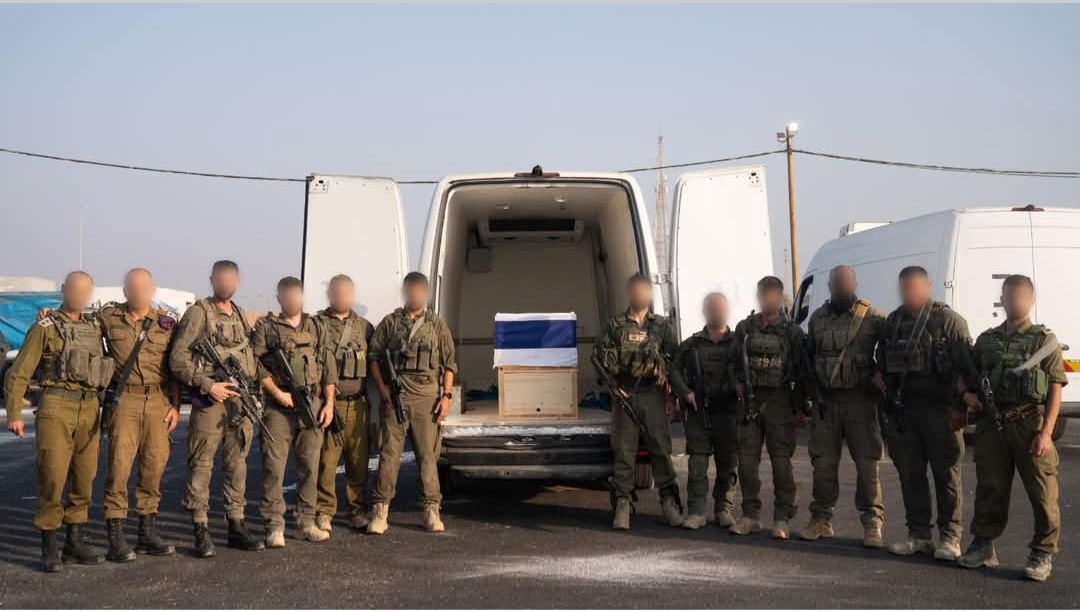
There are glimpses of a divine message here. The very soldiers who served with Hadar when he was killed and taken to Gaza were among those who welcomed his body home. That image is profoundly symbolic of the deep, intangible, but very real connection that Jews have with one another—even beyond life. It feels incredible, almost miraculous, and certainly not accidental.
This is the homecoming that this fallen hero deserved all along, and we have the zechut—the privilege—of witnessing it with our own eyes.
May Hadar Goldin’s memory be a blessing.