The Risk Assessment
Why travelling to Israel feels like the safest, honest thing I know…because between calculation and courage lies faith — and sometimes a boarding pass!
Whenever I mention I’m going to Israel soon, some people here in The Diaspora tend to lower their voices. They mean well. They’re not afraid for me so much as mystified — why go somewhere that looks so complicated from afar?
They talk about rockets, borders, politics. But nobody warns you about the queues, the coffee, or the fact that security may well know more about your childhood than your therapist. People imagine the potential danger, not the life — the laughter, the argument, the constant hum of resilience, the feeling at home.
Of course, for those who live there, the daily rhythm of vigilance is simply life. It isn’t danger — it’s routine courage, the kind that never makes the news. I remember once listening to James O’Brien’s show on LBC when Israel was in the midst of a different conflict. He was interviewing or speaking to an Israeli about the situation at the time, and she finished off by saying – “I have to go now, my son has his driving test!” O’Brien was baffled by the banality of the life that plodded on, alongside the potential danger of ongoing conflict. He openly admitted this.
And I am well aware of what it all can mean. I have spoken to friends when they’ve spent an evening/night in air raid shelters; I regularly speak to a friend who has a child in the army.
Whenever I start to pack a suitcase, I hear my late mother’s voice. She was a master packer — second-generation Holocaust trauma disguised as neatness. Every shirt rolled, every label facing out, just in case. She taught me that preparedness was a form of love, that order could keep chaos at bay.
My late father, by contrast, managed his life like a spreadsheet, as if carefulness could outwit fate. He disliked spontaneity, preferred documentaries to holidays, and in the end he died in front of the television — one of the safest activities in the world.
Between them, my parents built a theology of caution — my mother packing to keep the past from happening again, my father planning to keep the future from surprising him. One lived by memory, the other by calculation. I inherited both, yet somehow keep buying plane tickets.
The world likes to pretend that risk can be managed, that it lives neatly inside red and amber travel zones. But danger is democratic. It doesn’t queue politely for passports.
I was in Manchester the day after the Yom Kippur attack — not just Manchester, but Crumpsall itself — and I’m writing this as reports emerge of an assault on an LNER train. The map keeps changing, but the headlines stay the same.
Perhaps what unsettles people isn’t Israel’s risk but its honesty — a country that lives truthfully in the space between uncertainty and faith.
In Jewish thought, that balance has always been part of the covenant. The first words spoken to Abraham were Lech Lecha — “go forth from your land.” The Jewish story begins not with certainty but with movement. Maybe every boarding pass carries a trace of that command: go forth, still trusting.
Judaism never promised safety. It taught us to bless the bread even when the future was uncertain, to light candles knowing the wind might blow. The Hebrew concept of bitachon — trust — isn’t naïve; it’s disciplined. You still lock the door, you just refuse to live behind it.
We talk about safety as if it were an end in itself, but it was always meant to be a condition for living — not a substitute for it. When safety becomes the goal, we forget what it was meant to protect: joy, curiosity, connection.
I think of my parents often — how their love was expressed as vigilance. I understand it now, but I can’t live that way. I’ve seen too much to mistake safety for living.
Sometimes I wonder if the language of risk has become our new religion — our way of measuring faith in the absence of certainty. The problem is, faith and fear run on the same fuel: imagination. They both ask us to believe in things we can’t see. The difference is what we picture on the horizon.
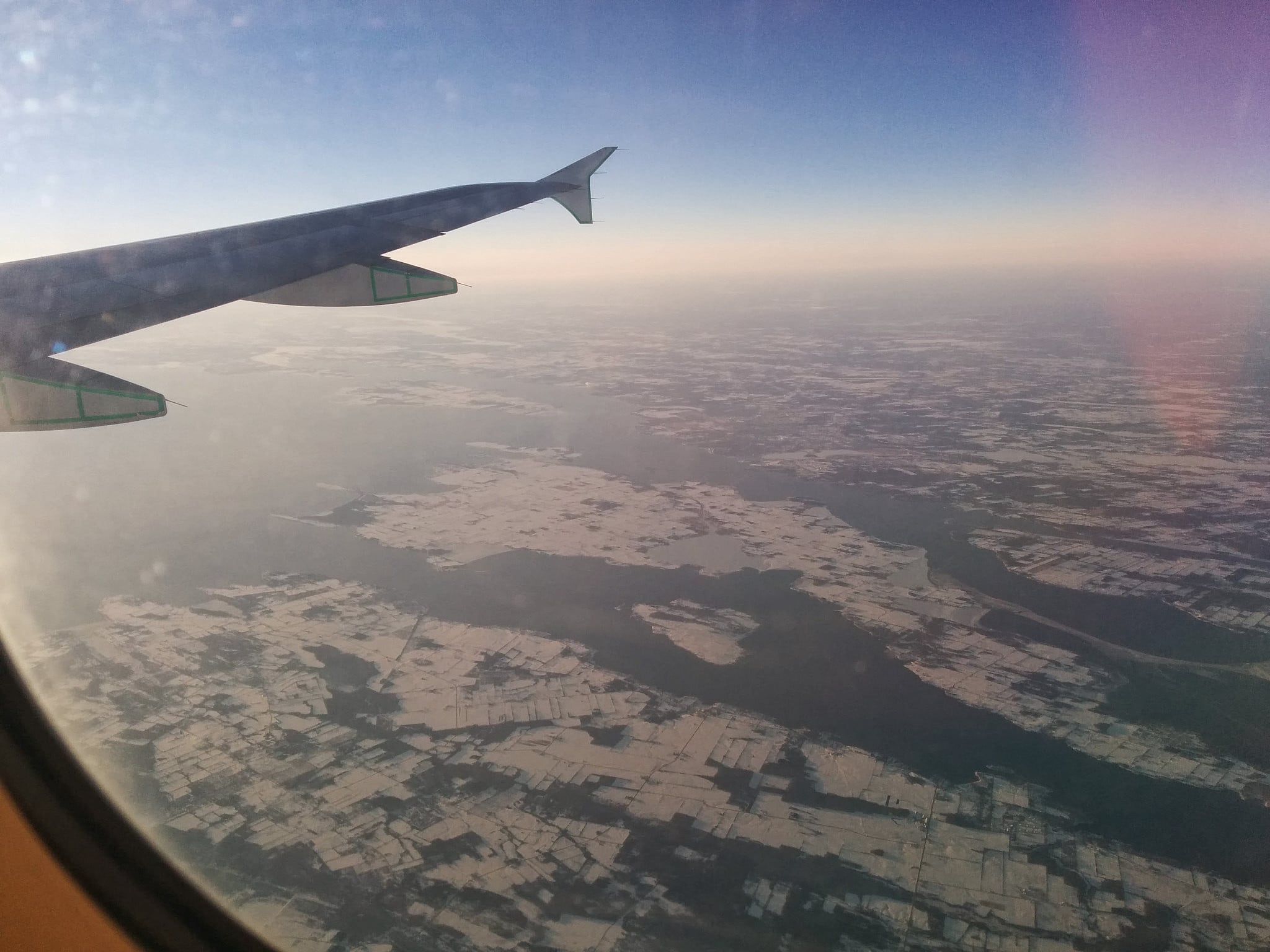
There’s a moment on every flight when the plane lifts — that impossible second between gravity and faith. I always hold my breath, not in fear but in recognition. We were never meant to stay on the ground.
So yes, I’m coming to Israel. I’ll take the usual precautions — sunscreen, insurance, hope. But the real safety is in the belonging, in the act of being part of a people who keep walking forward.
The covenant was never about safety; it was about presence. God didn’t promise that the path would be easy — only that we wouldn’t walk it alone.
The world is unpredictable, but staying still has never saved anyone.
Some journeys are safest when you stop checking the odds.
The past two posts — Were You Tempted to Cheat? and The Risk Assessment — have been little segues: moments to pause, smile, and think about authenticity, courage, and the odd places faith shows up (even at 30,000 feet).
Next week I’ll be resuming my main series exploring belief, belonging, and moral responsibility — the larger journey that began with The Right to Speak.
In the meantime, I hope these interludes offered a breath between heavier themes. Sometimes the “in-between” pieces reveal the most truth.