From Kibbutz to the global stage
The Road to Gaza’s Rebuilding — Between Vision, Interests, and a Sea of Ruins
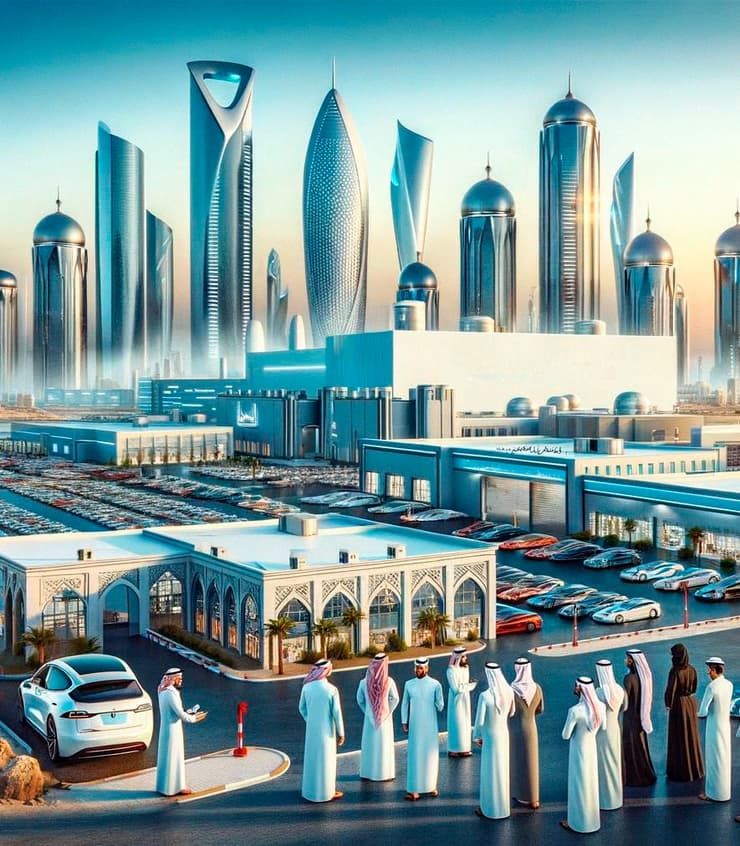
Image: From humanitarian aid to electric vehicle production — the American “Gaza 2035” vision proposes an industrial future for northern Gaza. (AI-generated rendering; Israel PMO)
The Road to Gaza’s Reconstruction — Between Vision, Interests, and a Sea of Ruins
Following my September 12 analysis, published just three days after the failed assassination attempt against senior Hamas officials in Doha, I argued in The Times of Israel that Donald Trump’s ceasefire plan between Israel and Hamas could reshape the regional landscape.
In the weeks since, my post — which also explored the concept of an artificial island off the coast of Gaza as part of a long-term reconstruction plan — has drawn over 17,000 views and sparked vibrant debate on social media.
Now, with new developments from Cairo, Paris, and Washington, it is time to connect the dots.
The Sharm el-Sheikh Summit and the “Reconstruction Triangle”
At the October 13 Sharm el-Sheikh Summit, Egypt was granted an official mandate to lead Gaza’s reconstruction process.
President Abdel Fattah el-Sisi announced that a follow-up international conference will convene in Cairo to discuss funding mechanisms, project priorities, and the division of responsibilities among partner states.
This summit effectively shaped a “Reconstruction Triangle”:
- The American vision (Trump)
- The regional plan (Egypt)
- The international framework (Sharm Summit and France’s upcoming Paris Conference)
The American Initiative: Rafah as a Pilot Zone
According to reports from Axios and Israel’s Channel 12, Trump’s advisers propose beginning reconstruction in areas outside Hamas control, primarily Rafah, near Egypt’s border.
The goal is to transform Rafah into a “demonstration zone” — a model for post-Hamas Gaza featuring new infrastructure, jobs, and international investment.
The proposed “MAGA Trust Fund” estimates $100 billion for Gaza’s recovery by 2035.
The February 2025 plan titled “Reimagining Gaza” includes ten flagship “Mega Projects,” among them “Gaza Trump Riviera & Islands” — world-class resorts on artificial islands modeled after Dubai’s Palm Island.
The US vision positions Gaza as a Mediterranean economic and tourism hub, led by major corporations such as Bechtel and Jacobs, and involving American, Israeli, and Gulf partners.
However, the Arab Center in Washington — affiliated with the Doha-based Arab Center for Research — harshly criticized the initiative in an article titled “A Blueprint for Dispossession, Not Reconstruction.”
It accused the plan of seeking to displace Palestinians under the guise of development, signaling Qatar’s growing skepticism toward both Trump and Cairo.
Egyptian and European Initiatives
Egypt is preparing for the Cairo Reconstruction Conference in November, while France announced plans for a parallel international conference in Paris under UN sponsorship.
Both aim to define coordination mechanisms and supervision frameworks — forming the foundation of what is increasingly referred to as the “Great Trust for Gaza.”
Egypt’s plan, endorsed by the Arab League in March 2025, outlines a $53 billion reconstruction program to be completed by 2030.
It includes artificial islands off Gaza’s coast — one large island near Gaza City and two smaller ones near the Muassi area — as well as a commercial port, fishing harbor, airport, industrial zone, and beachfront promenade.
President Macron’s Paris conference will complement these efforts, offering an independent European platform.
UN-affiliated reconstruction plans already estimate the total financial framework at around $70 billion.
Israel’s Approach: Turning Rubble into Renewal
In Israel, new research within the IDF Intelligence Branch and academia explores a bold engineering-environmental idea: using millions of tons of construction debris from Gaza to expand the coastline westward — creating new reclaimed land while mitigating sea-level risks.
This approach mirrors successful precedents in Beirut and Tel Aviv (Charles Clore Park), where treated debris was repurposed to create urban shorelines.
It represents a potential fusion of environmental recovery and geopolitical stabilization.
Three Sources of Complexity
1. Lack of Regional Consensus
Despite broad participation at Sharm el-Sheikh, key Arab powers sent only mid-level delegations.
Saudi Arabia, the UAE, and Oman maintain distance from Qatar and Turkey, which back Hamas and promote independent reconstruction.
Meanwhile, Riyadh and Abu Dhabi demand a return of the Palestinian Authority to civil administration.
This disunity hampers the creation of a unified international mechanism or donor coalition.
2. Israel’s Strategic Ambiguity
Jerusalem deliberately avoids endorsing any single plan, preferring to keep “the day after” undefined.
This ambiguity preserves security control (e.g., along the Philadelphi Corridor) while maintaining political flexibility.
Right-wing ministers, such as Finance Minister Bezalel Smotrich, have even suggested future Jewish resettlement in Gaza, signaling ideological tensions beneath the reconstruction rhetoric.
3. Weak International Institutions
Institutions once central to postwar reconstruction — the World Bank, IMF, and regional development banks — have lost influence and credibility.
Without a strong coordinating body, the risk grows of overlapping projects, lack of transparency, corruption, and reduced safety standards, turning recovery into a potential economic free-for-all.
Trump: Mediator or Flashpoint?
Trump’s vision of “Peace through Prosperity” hinges on complex diplomacy:
- Qatar & Turkey back Hamas and reject PA involvement.
- Saudi Arabia & UAE insist on PA-led governance.
- Egypt champions the Arab League-approved plan.
- France & the UN await official endorsement.
- Israel remains deliberately vague.
Trump may attempt to bridge these divides through a multilateral economic framework:
Egypt manages, Saudi Arabia funds, the PA legitimizes, Europe and the UN supervise, and the US provides corporate leadership.
But for now, this remains an aspirational outline, not a formal process.
A Moment of Convergence
Three emerging vectors —
- The American Rafah pilot,
- International reconstruction conferences, and
- Israel’s coastal expansion concept —
are gradually forming a comprehensive regional roadmap for Gaza’s recovery, blending security, environmental, and economic dimensions.
That these initiatives are evolving almost simultaneously, only weeks after my initial post, suggests a global shift — from war management toward the architecture of hope.
Related Topics
Related Posts