Thinking about 'Resilient Zionism'
The Same Sky, the Same Land, a Different Generation
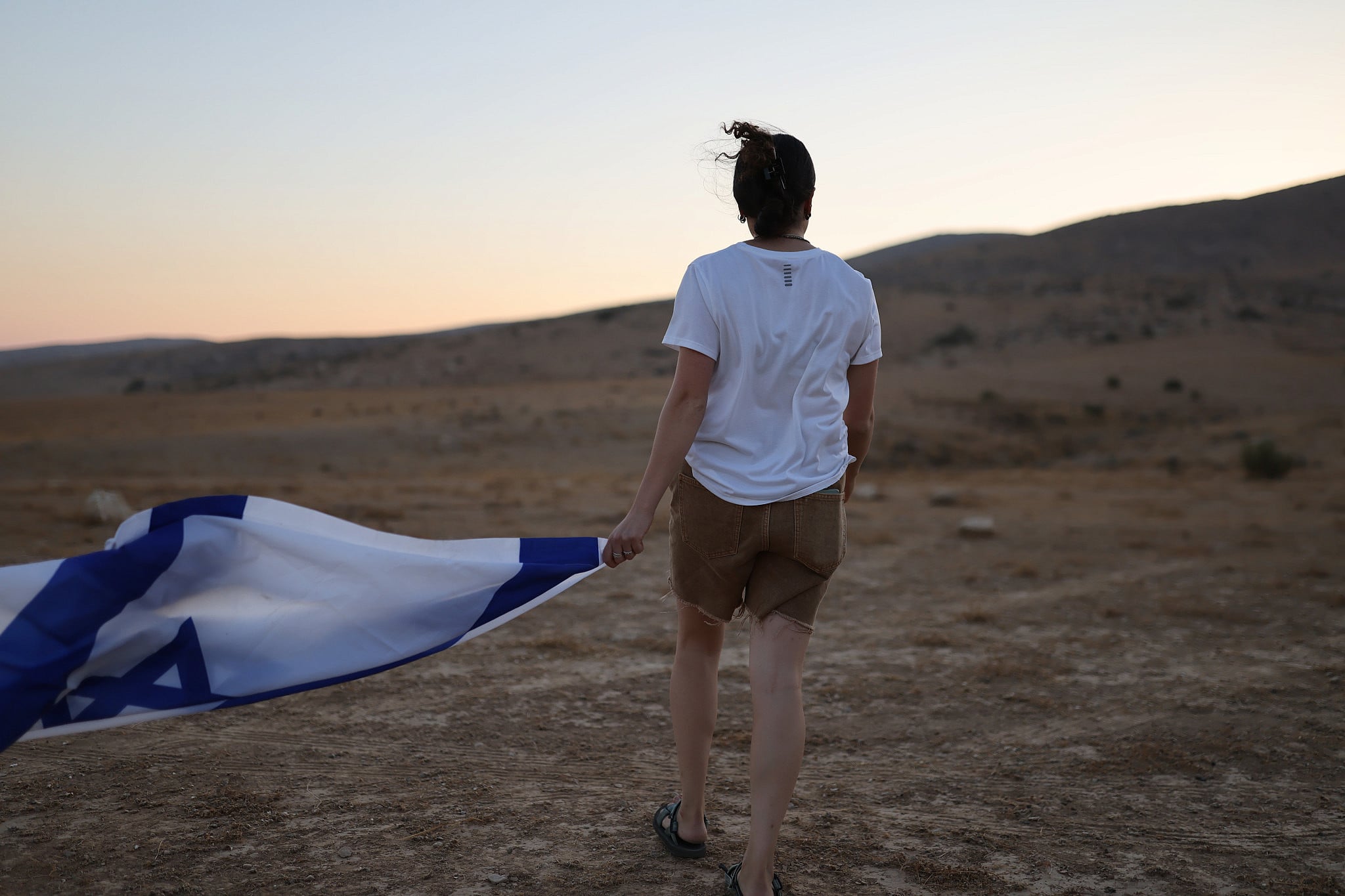
Member of Garin Yachad at the site in Mevuot Arad where the community will be established
There is something almost theatrical about the opening of this week’s Torah reading of Parshat Haazinu.
As Moshe approaches the end of his life, he does not simply address the people standing before him. He calls on the universe itself:
“Give ear, O heavens, and I will speak; and let the earth hear the words of my mouth.”
Why heaven and earth?
Rashi explains that Moshe summons enduring witnesses. Human generations come and go, but heaven and earth remain. They will testify to the covenant between the Jewish people and G-d long after Moshe and his listeners have disappeared.
But perhaps there is another dimension to the imagery.
The covenant Moshe describes is not intended to remain suspended somewhere between theology and history. It is meant to become physical. It is lived through rain and soil, harvest and settlement, community and responsibility. Heaven and earth are not merely witnesses to the story. They are where the story happens and they are an intrinsic part of the story itself.
This thought has been occupying me as our Yachad community moves closer to turning a long-discussed dream into something tangible. For two years we have spoken about establishing a new community in the Negev: a mixed religious and secular Zionist community built around shared responsibility, connection to the land, resilience, agriculture and a commitment to building something together. We are now beginning to stand on the land itself. Plans are becoming infrastructure decisions. Ideas about agriculture are becoming questions about water, crops and economics. Conversations about community are becoming decisions about education, culture, governance and what sort of society our children will actually grow up in.
There is an enormous difference between believing in settling the Negev and actually preparing to move your family there and build a community from scratch. And perhaps that is where Haazinu meets Yom Kippur.
Yom Kippur is often described through the language of forgiveness. But its emotional power comes, at least for me, from something deeper: covenantal responsibility.
For one day we strip away many of the distractions that allow us to avoid asking uncomfortable questions. What am I doing with the life I have been given? What responsibilities have I accepted? Where have I fallen short? And perhaps most unsettlingly: what happens when the things I claim to believe in begin making demands upon me?
In Israel, Yom Kippur carries another layer of memory. For more than half a century, the day has also carried the echo of 1973 — of men called suddenly from synagogues and homes to the front, of families left waiting, and of thousands who were killed or wounded in a war that permanently marked Israeli society.
For my generation, and perhaps even more for our children’s generation, that history raises an uncomfortable question. What responsibility do we carry toward those who paid such a price for the existence and security of this country?
We have been privileged to witness the answer given by so many heroic soldiers, reservists and their families over the last three years. Given this it is acutely clear that for me remembrance cannot end with ceremonies, sirens or stories.
As we enter into Yom Kippur some 36 days prior to the upcoming Israeli elections questions such as are we building a society worthy of that sacrifice? Are we strengthening the communities, institutions and landscapes that make Israel resilient? Are we willing to accept some measure of discomfort, uncertainty and responsibility ourselves in order to carry the story forward?
This tension has become increasingly real for me. There is excitement in the possibility of helping establish something new in the Negev. There is a sense of privilege in participating, however modestly, in a chapter of the much larger Zionist story. The closer Yachad comes to reality, the less comfortable it becomes to describe the project simply as inspiring.
Building a community means making choices that affect real people. Building an economy means creating livelihoods. Building an agricultural settlement means assuming responsibility for land and resources. Building a shared religious-secular community means learning to live with disagreement rather than merely celebrating diversity as an idea.
Significance carries weight.
That may be one of the messages Moshe leaves us in Haazinu . The Torah does not describe entering the Land merely as the culmination of a journey. Again and again, arrival creates obligation. The Land is not simply something to possess. It is something before which we become accountable. And perhaps that is why heaven and earth make such appropriate witnesses. The sky above us and the ground beneath our feet have no interest in our slogans. They respond to what we actually build.
Standing on the future site of the Yachad community recently, I found myself thinking about Moshe’s witnesses.
The same sky.
The same land.
Different generation.
And perhaps the same question:
Now that you are here, what are you going to build?
Related Topics
Related Posts