
The Signs That Would Prove Iran Has a Nuclear Bomb
Eight of the world’s nine nuclear powers detonated a device before anyone called them nuclear powers. The ninth is Israel, and its case has gone unresolved for 47 years.
Iran has detonated nothing. Two earthquakes raised suspicion of a secret test, one in Semnan province in October 2024 and one in Fars province in March of this year. Both turned out to be tectonic. The Comprehensive Nuclear-Test-Ban Treaty Organization (CTBTO), which operates a global network of more than 300 stations based in Vienna, compared waveforms from dozens of stations and found nothing resembling a blast.
Everything the world knows about Iran’s nuclear program comes from inspections, documents, uranium accounting, defectors, and an archive stolen from Tehran. None of it comes from an explosion. That distinction matters. The International Atomic Energy Agency depends on access that can be revoked overnight. The CTBTO does not. Its sensors listen whether Iran cooperates or not.
So what would it take to know, with evidence rather than inference, that Iran had crossed the line?
Five nuclear powers tested to announce themselves. The United States, the Soviet Union, Britain, France and China all detonated in the atmosphere before 1965. The Non-Proliferation Treaty later defined a nuclear-weapon state as one that tested before January 1, 1967. Three others tested to force recognition: India in 1974 and 1998, Pakistan weeks later, and North Korea six times from 2006 to 2017. All were detected within minutes.
Israel did neither. No confirmed test, no declared arsenal, no signature on the NPT. The closest call came on September 22, 1979, when an American satellite recorded a double flash over the Indian Ocean, the optical signature of an atmospheric detonation. The same satellites had caught 41 such flashes before, every one of them a known nuclear test. The CIA put the probability of a nuclear test at 90 percent plus. A White House panel concluded otherwise, and declassified memoranda show its staff agreeing to hear out the dissenting agencies “so that we can more safely ignore them.” What was missing then is what would still be missing now.
Verification rests on four pillars that arrive on different clocks.
The first arrives in minutes. An earthquake is a rupture along a fault; an explosion is a point source that pushes outward in every direction at once. The primary wave arrives sharp and compressional at every station. The secondary wave is weak. The ratio of body-wave to surface-wave magnitude has been a reliable discriminant for sixty years and remains a core CTBTO screening criterion. Depth settles the rest. Iranian earthquakes typically occur at ten or fifteen kilometers. A contained nuclear test must sit in the first few hundred meters of rock. The March 2026 event in Fars occurred at ten kilometers and was ruled out in days.
The second pillar arrives in days. Satellite radar measures ground movement to centimeters. North Korea’s 2017 test under Mount Mantap pushed the surface outward by up to 3.5 meters and then dropped it half a meter, all mapped from orbit.
The third arrives in weeks, if at all, and is the only one that proves fission. Xenon-133 and xenon-131m act as a clock. North Korea’s small 2006 test was confirmed by xenon detected in Canada two weeks later. In 2013 the gases arrived after fifty-five days. In 2009 and in the 1979 Vela event, nothing was detected. That absence is why the latter case remains open.
The fourth pillar arrives first. Preparing a test site is construction: tunnel portals, spoil piles, new roads, cabling, sealing, evacuation. An atmospheric test is off the table. No one has conducted one since 1980, and the fallout would be diplomatically catastrophic. Underground is the only option. Iran needs competent dry rock far from cities and aquifers, a mountain with a horizontal tunnel, the same geometry it has spent two decades mastering for other purposes. Satellites see that work months before any detonation.
Iran once planned such a site. The Amad Plan of the early 2000s included a subproject called Midan whose purpose was an underground test site. One of five planned warheads was earmarked for a test. The project ran behind schedule and was never finished. Documentation comes from the nuclear archive removed from Tehran in 2018.
What Iran did complete is more relevant. High-explosive work at Parchin and diagnostic testing at sites such as Golab Dareh validated implosion geometry, detonator timing and initiator design without producing nuclear yield. No seismic wave. No xenon. That part of the path can be walked in silence, and much of it already has been.
Detection has improved dramatically since 1979. A Vela-type event today would be characterized within hours. Yet every advance made it easier to detect an event and none made it easier to confirm one. If the rock holds and the xenon never escapes, the world is left with a signal that something happened and no proof of what.
That is the smaller limit. The larger one is that all four pillars detect tests. None detects weapons.
South Africa assembled six complete gun-type devices, each containing fifty to sixty kilograms of highly enriched uranium, and destroyed them in the early 1990s without ever detonating one. The world learned of them only when President de Klerk announced the program in 1993. Not a single monitoring pillar would have registered anything. The gun-type design is simple enough to trust without a full test. Little Boy was used on Hiroshima without one. Testing is essential for sophisticated or miniaturized designs. It is nearly optional for a country that wants one or a few devices rather than an arsenal.
For Iran the cost is higher still. A test consumes a weapon. The 440.9 kilograms of 60-percent enriched uranium the IAEA counted on the eve of the June 2025 attacks, and has been unable to verify since, would, if further enriched to 90 percent, provide material for roughly nine to ten devices. Using one to prove the design leaves eight or nine and no capacity to rebuild while enrichment facilities are under attack. The established powers tested with industrial depth behind them. Iran has an inventory.
Iran could finish enrichment, machine the metal, assemble the components and stop. No instrument on earth would register the finished weapon. That path is real, but it is not free. An untested device carries a doubt its owner cannot resolve: the moment of truth would be the moment of use, and a dud is worse than no weapon. Simply announcing possession without a detonation persuades no one who needs to be persuaded, and it would hand Israel and the United States the justification they have sought for years, at the moment the arsenal is smallest.
Both doors are closed. Test, and the world knows within minutes at the point of maximum vulnerability. Stay silent, and the weapon deters no one, because deterrence requires belief.
Israel cannot rely solely on the technical pillars of verification. Those systems detect tests, not arsenals. The only real defense against an Iran that has assembled devices without testing them is intelligence: continuous monitoring of possible test sites and, above all, reliable information on whether completed weapons already exist. No satellite and no isotope station will provide that knowledge. Without it, the danger is not only that Iran might one day test. It is that Tehran could decide to use what it has, untested, and that at least one of those weapons might work.
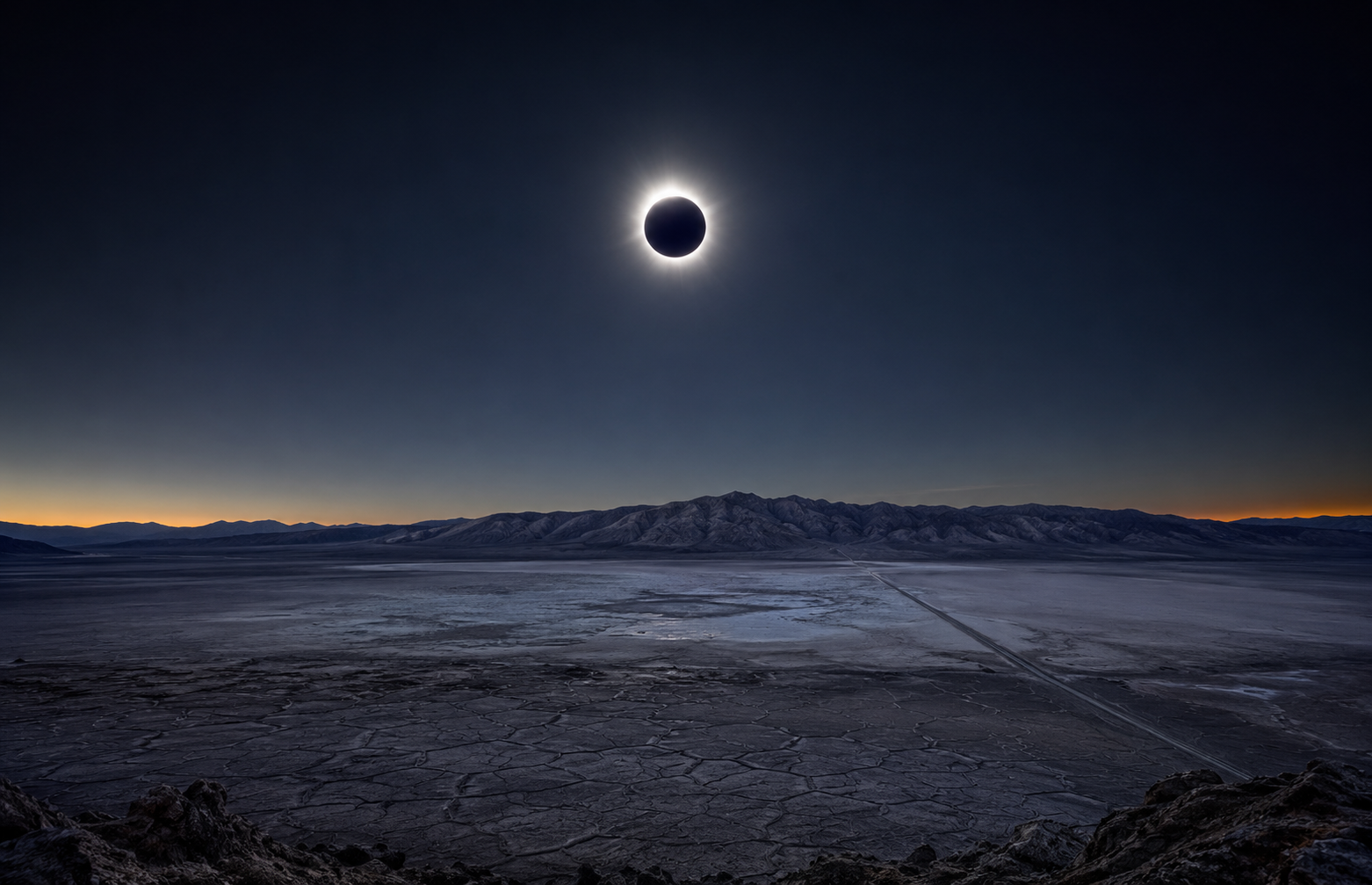
A nuclear weapon that has never been tested can remain hidden the way the sun is hidden during an eclipse. The shadow is temporary. Light always returns, and when it does, what was concealed becomes visible.
The question is no longer what signs would prove that Iran has tested a nuclear bomb.
The question is what signs, in the absence of any test, would prove that Iran already has one, and which risk Tehran is prepared to run: spending one of its nine or ten devices on a demonstration that advertises the rest, or keeping all of them and never knowing whether any will work until the day it matters.