
Writing Where Intelligence Meets Strategy
The Silence After Tartus
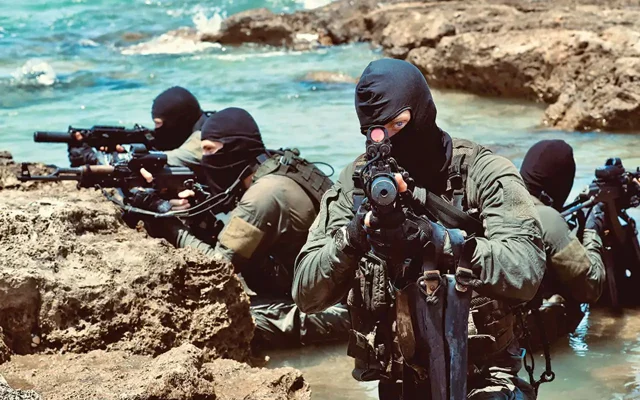
When I read Ehud Olmert’s recently published account of the operation that assassinated Muhammad Suleiman, the operational details were remarkable: Israeli naval commandos approaching his seaside residence near Tartus under cover of darkness, identifying one of Bashar al-Assad’s closest military advisers, firing three shots and disappearing back into the sea without being detected.
But another part of the story struck me even more.
For eighteen years, Israel said nothing.
Suleiman was hardly a household name, but inside Assad’s Syria he was a key figure. He was deeply involved in the country’s strategic weapons programs and closely connected to the secret nuclear project at Deir ez-Zor. Israel had long been suspected of responsibility for his assassination on August 1, 2008, but never publicly acknowledged it. Only now has a former Israeli prime minister confirmed what many had assumed for years.
That silence may be almost as interesting as the operation itself.
Less than a year before Suleiman’s assassination, Israel destroyed the nuclear reactor Syria was secretly building at Deir ez-Zor. Here too, Israel initially chose not to take responsibility. Assad knew what had happened. Israel knew that he knew. Yet neither side was forced to turn that shared knowledge into an immediate public confrontation.
The ambiguity had strategic value.
By remaining silent, Israel left Assad room to absorb a serious blow without forcing him to respond to a public humiliation. The threat had been removed and the message delivered, but the political cost of restraint had not been unnecessarily increased.
I believe that distinction is worth reconsidering today. We live in an era in which almost every major military operation is immediately followed by a battle over the narrative. Satellite images appear within hours. Officials brief journalists. Videos circulate online. Political leaders explain what was attacked, why it was attacked and what message the operation was intended to send.
Some of that is necessary. Democratic governments owe their citizens accountability. Allies may need reassurance, and adversaries sometimes require an unmistakable warning. But publicity and strategy are not always the same thing. A military success does not automatically become more valuable because it is publicly advertised.
Assad did not need an Israeli press conference to understand who had destroyed the reactor at Deir ez-Zor. Nor did Syria’s senior leadership need an official statement from Jerusalem to understand the significance of Suleiman’s assassination. The people who needed to understand the message already understood it.
Public acknowledgment, however, could have changed the political calculation facing Assad. Instead of asking only whether retaliation served Syria’s interests, he would also have had to consider the domestic and regional cost of appearing unwilling to respond to an Israeli action that Israel itself was publicly celebrating.
Leaders do not make such decisions on military calculations alone. Prestige, domestic politics, allies and public expectations can narrow their freedom of action.
Sometimes deterrence is not only about demonstrating the ability to hurt an adversary. It is also about leaving that adversary a politically acceptable path not to retaliate.
Silence can provide that path.
This is not an argument for secrecy in every circumstance. The Middle East of today is very different from the Middle East of 2008, and communications technology has made strategic ambiguity far more difficult to maintain. There are also situations in which public acknowledgment is essential precisely because a country wants to establish a clear red line.
But the Suleiman affair reminds us that a military operation does not end when the target has been hit.
Political leadership must also ask what happens afterward. How will the adversary interpret the action? What pressures will it face? Will public acknowledgment strengthen deterrence, or will it make retaliation more likely?
There is a striking contrast in Israel’s approach to Syria during those years. Israel acted against the nuclear reactor because it regarded the threat as too serious to leave unresolved. Yet after acting, it showed little urgency to receive public credit. The objective was to change reality, not to dominate the news cycle.
The same principle can be seen in Tartus. The operational achievement was remarkable, but Israel did not immediately turn it into a public demonstration of power. For eighteen years, the people who needed to understand what had happened understood it.
To me, that may be the most important lesson of the Suleiman affair. Silence is not the absence of strategy. Sometimes it is part of strategy. There are moments when a country needs the world to know exactly what it has done. There are others when the adversary already understands the message, and saying more achieves little except to make restraint more difficult.
The challenge for political leadership is knowing the difference.
Related Topics
Related Posts