
The Silent Strategy Against Western Democracy
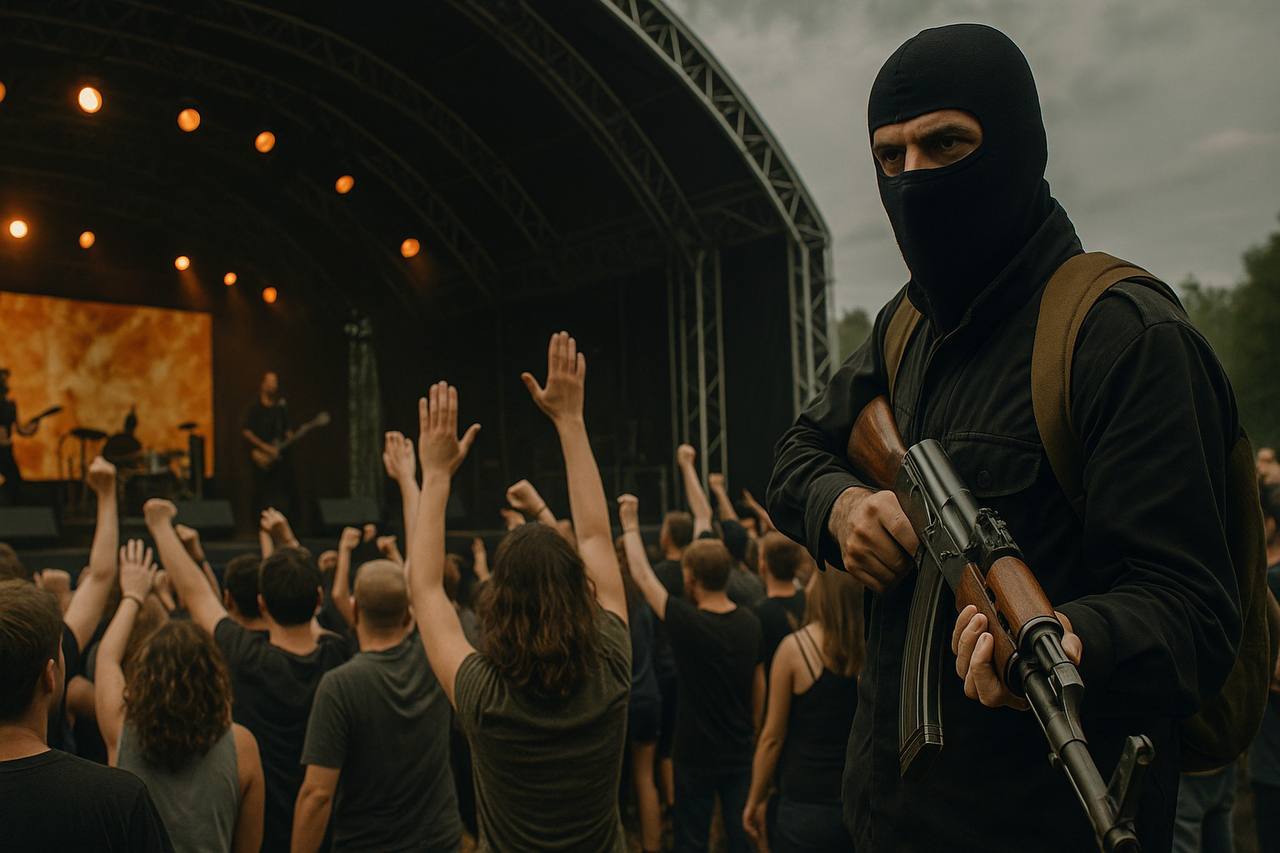
In recent years, the world has witnessed a disturbing pattern of terrorist attacks targeting public celebrations and carnivals in Western countries. From Christmas markets in Germany, France, to Jewish festivals such as Rosh Hashanah, Hanukkah, and even music events like the Ariana Grande concert in Manchester and Nova festival during October 7th in Israel—all have been transformed from gatherings of joy into scenes of terror and death by Islamic terrorists using similar methods.
These incidents are not isolated terrorism acts but part of a broad, long-term strategy orchestrated by an anti-democratic axis, primarily directed by authoritarian regimes in the East.
Just as Western democracies have sought to export their ideological framework of liberalism and democratic governance eastward and criticize the lack of freedoms in authoritarian countries, Eastern powers are countering by undermining democracy from within.
Their goal is to portray democratic societies as chaotic, divided, and dysfunctional, ultimately leading to their collapse. This strategy rests on two ideological pillars: the “psychology of grief” and “terror and societal division.” By creating persistent fear, grief, and discord, these actors aim to erode the social fabric of the West, making it vulnerable to internal collapse or external domination and occupation.
Understanding the motivations behind these attacks and the mechanisms of this anti-democratic strategy is crucial, as failing to counter it could lead to civil unrest, the weakening of state structures, or even World War III.
The Pattern of Attacks on Celebrations
Just as in 1979 in Iran, Shia Islamist clergy attacked ancient Nowruz celebrations and music performances, issuing fatwas declaring them haram, similar attacks on celebrations have been promoted in the West.
Over the past decade, terrorist attacks have increasingly targeted festivity symbols and collective unity in Western societies. In December 2016, a truck plowed into a Christmas market in Berlin, Germany, killing 12 people and injuring dozens. In a similar event in Strasbourg, France, in 2018, a gunman attacked a Christmas market, resulting in several deaths. In December 2024, a similar attack occurred again in Magdeburg, Germany. Dozens of such plots have been foiled before they could be committed.
These are not random terrorist events, they target the heart of celebrations where families and communities gather for joy. Jewish festivals have also been targeted: On October 27, 2018, a synagogue in Pittsburgh was attacked during Shabbat services, killing 11 and wounding 7 others; a knife attack in Monsey, New York, in 2019; an attack on a synagogue in Manchester in 2025; or the most recent one targeting Hanukkah celebrations in December 2025 on Bondi Beach, Australia.
Even non-religious events have not been spared. The bombing at the Manchester Arena in 2017 during an Ariana Grande concert killed 22 people, while the Nova music festival in Israel in 2023, attended mainly by young fans, turned a night of music and excitement into tragedy. These attacks share one thing: they disrupt moments of collective joy and plant seeds of fear and sorrow.
But why target joy? Because in democratic societies, shared celebrations strengthen social bonds, cultural identity, and resilience, elements that authoritarian regimes view as threats to their crowd mind control-oriented models.
Geopolitical Counteraction: Weakening Western Democracy
The West’s promotion of democracy through institutions like the European Union and NATO, which ultimately uphold the rule of law, along with criticizing human rights violations in China, Iran, and Russia, has long angered Eastern authoritarians. These regimes see democratic expansion as an existential threat that encroaches on their spheres of influence. In response, they employ a counter-strategy: not direct attack, but soft sabotage to make democracy appear ineffective.
Russia, China, Cuba, Iran, and Venezuela, in particular, lead this axis, threatening the internal stability of the West. By financing or inspiring proxy actors from terrorist groups to online trolls, they aim to accelerate the West’s decline.
This is not merely a conspiracy theory; declassified intelligence reports and investigations, such as the Mueller Report on Russian election interference, highlights systematic efforts to exploit divisions. The ultimate goal of this project is to demonstrate that democracy leads to chaos and to justify their own authoritarian models on a global scale.
First Ideological Pillar: The Psychology of grief
The first pillar of this strategy is the “psychology of grief” a deliberate effort to oppose social joy. Authoritarian systems rely on social control, and a happy, motivated population is harder to suppress. Joy and creativity foster dissent inclusivity and collective unity, elements antithetical to regimes that depend on apathy and fear. By targeting celebrations, attackers create widespread, lingering pain that wears down public morale.
Psychologically, sorrow creates a cycle of isolation: people avoid public gatherings, leading to dissent and reduced trust in social institutions. After the Berlin Christmas market attack, attendance at similar events dropped, and security measures increased—such as bollards in city centers, turning festive atmospheres into fortified zones. This permanent state of mourning makes societies vulnerable, as grieving communities are less likely to mobilize against external threats or internal injustices.
Eastern powers amplify this through propaganda. Russian state media and the Islamic Republic often portray Western societies as corrupt and doomed, framing tragedies and terrorist attacks in ways that highlight democratic failure to justify themselves. Chinese, Cuban, and Islamic Republic media similarly emphasize Western “chaos” and crises, contrasting it with their own “harmonious order” derived from authoritarianism. The result? A subtle suggestion that joy in democracies is fleeting, making authoritarian stability seem preferable. In effect: “If we suppress you in China, don’t protest because the alternative is this Western ‘mess.'”
Second Ideological Pillar: Instilling Fear and Societal Division
The second pillar involves creating fear and societal division, turning democratic openness against itself. This manifests through tactics like labelling, accusation, cancel cultural, and organized protests. Fear suppresses free expression: individuals self-censor out of fear, while divisions polarize the society and paralyses political establishment.
Another key mechanism is infiltration into Western decision-making institutions. Agents of Eastern powers penetrate mainstream media, policy bodies, and social networks.
For example, the case of Ana Montes, a former senior Defense Intelligence Agency analyst who spied for Cuba for 17 years! She even advised highest officials on Cuban affairs and was eventually imprisoned for espionage. More tangible examples include allegations of Russian agents funding both far-right and far-left groups in Europe, such as the 2019 revelations about Kremlin ties to Italy’s Lega party.
Social media moderator teams are another battlefield. Reports of infiltration by agents from Eastern governments like the Islamic Republic, China, and Russia into platforms like X (Twitter) and Facebook have led to the suspension of accounts critical of these regimes while amplifying divisive content.
Cyber armies or troll farms in St. Petersburg, Wuhan, and Tehran flood social media with misinformation, stoking fears on issues from climate change and the environment to Scottish independence!
Even the climate change discourse has been weaponized. What began as a scientific debate has turned into a political mess, with Eastern-backed narratives accusing the West of hypocrisy or exaggerating apocalyptic scenarios to breed despair. These efforts foster multilayered impact: traditional media create doubt, social media amplifies it and widen divisions and street protests make it tangible.
Consider the pro-Hamas protests in Britain, the United States, and most European countries following the October 2023 attacks on Israel. While some participants genuinely advocate for Palestinian rights, the scale and intensity suggest a global organization. These protests, often accompanied by divisive and antisemitic slogans, escalate into clashes with police and disruptions to daily life not to resolve conflicts but to inflame them. Many activists are linked to funding from Islamic Republic and Qatari sources together with Russian and South African bots amplifying the pseudo-discourse on social media.
In London and most European capitals, marches blocked streets, leading to arrests and divisive tensions between communities. In the United States, campus protests disrupted higher education and created an atmosphere of intimidation. These are designed to harass society, pit groups against each other, and portray democracies as incapable of maintaining order.
This polarization goes beyond traditional left-right politics. Eastern strategies enhance far-left (communist-oriented) and far-right (fascist) extremes, creating false dichotomies. For instance, Russia’s support for Antifa groups and far-right militias in the West aims to escalate conflicts, as FBI reports on foreign interference in the 2020 protests indicated.
The Role of Mysterious China and Closed Russia
These operations are not accidental; they are directed by China, Russia, and with participation of the Islamic Republic, Cuba and Venezuela, which see Western division as key to their global dominance. Russia’s “Active Measures” doctrine, dating back to the KGB, involves disinformation. China’s “United Front Work” expands influence through diaspora communities and economic leverage. Together, they erode Western unity and make alliances like NATO fragile.
The stakes are high: unchecked, this could lead to democratic backsliding, as seen in the flirtations of some Eastern European countries with authoritarianism. Worse, it increases vulnerability in wars like Ukraine, where internal Western discord delays or prevents military aid.
Linking Moderate Forces and National Unity
The solution lies in building bridges between moderate parties and forces on both the left and right. We must examine shared threats like misinformation and raise them across political groups.
Media education, stricter regulations on foreign influence in social media, and robust intelligence sharing among security agencies are essential. Culturally, reclaiming joy through secured celebrations can challenge the psychology of grief —while simultaneously preventing the importation of predominantly mournful ceremonies from the Middle East into the West and religious gatherings in streets under the disguise of religious liberty.
Failure to act, however, risks escalation: internal divisions could ignite civil wars or weaken defense against Eastern aggression, potentially sparking World War III. By prioritizing cooperation among moderate political forces, democracies can consolidate their strength and bolster defenses against the anti-democratic axis.
Final Word
Attacks on Western celebrations are symptoms of a deeper strategy to destroy democracy, control, and occupy through terror-induced sorrow and division. This axis, led by Russia, China, and the Islamic Republic, exploits democratic openness to plant seeds of chaos and seeks to erode the constant vigilance needed to preserve freedom. By uniting moderates from both sides of the isle and strengthening social and cultural institutions, the West can preserve its values and avert catastrophe. Failing to do so would tilt the world toward lawlessness, and ignoring it would be profoundly destructive.