
The Sorcerer’s Apprentice: How The Left Lost Control Over Its Islamist Spirits
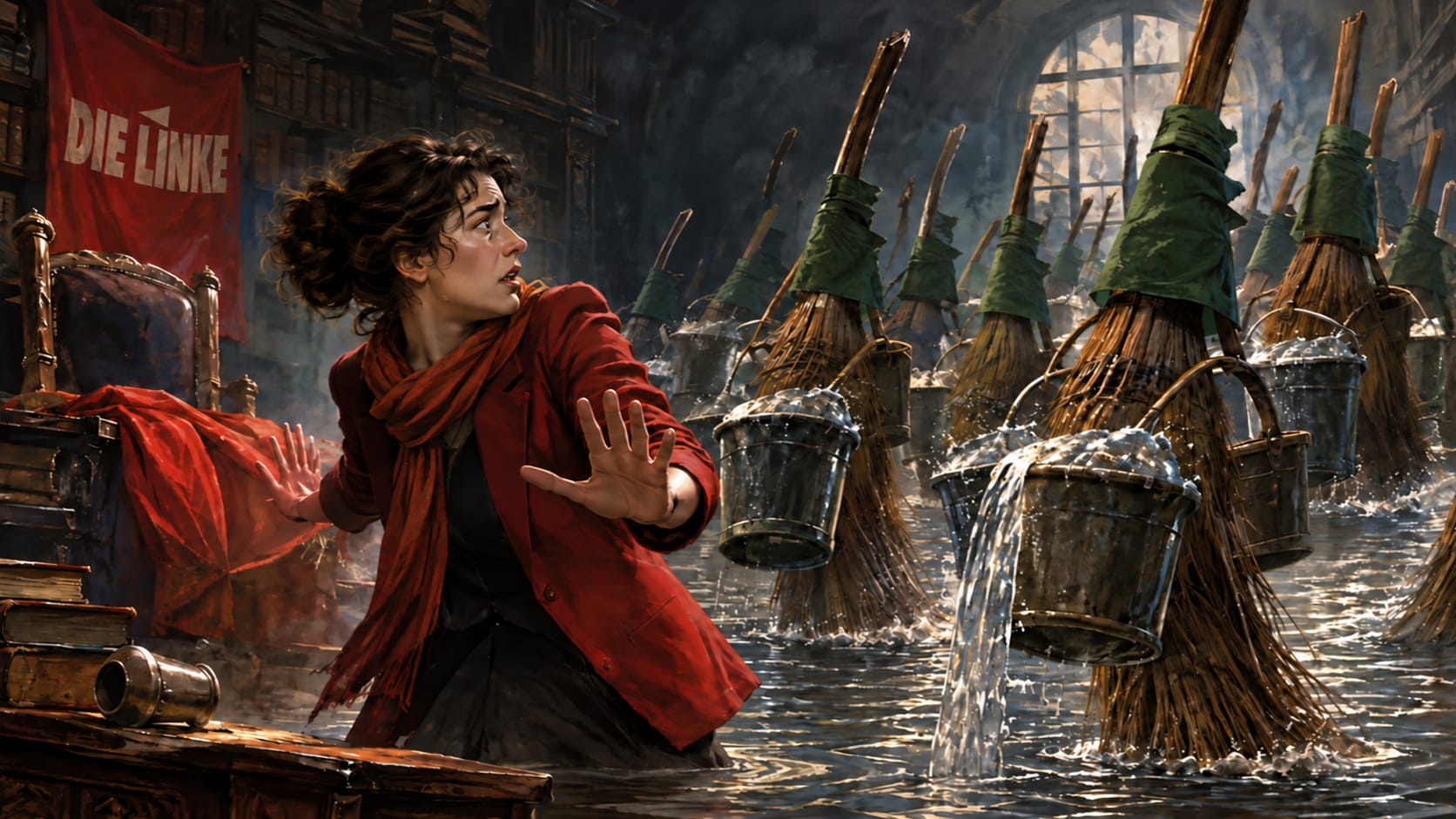
In 1797, German polymath Johann Wolfgang von Goethe published The Sorcerer’s Apprentice, a poem about a young apprentice who uses magic to make a broom carry water in his master’s absence. Initially delighted by his success, he soon discovers that he cannot stop what he has set in motion. The broom keeps working, the water keeps rising, and the apprentice is helpless. Goethe’s famous conclusion captures his predicament: “The spirits that I summoned, I now cannot rid myself of.”
More than two centuries later, the poem offers an uncomfortable metaphor for parts of Europe’s political Left.
In pursuit of broader political coalitions and votes from a largely segregated migrant population, some left-wing movements have increasingly embraced radical anti-Israel activism and established relationships with Islamist networks.
The growing visibility of Hamas sympathizers and other extremist actors in sections of Europe’s protest movements raises an uncomfortable question: have parts of the Left become so invested in these alliances that they are no longer willing or able to challenge their more radical partners?
Germany, and Berlin in particular, offers a revealing case study.
German intelligence authorities have repeatedly warned about Hamas support structures operating in the country, even after Hamas was banned in Germany in 2023. Berlin’s Office for the Protection of the Constitution has also documented the activities of organizations and networks associated with foreign-related extremism, including the United Palestinian National Committee (VPNK).
The political implications became particularly apparent after Berlin’s September 2026 state election, in which Die Linke (The Left) emerged as the strongest party. Its leading candidate, Elif Eralp, is now seeking to become the city’s Governing Mayor.
On October 29, Der Spiegel revealed an extraordinary episode. During the authorization process for an interview, Eralp’s office accidentally returned a document containing internal comments. Discussing Palestinian activist Ibrahim Ibrahim, who has praised former Hamas leader Yahya Sinwar as a martyr and hero, Eralp wrote that she and her husband were afraid of “these people.” She also explained that she could not put herself and her family in danger for the magazine.
Ibrahim had attended Die Linke’s election-night celebration in September. His presence raised questions about the relationships between sections of the party and activists associated with networks scrutinized by German authorities.
Berlin is not an isolated case. Across Europe, the war in Gaza has brought together otherwise very different political constituencies. Secular left-wing activists, anti-globalization movements, Palestinian nationalist organizations and Islamist actors have sometimes found common ground in their opposition to Israel but also in their opposition to the liberal democratic order of the West. Their motivations and ultimate objectives are not necessarily identical. Yet shared demonstrations, political platforms and alliances can provide extremist actors with visibility, legitimacy and access to mainstream political spaces.
These political alliances come at a price. When parties repeatedly overlook the ideological commitments of their partners, the distinction between tactical cooperation and political accommodation begins to erode.
Islamism, particularly in its authoritarian and theocratic manifestations, rejects many of the freedoms European left-wing parties claim to defend. Its hostility towards secular institutions, religious minorities, individual liberties and women’s rights represents a fundamentally different vision of society.
Goethe’s apprentice eventually discovers that summoning forces he does not understand is not the same as controlling them. He can call upon the spirits, but he cannot make them obey. Only the return of his master, who breaks the spell, saves him.
There are two fundamental differences between Goethe’s poem, written in 1797, and Europe in 2026. Both are disturbing.
First, the enchanted water-carrying brooms caused a mess, but they did not threaten the apprentice’s very existence. Today, the political Left might literally drown.
Second, there is no master coming to save the Left from the forces it has unleashed. To borrow Goethe’s words: The spirits that they summoned, they now cannot rid themselves of.