The Sorrow and the Pity Revisited: Justes Femmes
Marcel Ophuls’ death earlier this year brought new viewers to his 1969 holocaust documentary, The Sorrow and the Pity, including myself. “[It] shattered the comforting myth that most of France had resisted the Nazis during World War II,” wrote Thomas Adamson in the Times of Israel. The film also raised highly uncomfortable facts of how French authorities persecuted Jews independently of the Nazi regime, detailing the complicity of Marechal Petain and Vichy laws in their persecution. The “ordinary” French citizens that Ophuls interviewed had looked the other way.
Gentiles who risked their lives to help Jews were absent from the Sorrow and the Pity and at the time of the film’s release, Ophuls heard from Simon Veil, a cabinet minister in France, and a survivor of Auschwitz and Bergen-Belsen, that their absence was a major flaw in the documentary. From the point of view of the present, we know that thousands of rescuers were present in France at that time. The list of the French Righteous Gentiles now includes 4,255 individuals (Les Justes parmi les Nations – Comité Français pour Yad Vashem). This is not to say that Ophuls intentionally overlooked the Les Justes. When he finished his film in 1969, only 41 French citizens had been found who met Yad Vashem’s criteria and none of these early honorees were from Clermont-Ferrand, the city Ophuls chose as a base for the film.
“Did you know any Jews?” asks an interviewer to a pharmacist, Marcel Verdier, halfway through the film. “I knew more Jews than I’ll ever know again in my life!” he replied. Verdier went on to describe a colleague who he recalled was “remarkable” and who had a daughter, “a very well-mannered young woman.” “Nobody wanted to take their children. He had been to all the pharmacies and [he] warned them not to take the girls.” At this point, the interviewer asks, “Who was ‘he?’” although the audience pretty much knows that the “he” is a person much like Verdier, someone who spent the war years with his head down.
In the Sorrow and the Pity, almost all of the interviews are with men, though a side question is sometimes fielded with a wife. The exception is a hairdresser, “Madame Solange,” who unlike Ophuls’ other subjects is somewhat ambiguous. We never find out her story, whether she betrayed others or not. Of course, much of what the women in France did, counted a great deal. The majority, some 60 percent of the French Righteous gentiles, are women. Some of these were married to men who were also Righteous or were the daughter or a mother of another Righteous.
The first person from Clermont-Ferrand to be honored by Yad Vashem was Gabrielle Remy, recognized in 1986. She had joined the Resistance and when another resistance activist she knew – Pierre Rozen—was arrested by the Gestapo, she convinced the authorities that Rozen was not actually Jewish. The young man was released, and Remy was also able to help Pierre’s brother, sister and mother, as well as other Jews. She herself was arrested in late 1943 and sent to the Ravensbrueck concentration camp but survived the war. To date, nine other women from Clermont-Ferrand have been honored as “Justes” as have five men.
Women from other countries were also active helping Jews in France. Only two American women have been honored as Righteous– Lois Gunden and Martha Sharp—and they both worked in Vichy France.
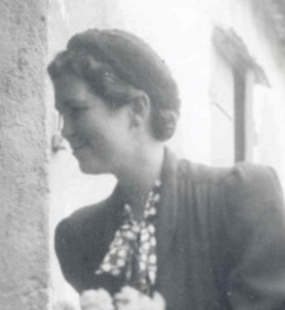
Lois Gunden, originally from Illinois, had caught the attention of the Mennonite Central Committee because of her facility with the French language acquired at the Mennonite affiliated Goshen College. She accepted their request to work in a children’s home near the Rivesaltes internment camp in the southwest of France. (Lois Gunden | Stories of Women Who Rescued Jews During the Holocaust) One day, German officers came to the home in Canet-Plage to take away a group of refugees. Ms. Gunden told them that the children were on an outing, and when they returned the next day, she told them that their clothing was being prepared and was still in the laundry. This time, the officers did not return. She had no illusions about the dangers facing the children in her care and worked with a network of French women to place young children with French families, if possible. Her legacy was much like a European Righteous who acted quietly without ties to US government officials. Of the American rescue workers in France, she was able to remain in the country the longest, from the Fall of 1941 until her arrest by the Germans in early 1943 and internment in Baden-Baden.
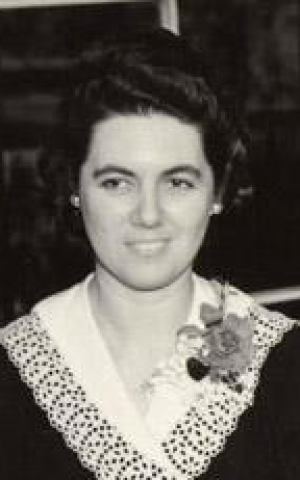
By contrast, Martha Sharp a volunteer with the Unitarian Service Committee, an American organization, tended to seek out the most senior official in any situation and draw support from an extended network. She was one of the first American volunteers to arrive in Vichy France during the chaos of 1940 and took the view that the apparent inhumanity of the regime may have been due more to inefficiency than antisemitism. She reached out to top officials in the Vichy government, including the president, Marechal Petain to try to convince him of the worthiness of her projects. She had more success with the top US consular official, Hiram Bingham and was able to work out a childrens’ party using block visas from the USA. Her work to collect the paperwork necessary for groups of refugees to leave France was emulated by European Quakers and Jewish organizations who arranged for several hundred children to leave in large groups. Martha Sharp spent the next decade raising money to help Jewish orphans to start a new life in Israel.
Martha Sharp, Lois Gunden, Gabrielle Remy, and the 2,000+ French women who succeeded as rescuers, present us with characters of intelligence and courage. In contrast to the pitiless clips of women paraded with shaved heads after the Liberation, as shown in Ophuls’ documentary, they were people with great dignity and agency. While there is no doubt that the conformity and passivity, as shown in the Sorrow and the Pity, characterized the majority of French citizenry, these exceptional women, Les Justes, show us what was possible, what may always be possible.