Rabbi and Social Activist
Featured Post
The soul of the nation: What Israel’s election is really about
Judaism mandates our leaders' active participation in the community's survival, from the strategic future to the rule of law, the draft, and a robust Oct. 7th inquiry
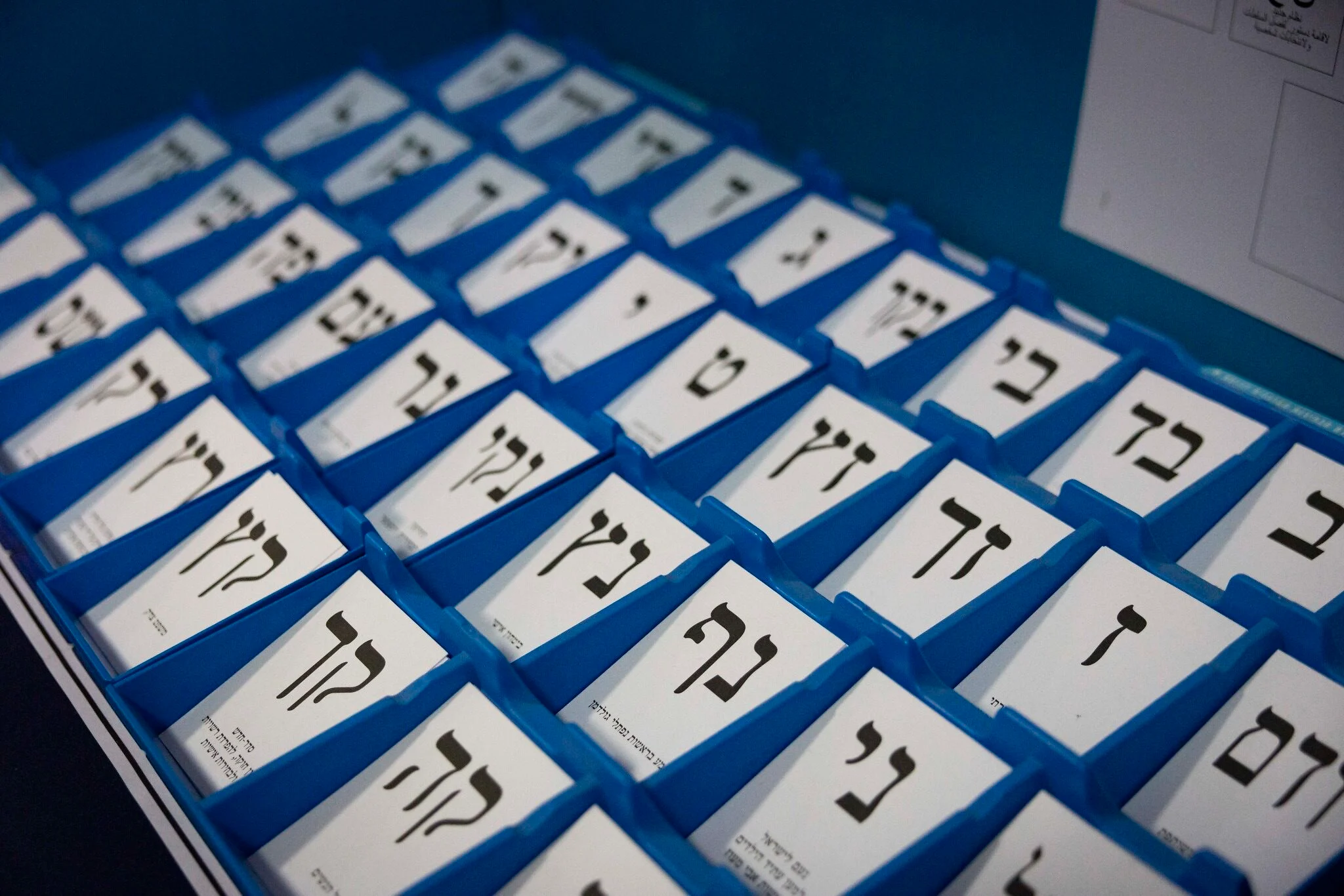
Ballot papers of various political parties are displayed at the Central Elections Committee warehouse in Shoham, ahead of Israel’s upcoming general election, October 14, 2026. (Yonatan Sindel/Flash90)
When Israelis go to the polls on Tuesday, the chatter will center on the familiar mechanics of political survival: coalition math, budget allocations, and regional deterrence. We will be invited to cast our votes based on who can best manage the economy, who can stand up to Washington, or who can keep our enemies at bay.
But once past the campaign slogans, this election is not a routine debate over policy. It is a fundamental confrontation over something much larger: what it actually means to be a Jewish and democratic state in 2026. This vote is a referendum on the soul of the country. It comes down to two simple concepts that have been stretched to their breaking point: responsibility and accountability.
Take a look at the fault lines running through Israeli society right now. They are not discrete political fights; they are connected by an identical moral thread.
Consider the draft debate surrounding the ultra-Orthodox community. For decades, military exemptions were treated as cheap currency in coalition negotiations. But after everything this country has endured since October 7th, when the burden of defense falls so heavily on the same families month after month — my family included — the issue is no longer just political. It’s about mutual obligation — Arvut Hadadit. Can a state claim to embody Jewish solidarity when one segment of society bears the ultimate sacrifice while another claims immunity from shared national defense? Jewish tradition has never celebrated standing idly by while your neighbor bleeds; it demands active participation in the community’s survival.
Nuance is essential here. Demanding an inclusive draft should not mean dismantling the great Torah institutions that enrich our nation and heritage. This need not be a zero-sum game; shared responsibility and a flourishing world of Torah study can — and must — coexist.
Likewise, the stalling of a formal national commission of inquiry into October 7th.
Throughout Jewish history, authority without accountability was viewed as a fatal corruption of leadership. From ancient kings to modern statesman, true strength requires taking ownership of failure – consider the case of King Saul, the Jewish people’s first monarch. A democratic country cannot function if its leaders shun scrutiny, and a Jewish state sacrifices its moral authority when those at the top evade responsibility for catastrophic failures on their watch. And so long as a significant portion of the public remains skeptical of the commission’s impartiality, those concerns cannot simply be dismissed. Rebuilding trust requires addressing those doubts directly and reassuring all sectors of society that the goal is truth, not political score-settling.
Look, too, at events in the West Bank. The broader political debate over settlements aside, recurring violence against Palestinian civilians by extremist elements — and the shameful lack of law enforcement that follows — strikes at our moral core. The Torah repeatedly commands us regarding the treatment of the stranger and the vulnerable, constantly reminding us of our own beleaguered history. Lawlessness that is tolerated or ignored for political convenience degrades both democratic equality under the law and the ethical standards that define us. Here too, probity requires acknowledging the full context: while the lawlessness of the so-called “hilltop youth” must be confronted, it often unfolds against a backdrop of Palestinian violence and provocation. Acknowledging this complexity does not excuse vigilantism, but it is necessary for understanding the reality on the ground.
Even our strategic decisions regarding Iran and its proxies boil down to this same core question: Are our leaders exercising sober, long-term stewardship over the country’s existence, or are critical national security choices being sacrificed for short-term political survival?
When you connect these dots, the real issue is evident/unambiguous. The draft, the inquiry, the rule of law in Judea and Samaria, and our strategic future are all facets of a single question: What kind of state are we building here?
A Jewish state cannot merely be a matter of demographics, a flag, or official calendar holidays. If Israel is to fulfill its purpose, its Jewish character must be actualized in its ethics — how it treats its citizens, how it dispenses justice, and how its leaders account for their actions. Democracy is not an alien concept that conflicts with Jewish identity. It is the practical structure through which these values are lived out in a modern sovereign nation.
When we cast our ballots, we must tune out the partisan white noise. We are not simply choosing a prime minister or a ruling coalition; we are deciding on a direction for Israel’s soul. May our next government be defined by accountability and responsibility — for these values stand at the very heart of the Jewish tradition.
–
Rabbi Seth Farber is the founder of ITIM: The Jewish life Advocacy Center and is the rabbi of Kehilat Netivot in Ra’anana where he lives with his wife Michelle and their family.
Related Topics