The Spanish Inquisition: When Religion, Politics, and Power Walked Hand in Hand

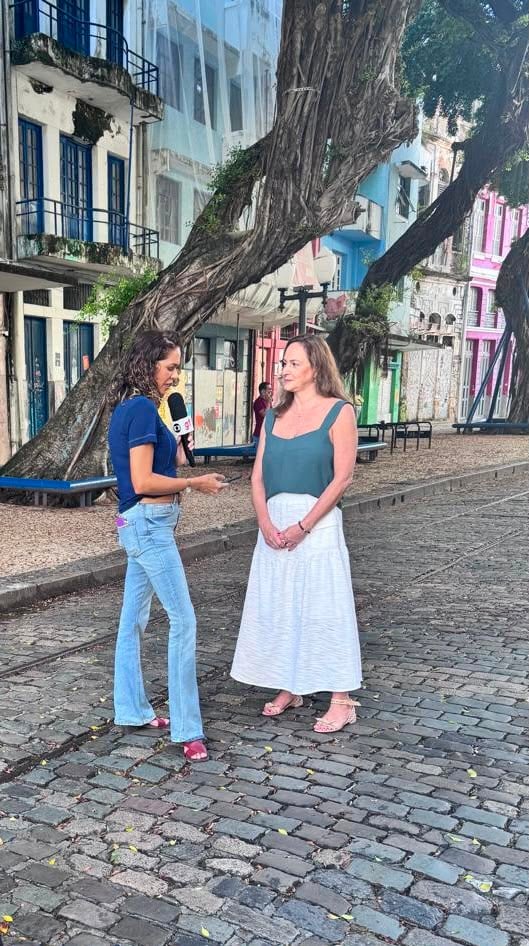
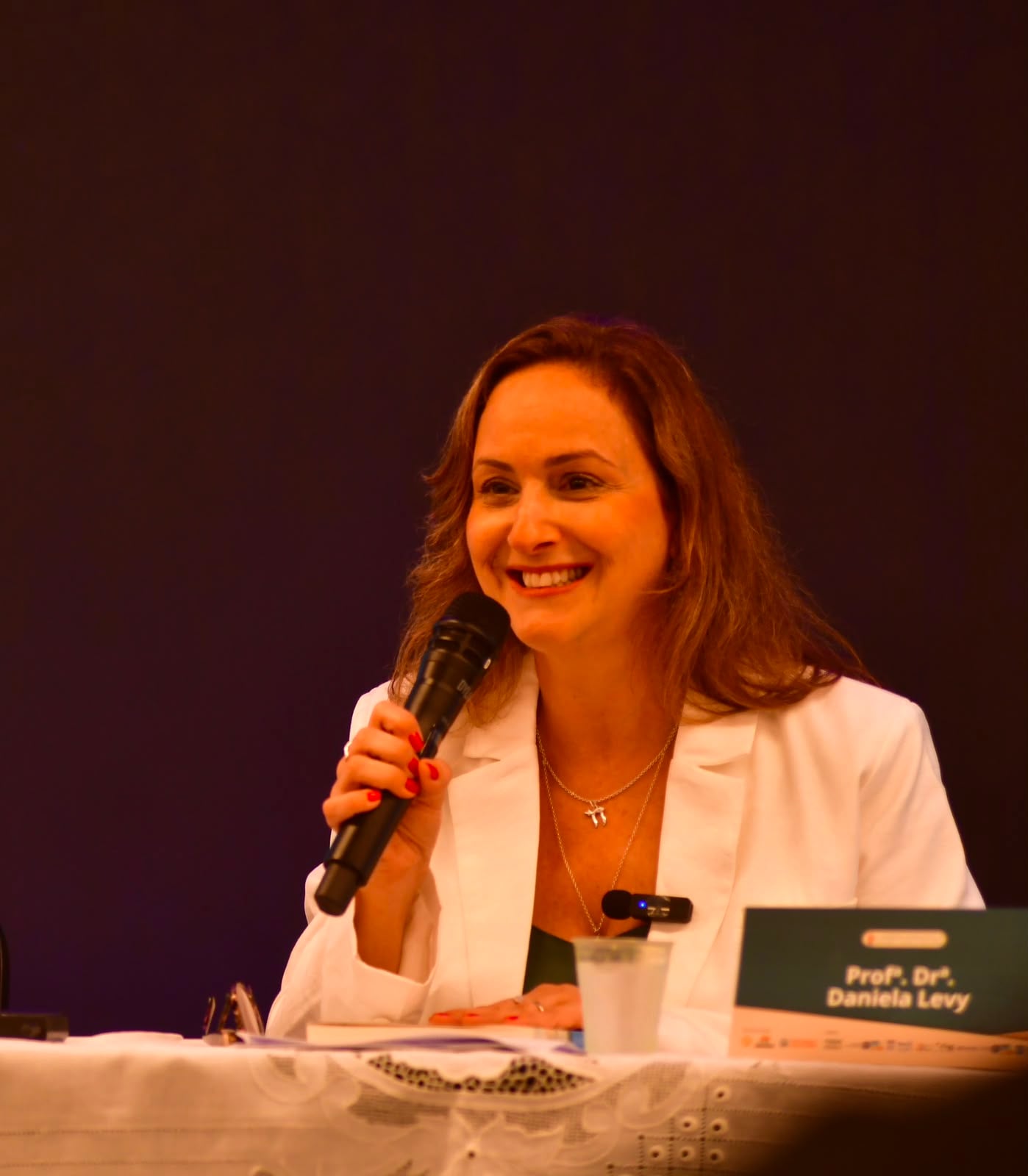
In this article, we are joined by Daniela Levy, one of the most respected voices in Brazil when it comes to the history of the Inquisition.
Daniela Levy – Profile and Career
Daniela Levy is a historian active since 2000, having pursued her academic training under the guidance of Professor Anita Novinsky, with whom she worked until Novinsky’s passing. She holds a PhD in Social History from the University of São Paulo and currently serves as Vice President of CRIAN – Centro de Referência sobre Inquisição Anita Novinsky/SP.
Education and Research
- Master’s and PhD in Social History from USP, with research focused on the Inquisition and its impact on Iberian and Brazilian society.
- Published her master’s thesis on the Jews who left Recife for New York (De Recife a Manhattan: Jews in the Formation of New York, Ed. Planeta/CEPE), a work widely consulted, especially in Brazil’s Northeast.
- Co-author of The Jews Who Built Brazil (Ed. Planeta), the result of a ten-year project in partnership with Eneida Ribeiro and Lina Gorenstein.
- Organizer of The Inglorious Struggle of Father Antônio Vieira and author of numerous book chapters and articles on the Inquisition, New Christians, and antisemitism, published both in Brazil and abroad (United States and Israel).
Curatorial and Public Engagement
Daniela Levy has distinguished herself as a curator of exhibitions on the Inquisition and Jewish history in Brazil. Her work includes:
- Exhibitions in partnership with the Recife Synagogue, the first synagogue-museum in the Americas.
- An exhibition on the Inquisition at the Jewish Museum of São Paulo.
As a lecturer, she focuses on the discriminatory nature of the Inquisition and its lasting impact, particularly on how Iberian (Portuguese and Spanish) mentalities were transferred to Brazil, shaping practices of exclusion and prejudice.
Research Center
Levy is currently leading the creation of a new research center based on the library of Professor Anita Novinsky. The collection brings together documents gathered from archives in Europe, the United States, and Israel, with the goal of making the center accessible and active for scholars interested in the history of the Inquisition and Jewish presence.
Daniela Levy has established herself as a leading authority on the Inquisition, New Christians, and antisemitism, contributing to the understanding of how discourses of intolerance were constructed and perpetuated across centuries. Her work combines academic research, cultural curation, and historical outreach, making her a vital voice in reflecting on the legacies of religious persecution and discrimination.
Spanish Inquisition
The Spanish Inquisition was far more than a religious tribunal. Created in the late 15th century, it became one of the most powerful instruments of persecution in European history. Although its official mission was to protect the Catholic faith, its actions were directly tied to Spain’s political unification project and the strengthening of the monarchy.
Its motto was clear: “One territory, one law, one religion.”
The Tribunal of the Inquisition was established in Castile on November 1, 1478, and soon extended to the kingdoms of Aragon, Catalonia, and Valencia. At its head stood Dominican friar Tomás de Torquemada, remembered as the first Grand Inquisitor.
The institution was born from an agreement between the Catholic Monarchs, Ferdinand of Aragon and Isabella of Castile, and Pope Sixtus IV. Though cloaked in religious authority, the Inquisition also served political, economic, and social interests. In a Europe marked by power struggles and growing anti-Jewish sentiment, religion became a tool to consolidate state authority.
From Coexistence to Prejudice
For centuries, the Iberian Peninsula was one of the few places in Europe where Jews, Christians, and Muslims lived together relatively harmoniously. Between the 8th and 12th centuries, this coexistence fostered advances in medicine, astronomy, mathematics, philosophy, and commerce, turning the region into a major intellectual hub of the medieval world.
Meanwhile, across much of Christian Europe, Jews were increasingly demonized—blamed for Christ’s death, accused of crimes never proven, and linked to sinister forces. One of the most infamous false charges was the so-called “ritual crimes,” alleging that Jews kidnapped Christian children to use their blood in preparing unleavened bread for Passover. Historians today recognize these claims as fabrications designed to justify persecution and fuel antisemitism.
This climate of intolerance laid the ideological foundations of the Spanish Inquisition. In the 15th and 16th centuries, religious rhetoric legitimized persecution not only of Jews but also of conversos—converted Christians suspected of secretly practicing Judaism.
Reconquest and Rising Antisemitism
The Christian Reconquest, culminating in the expulsion of Muslim kingdoms from Iberia, gave new strength to anti-Jewish discourse. Religious leaders and political elites argued that Jews and other minorities threatened the unity of the realm.
In 1454, in Valladolid, Jews were accused of murdering a Christian child in a supposed ritual. Later, it was revealed that Christians seeking to steal the victim’s money were responsible. Yet the innocence of the accused did not prevent the case from being exploited as propaganda against the Jewish community.
Economic rivalries also played a role. As Christian merchants rose in prominence, tensions with established Jewish families were politicized, reinforcing the idea that Jews were to blame for the kingdom’s hardships.
But the Inquisition’s creation was not solely about religion.
Ferdinand and Isabella needed to consolidate their newly unified monarchy, secure Church and urban elite support, and finance the costly campaign to conquer Granada—the last Muslim stronghold in Iberia.
The Inquisition became a tool of revenue: confiscated property from the condemned was divided between the Crown and the Tribunal.
The Conversos: Spain’s New “Enemy”
Violent pogroms, such as the massacre in Seville in 1391, forced thousands of Jews to accept baptism as their only means of survival. Thus emerged the conversos, or “New Christians.”
Instead of ending persecution, conversion sparked new discrimination. Rumors spread that many conversos secretly practiced Judaism. In reality, their experiences varied: some remained faithful to Judaism, others converted sincerely, and many abandoned religion altogether.
Regardless, suspicion fell on all of them. The charge of “judaizing”—secretly observing Jewish practices—was rarely proven but became a cornerstone of inquisitorial action.
Many conversos rose to prominence in commerce, finance, medicine, law, and administration. Their success provoked resentment, and they were derisively called marranos (“swine”), implying their conversion was insincere. Hostility culminated in massacres, such as Toledo in 1449, where violence targeted conversos specifically, marking a shift from religious persecution to discrimination based on ancestry.
Institutionalizing Discrimination
This shift was formalized in the Statutes of Blood Purity, first enacted in Toledo in 1449. These laws declared that descendants of Jews or Muslims carried “impure blood,” even generations after conversion.
The statutes barred them from universities, guilds, religious orders, military institutions, and public office. Applicants had to present proof of “clean lineage” (habilitación de genere), showing no Jewish or Muslim ancestry.
Supporters claimed Jewish identity was hereditary, even transmitted through maternal milk, and that baptism could not erase “impurity.” Thus, persecution moved from religion to family origin, creating one of Europe’s earliest institutionalized systems of exclusion.
A Legacy Across Centuries
Though the Spanish Inquisition eventually ended, its ideas endured. The image of Jews as “permanent outsiders” persisted, shaping antisemitic propaganda in the 19th and 20th centuries. Old prejudices were repurposed to support nationalist and racial theories that again cast Jews as “internal enemies.”
The paradox is striking: Jews had lived in Iberia for over 1,500 years, contributing significantly to its economy, science, and culture, yet were portrayed as alien to Spanish identity.
Historians emphasize that this discourse was not spontaneous but deliberately constructed by the Church, state bureaucracy, and intellectual elites. Antisemitism became a tool to strengthen political power, justify exclusion, and promote national unity.
The Spanish Inquisition was more than a religious tribunal—it was a mechanism of social control and institutionalized persecution. By linking religion, ancestry, and identity, it created a system of exclusion that deeply marked Spain’s history and left consequences far beyond its time.
Understanding this process is essential not only to grasp the Inquisition’s history but also to recognize how intolerance can be constructed, legitimized by power, and perpetuated across generations. Its legacy remains a warning: prejudice often arises from the convergence of political interests, economic rivalries, and religious discourse—and knowing this past is vital to prevent its repetition.
Source: Daniela Levy