
Author and Global Affairs Commentator
The Strait That Holds the World
Gulf governments recognize that no external power can permanently guarantee stability unless regional actors themselves possess a stake in preserving it.
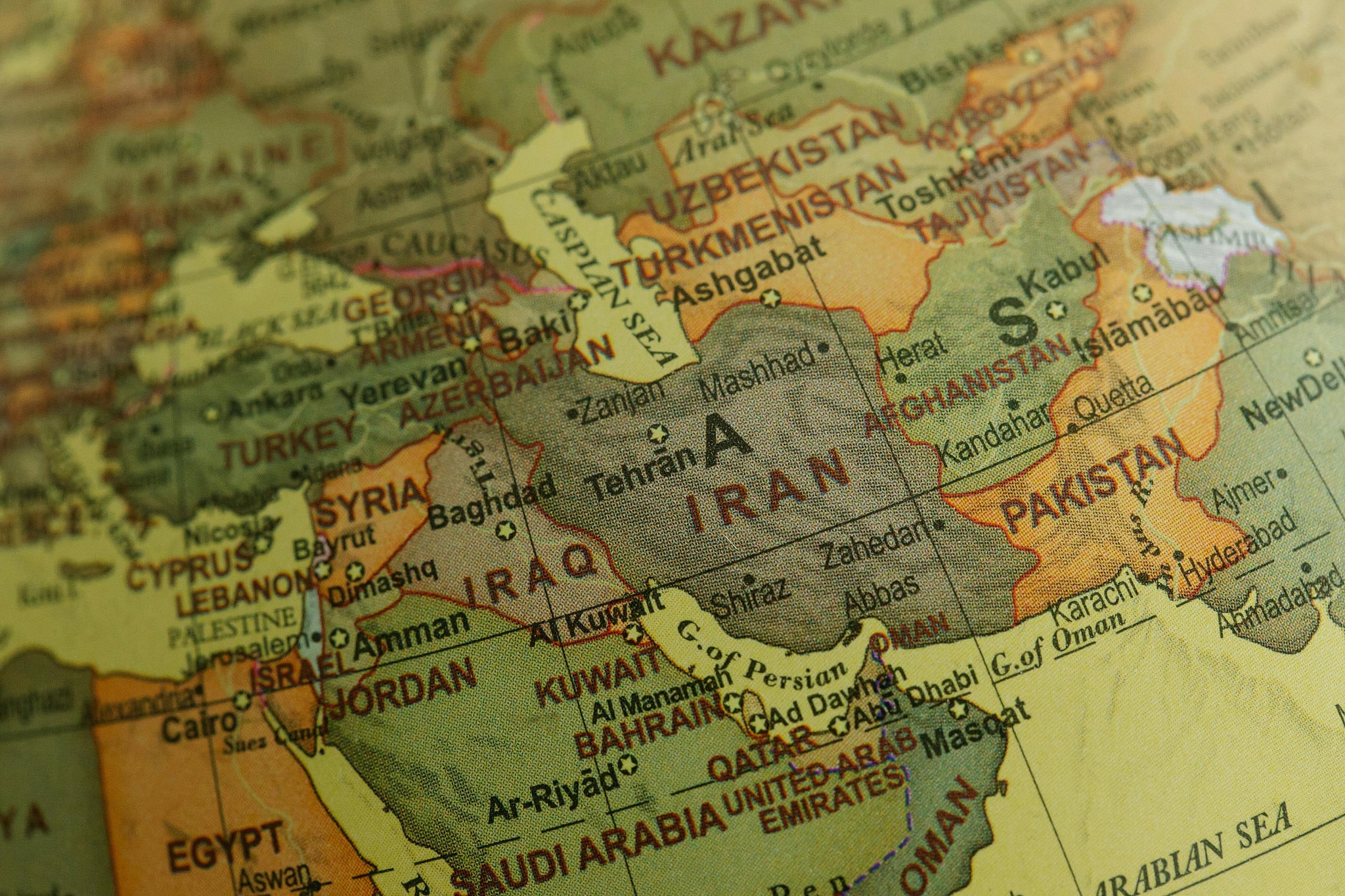
The latest confrontation between the United States and Iran suggests that the Middle East has entered a different strategic era. Military escalation and diplomacy are no longer sequential phases of conflict but parallel instruments of statecraft, with both sides seeking leverage without provoking a wider regional war. The result is an uneasy equilibrium in which the Strait of Hormuz has become not merely a shipping lane, but the principal currency of geopolitical bargaining.
The New Rules of Gulf Statecraft
For decades, conventional wisdom held that diplomacy began only after the guns fell silent. In the Persian Gulf, that distinction is steadily disappearing. Military strikes and negotiations now unfold simultaneously, each designed to strengthen the other’s hand. The United States and Iran increasingly appear to accept that calibrated confrontation has become an unavoidable feature of diplomacy rather than its failure.
The fragile ceasefire that emerged after weeks of military exchanges illustrates this shift. Despite repeated violations, neither Washington nor Tehran seems eager to return to full-scale conflict. Both governments instead view limited coercion as a means of extracting concessions while preserving space for negotiation. Rather than choosing between war and peace, each is attempting to manage both simultaneously.
Hormuz as Strategic Currency
At the center of this new geopolitical equation lies the Strait of Hormuz, the world’s most consequential maritime chokepoint. A substantial share of globally traded crude oil and liquefied natural gas passes through the narrow waterway each day, giving whoever influences its security disproportionate leverage over international markets.
Iran understands this reality better than any other regional power. Although years of sanctions have constrained its economy and military modernization, geography continues to provide Tehran with an enduring strategic advantage. Its ability to threaten—or merely cast doubt upon—the uninterrupted flow of maritime commerce ensures that every crisis in the Gulf reverberates far beyond the region.
For Washington, guaranteeing freedom of navigation remains both an economic necessity and a strategic obligation. Any prolonged disruption would immediately affect global energy prices, inflation, insurance costs, and financial markets while testing American credibility among Gulf partners whose prosperity depends upon uninterrupted exports.
The result is an uncomfortable balance. Iran cannot permanently close Hormuz without inviting overwhelming retaliation. The United States cannot entirely neutralize Iran’s capacity to create uncertainty without risking a broader regional war. Neither side possesses a decisive solution, making negotiation increasingly attractive despite profound mutual distrust.
Escalation Without Catastrophe
Recent exchanges have demonstrated how quickly tactical incidents can generate strategic consequences. Disputes over shipping routes, commercial navigation, and maritime security rapidly evolved into reciprocal military strikes before both sides recognized the dangers of uncontrolled escalation.
This pattern reflects a broader evolution in deterrence. Modern crises no longer necessarily seek decisive military victory. Instead, carefully calibrated demonstrations of force are intended to shape diplomatic outcomes. Air strikes, naval deployments, cyber operations, and economic pressure increasingly function as bargaining tools rather than preparations for total war.
Such an approach carries obvious risks. Precision can quickly give way to miscalculation. Regional militias, commercial vessels, or technical failures could produce unintended escalation beyond the control of either Washington or Tehran. Yet both governments appear to believe these dangers remain preferable to either outright surrender or sustained warfare.
The Gulf States Find Their Voice
Perhaps the most significant geopolitical development is the growing diplomatic confidence of the Gulf monarchies themselves. States that once relied almost exclusively upon American security guarantees increasingly seek to shape regional outcomes directly.
Oman continues to occupy its familiar role as discreet mediator, while Qatar has strengthened its reputation as a diplomatic intermediary capable of maintaining dialogue with adversaries across ideological divides. Saudi Arabia and the United Arab Emirates have likewise become more assertive in managing regional crises, balancing close ties with Washington against pragmatic engagement with Tehran.
This emerging regional diplomacy reflects changing strategic realities. Gulf governments recognize that no external power can permanently guarantee stability unless regional actors themselves possess a stake in preserving it.
Washington’s Calculus
The United States approaches negotiations from a position of considerable military superiority but diminishing appetite for another prolonged Middle Eastern conflict. American policymakers increasingly judge that preserving maritime security and preventing Iranian nuclear advances are achievable objectives without committing to another large-scale military intervention.
Economic considerations reinforce this approach. Stable oil markets remain essential not only for international growth but also for domestic political stability. Sharp increases in energy prices would reverberate through inflation, financial markets, and consumer confidence, making diplomatic restraint an attractive complement to military deterrence.
Washington therefore seeks a durable arrangement that preserves navigational freedom while limiting Iran’s strategic capabilities. Whether such an outcome proves attainable remains uncertain.
Iran’s Strategic Priorities
For Tehran, negotiations are driven by economic necessity as much as geopolitical ambition. Sanctions continue to constrain investment, financial access, and long-term growth. Maintaining avenues for oil exports while preserving strategic influence across the Gulf has become an increasingly delicate balancing act.
Iran’s leaders also understand that outright confrontation with the United States would impose costs the country can ill afford. Consequently, Tehran has refined a strategy centered upon incremental pressure rather than direct conventional conflict. Maritime leverage, regional partnerships, and calibrated military responses together provide bargaining power disproportionate to Iran’s broader economic strength.
A More Volatile Peace
The emerging order in the Persian Gulf is unlikely to resemble the relative stability that characterized earlier decades. Instead, periods of negotiation may increasingly coexist with limited military confrontation, cyber operations, economic coercion, and proxy competition.
This is not peace in its traditional sense. Nor is it conventional war. It is a form of managed rivalry in which both parties continuously test each other’s resolve while avoiding irreversible escalation.
Whether this equilibrium proves durable will depend less upon trust than upon calculation. Both Washington and Tehran appear to recognize that outright victory is unattainable, while renewed large-scale conflict would prove prohibitively expensive. That shared realization, paradoxically, may provide the strongest foundation for continued dialogue.
History suggests that the most enduring diplomatic settlements often emerge not from goodwill but from mutual recognition of strategic limits. The Persian Gulf may now be entering precisely such an era—one in which negotiations no longer interrupt conflict but become another theater within it.
Related Topics
Related Posts