
The Strategic Schism: The High Cost of Defying Washington on Lebanon
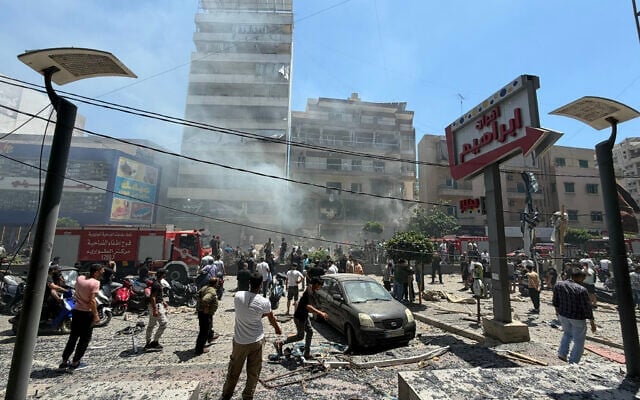
The current diplomatic impasse between Prime Minister Benjamin Netanyahu and the White House regarding the Lebanese theater is not merely a tactical disagreement; it represents a profound, structural collision of strategic interests. As the administration signals a clear intent to stabilize the region to serve its own global imperatives, Netanyahu’s insistence that a US-Iran de-escalation “does not include Lebanon” risks pushing Israel toward a dangerous, state-level isolation.
The Myth of Aligned Objectives
For months, the Prime Minister’s Office has promulgated a narrative of “total victory,” attempting to consolidate the conflicts in Gaza, the West Bank, and southern Lebanon into a singular, existential struggle against the “Ring of Fire.” While this framework maintains internal political stability for the current cabinet, it is increasingly untethered from the realities of American foreign policy.
Washington, driven by the necessity of tempering energy markets and curbing regional volatility, views the Lebanon front not as an essential theater of an existential war, but as an avoidable obstacle to broader geopolitical stability. President Trump’s recent, blunt pronouncements—demanding an immediate cessation of hostilities in Lebanon and publicly questioning the Prime Minister’s autonomy—mark the end of the era where Israel could unilaterally determine the tempo of a multi-front conflict with American indulgence.
The Erosion of Strategic Capital
The primary danger of this rift lies in the degradation of Israel’s strategic capital. The “special relationship” is not a static constant; it is an asset that demands a symmetry of interests. By openly defying a clear American mandate for de-escalation, the Israeli cabinet is testing the limits of its primary patron’s patience.
Should Jerusalem continue to prioritize its current “security zone” operational model—which relies heavily on continued tactical, intelligence, and logistical support from the US—it risks a significant drawdown of the very backing that sustains our conventional edge. We are moving toward a period where the asymmetry of power between the donor and the recipient will be felt in the most granular ways: restricted intelligence sharing, recalibrated diplomatic protection, and constrained operational maneuverability.
The Trap of the “Forever War”
Beyond the diplomatic friction lies a more insidious threat to Israel’s domestic health: the “managed conflict” trap. By rejecting any ceasefire that limits military reach, the government is effectively committing the IDF to a war of attrition in southern Lebanon. This is not a path to security; it is a blueprint for the hollowization of our societal and economic resilience.
Every day that the northern front remains active, the costs accrue—not just in the localized devastation of border communities, but in the protracted displacement of our citizens, the deepening of our economic deficit, and the erosion of the IDF’s readiness to address more acute, singular threats, such as Iran’s nuclear program. Netanyahu’s insistence that any pause constitutes a “defeat” is a performative binary that serves the political survival of the coalition at the expense of the long-term strategic viability of the state.
A Pivot Toward Reality
The reality of 2026 is that Israel’s security architecture cannot withstand the strain of being a strategic liability to the United States. A sophisticated national security policy requires the ability to distinguish between tactical posturing and the foundational requirements of a nation-state.
To ignore the parameters set by the White House is not a demonstration of strength; it is a reckless gamble with our most essential alliance. If Israel is to secure its future, it must recalibrate its objectives to align with a sustainable regional framework. Continued defiance of our most vital partner, particularly under the guise of an ill-defined “total victory,” is not a defense of Israel’s sovereignty—it is an acceleration of its isolation.