
The Strategic Solitude: How BiBi’s Diplomacy Has Left Israel on the Sidelines
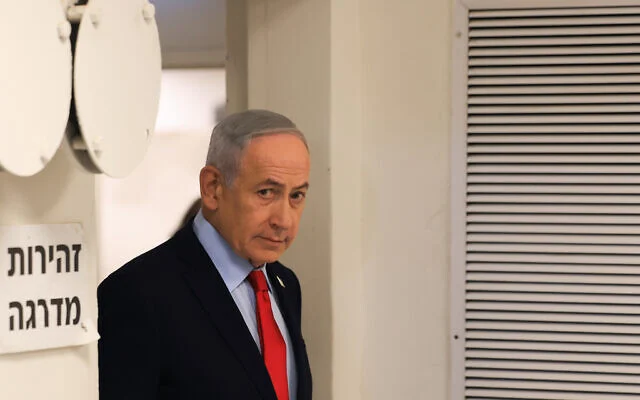
For decades, the cornerstone of Israeli national security was a simple, non-negotiable principle: when it comes to our existential threats, we must be the ones in the room where the decisions are made. Yet, as the shadow of a potential US-Iran rapprochement looms—a reality shaped by complex geopolitical shifts—Israel finds itself increasingly isolated. This absence of a seat at the table is not merely a diplomatic oversight; it is the direct, predictable consequence of Benjamin Netanyahu’s decade-long strategy of performative antagonism toward our most vital international allies.
The current vacuum in our strategic influence is the bill coming due for a policy that prioritized short-term domestic political theater over long-term statecraft. By treating the Biden administration—and, by extension, key European partners—not as indispensable strategic allies, but as adversarial obstacles to be managed or outmaneuvered, Netanyahu has effectively authored Israel’s own exclusion.
The Cost of Deceptive Diplomacy
Effective foreign policy requires trust. It relies on the ability to have candid, closed-door conversations where shared interests are aligned before public positions are solidified. Under Netanyahu, this relationship has been replaced by a cycle of public grandstanding and friction.
When a Prime Minister chooses to confront a sitting American president on the floor of Congress or allows diplomatic channels to fester into public spats to bolster his “strongman” image at home, he burns the institutional capital required to influence American policy toward Tehran. Washington, tired of the perpetual friction, has essentially decided that it is easier to pursue a “clean” negotiation with Iran without the constant interference and obstructionism from Jerusalem.
By failing to maintain a bipartisan base of support in the U.S., Netanyahu has allowed Israel’s security concerns—namely, the need for stringent, permanent safeguards against Iran’s nuclear program—to be sidelined as “political baggage.” The result is a diplomatic “off-ramp” for the U.S. and Iran that prioritizes regional stability for American interests while treating Israel’s specific security warnings as nuisances to be contained.
The Myth of the “Sole Defender”
Netanyahu’s rhetoric often suggests that he alone stands between Israel and oblivion. Yet, the irony is palpable: his insistence on an “Israel-only” approach to the Iranian threat—often accompanied by thinly veiled threats of unilateral action—has served only to alienate the very European powers whose diplomatic and economic leverage is required to keep the Iranian regime in check.
When we attack our allies’ motivations or dismiss their regional assessments, we lose the ability to shape their red lines. European capitals, once reliable partners in monitoring and sanctioning Iranian proxy activity, are now increasingly viewing Israeli demands through a lens of skepticism, partly because they see the current Israeli cabinet as an uncooperative actor that has abandoned the values of the democratic West.
A Path Forward or a Path to Isolation?
The security of Israel depends on its integration into a global coalition that understands the multifaceted nature of the Iranian threat—not just the nuclear program, but the regional destabilization fueled by the Islamic Revolutionary Guard Corps. By burning bridges, Netanyahu has narrowed our options to a binary choice: either sit silent while Washington dictates the terms of a deal, or risk a ruinous, unilateral military adventure that risks our remaining international support.
True strength is not measured by how many foreign leaders you can antagonize, but by how effectively you can harness their power to secure your national interest. It is time for a recalibration of our foreign policy that recognizes that Israeli security is not bolstered by isolation, but by an unwavering, respectful, and sophisticated partnership with the global community.
We are currently paying a heavy price for a “sovereignty” that looks increasingly like solitude. If we continue to view our allies as adversaries and our diplomacy as a battleground for domestic votes, we will find that when the next deal is signed, Israel will remain exactly where it is today: outside the room, watching our future be decided by those we were once privileged to call partners.