
The Strategic Victory for Israel in Lebanon
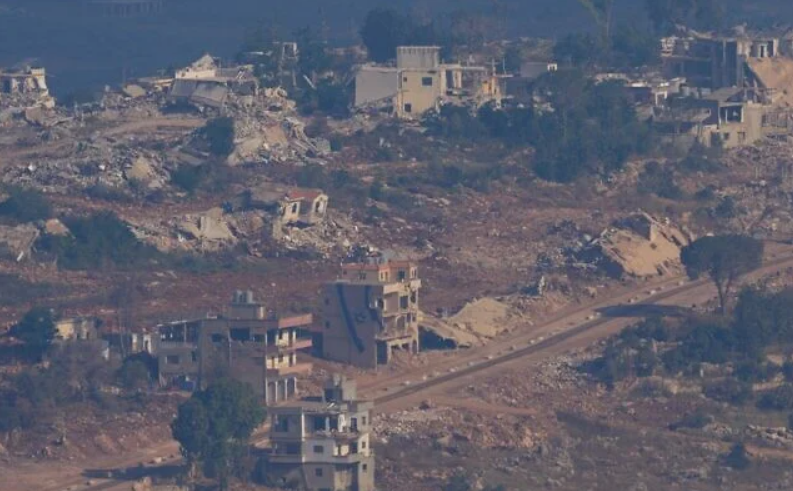
Along its northern border, Israel has encountered the same strategic conundrum for decades. Hezbollah eventually turned all ceasefires into little more than pauses while the terrorist group replenished its weapons, rebuilt its tunnels, amassed precision-guided missiles, and got ready for the next round of fighting. While steadily undermining Israeli deterrence, diplomatic agreements frequently produced the appearance of stability. The recently negotiated framework between Israel and Lebanon, mediated by the United States, seems to be essentially different.
The creation of a security zone is not the agreement’s most significant feature. Instead, it is said that the Israel Defense Forces’ continued freedom of action against both current and potential threats within that zone is guaranteed by the classified annex. Article 4, which Israeli leaders reportedly insisted upon during negotiations, specifically maintains Israel’s operational authority to attack Hezbollah infrastructure before it becomes an immediate threat. If accurately implemented, this changes the strategic equation.
Deterrence Instead of Illusion
International diplomacy in Lebanon was predicated for a long time on the false premise that ceasefires by themselves result in security. Contrary evidence comes from history. Resolution 1701 of the UN Security Council envisioned a southern Lebanon free of Hezbollah forces after the 2006 Lebanon War. In reality, Hezbollah expanded its missile arsenal, built increasingly advanced subterranean infrastructure, progressively reestablished military positions, and integrated itself into civilian populations. After October 7, the lesson became painfully clear. Restraint is interpreted differently by terrorist groups than by democratic governments. Organizations like Hezbollah often see opportunity where Western diplomats see de-escalation. Every time there is less pressure, military preparation takes place. The reported security annex attempts to solve this fundamental problem.
Instead of making Israel wait until rockets are fired or soldiers are attacked, it acknowledges a basic military strategy principle: threats are best neutralized before they develop. After notifying US officials ahead of time, Israeli forces destroyed a significant Hezbollah tunnel complex that allegedly contained hundreds of weapons and launch positions, demonstrating that philosophy almost immediately. According to Israeli officials, the operation was completely in line with the new framework.
Restoring Lebanese Sovereignty
The agreement is criticized for violating Lebanese sovereignty. Paradoxically, it might be the other way around.
Hezbollah, not the Lebanese government, has maintained effective military control over a large portion of southern Lebanon for many years. When an armed non-state actor decides on matters of war and peace on its own, no sovereign nation can assert complete sovereignty. According to reports, the agreement stipulates that the extension of Lebanese state authority into the south and the confirmed disarmament of non-state armed groups are requirements for Israeli withdrawal.
One of the biggest developments for Lebanese sovereignty in decades would occur if Beirut is ultimately successful in monopolizing the rightful use of force, a fundamental component of contemporary statehood. Hezbollah and its affiliated political figures have opposed the agreement more vehemently than proponents of Lebanese democracy. Their rejection is illuminating. Agreements that improve an organization’s strategic position are rarely opposed.
Why Washington Should Welcome This Framework
From an American standpoint, the deal is more than just another cease-fire in the Middle East. It provides a burden-sharing model. Washington has long grappled with the dilemma of trying to lessen direct military engagement in the Middle East while simultaneously assisting regional allies. That conundrum is addressed by this framework.
Instead of sending more American combat troops, the United States offers diplomatic leadership, political guarantees, and strategic oversight while Israel takes charge of tactical security along its border. This is in line with a larger American grand strategy that is becoming more and more concerned with empowering competent regional allies as opposed to carrying out protracted military operations.
The US gains a number of strategic advantages: First, Hezbollah’s military capabilities become progressively constrained. Next, Iranian influence inside Lebanon is reduced, possibly even erased. Third, Lebanon has an opportunity to strengthen state institutions. Fourth, American military commitments remain limited while regional stability improves. Lastly, Israel’s deterrence is strengthened without requiring large new US deployments. This is a classic example of effective alliance management rather than nation-building.
The Iranian Dimension
The larger regional balance of power must also be taken into consideration when evaluating the agreement. Hezbollah has been Iran’s most effective external military proxy for decades. Iran’s forward deterrent is thus weakened when Hezbollah is weakened. This framework is said to directly link long-term implementation to the dismantling of non-state military structures, in contrast to earlier diplomatic initiatives that largely acknowledged Hezbollah’s military presence as a political reality. That is a major shift in strategy. Instead of letting a militia supported by Iran dictate national security policy, it gives the Lebanese government sovereign authority over its own territory. Enforcement will be the test. Agreements by themselves, of course, never ensure success. There are numerous well-crafted documents throughout history that failed because political leaders were unwilling to implement them. What was signed in Washington won’t be the deciding factor. It will depend on whether infractions result in immediate repercussions. Israeli freedom of action must be unaffected if Hezbollah tries to reconstruct infrastructure, move missiles into the security zone, or set up new firing positions. Legal wording is less important for deterrence than proven willingness to take action.
A Rare Strategic Opportunity
Seldom do opportunities arise to change regional security architectures. One of them might be represented by this agreement. It acknowledges an unsettling but persistent reality of international politics: declarations by themselves cannot sustain peace. It is upheld by enforceable promises, credible deterrence, and a power balance that persuades prospective aggressors that the costs of a new conflict outweigh its advantages. The deal gives Israel the strategic flexibility that earlier ceasefires did not provide. It presents Lebanon with the chance to regain true state sovereignty. It offers the US a model for assisting allies while lowering the necessity of direct US military action. This framework is more than just another ceasefire because of that combination. It could serve as the cornerstone of a longer-lasting security order on Israel’s northern border and serve as an example of how US diplomacy can promote stability without compromising deterrence if it is consistently carried out.