The Street and the Home, Part I
Vienna, the Ostjude, and the Jewish Shadow
Julian Ungar-Sargon, MD, PhD — Former Clinical Director, PA Program, Borra College of Health Sciences, Dominican University, River Forest, Illinois
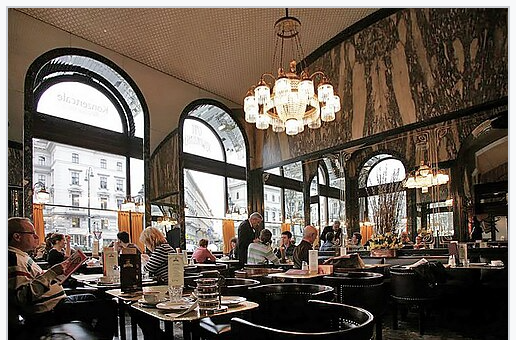
“One can leave Vienna; Vienna does not easily leave the soul.”
Introduction: The Stone
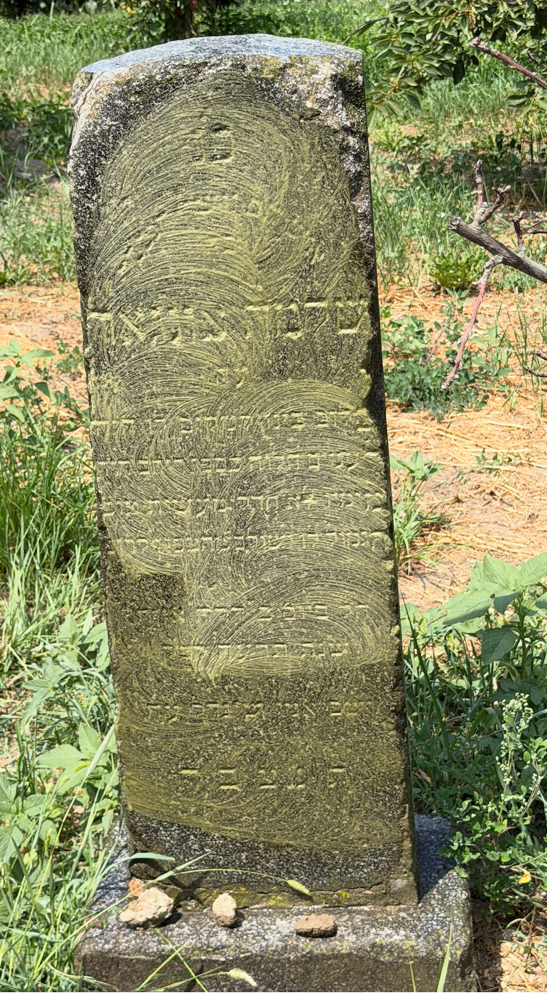
The stone should not have survived.
Around it lay fragments of names, broken Hebrew letters, shattered marble, abandoned graves whose descendants had disappeared into Auschwitz, Melbourne, Chicago, Tel Aviv, and memory. Yet one tall granite monument remained standing, weathered but unbowed. Upon it was carved the name of my great-grandfather, dead since 1918, decades before Europe decided that Jewish history should end.
I had crossed an ocean to stand before that stone.
I thought I had come to visit the dead.
Instead, the dead began questioning me.
Not through voices. Through images. A synagogue. A Viennese boulevard. My father’s remembered city. And finally, unexpectedly, a Hasidic family crossing the street in black kapotes.
The encounter lasted only seconds. The questions have lasted much longer.
Why did their presence disturb me? Not morally. Psychologically. Why should visible Jewishness feel somehow incongruous in a city that once tried to erase Jewish visibility altogether? Whose eyes were seeing? Mine? My father’s? Vienna’s? Or Europe’s?
That question became the beginning of this essay.
Notice that Hitler has not yet appeared here. Neither has Jung. I want the reader inside the pilgrimage before either enters — because the questions I am asking did not arrive as history or as theory. They arrived as a feeling in the body, on a street, before I had any framework with which to understand them. Everything that follows is an attempt to build that framework retroactively, honestly, without letting the framework flatten what was, as it happened, simply and uncomfortably felt.
1: The City That Invented the Modern Soul
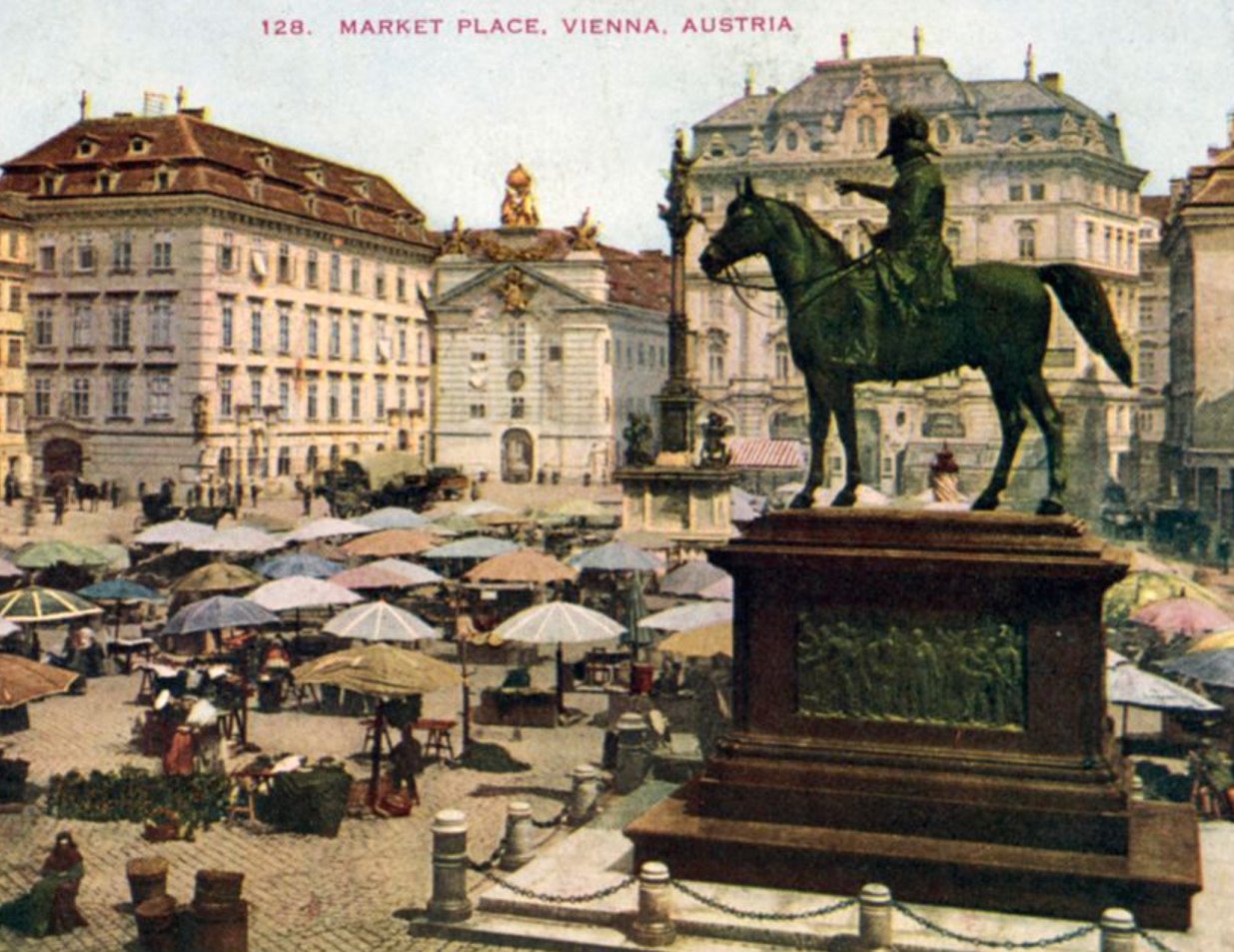
Before this can become a story about Jews, it must become a story about Vienna, because Vienna is not incidental to what I felt on its streets — Vienna is, in a sense, the mechanism.
Between roughly 1870 and 1938, a single city of modest size produced psychoanalysis, twelve-tone and late-Romantic music at its most radical, the Vienna Circle’s logical positivism, the Secession’s architectural and visual revolt against ornament, and — not by coincidence, but by dialectical relation — both political Zionism and modern political antisemitism, each responding to the other’s presence in the same coffee houses and the same newspapers. Carl Schorske’s classic account of fin-de-siècle Vienna treats the city as a laboratory in which liberal bourgeois culture, having lost its confident hold on politics, retreated into aesthetics, psychology, and the interior life — and Vienna’s Jews, disproportionately represented among the professional and cultural classes, were central actors in that retreat. (1)
It is not an exaggeration to call Vienna, in this period, something like the unconscious of Europe — the place where the continent’s repressions, ambitions, and terrors surfaced first, in disguised and undisguised form, before erupting more literally elsewhere. Freud built an entire theory of mind by listening, in a consulting room on the Berggasse, to what cultivated Viennese would not say to each other directly. Mahler composed music soaked in irony and mourning while holding — and being tormented by holding — the directorship of the Court Opera, a position his conversion to Catholicism had made possible. Klimt and the Secession painters turned gilded ornament into a kind of erotic and spiritual confession. Schnitzler’s fiction anatomized the gap between what respectable Vienna performed and what it desired. Wittgenstein, born into one of the wealthiest and most assimilated Jewish families in the empire, would spend a philosophical career interrogating the limits of what language itself could say. Herzl, a Viennese journalist steeped in exactly this world of aspiration and disappointment, would leave it to find political Zionism after watching the Dreyfus Affair convince him that European Jewish belonging had a ceiling. Karl Kraus edited Die Fackel and turned his considerable wit — including, uncomfortably, wit aimed at his own Ostjuden — into a one-man campaign against the era’s hypocrisies.
What I find striking, and what I think deserves more attention than it has received, is that Freud, Jung, Neumann, and Hillman — the four thinkers whose frameworks structure this essay — are, in different ways, all children of this same Central European crisis, even though only one of them, Freud, actually lived in Vienna. Freud built his psychology inside the city itself and fled it only at the very end, in 1938, an old and dying man forced into exile by the Anschluss. Jung, Swiss and never Viennese, nonetheless developed his entire psychology in dialogue — and painful, unresolved rupture — with Freud’s Vienna, and his own conduct during the 1930s, when he allowed himself to be used by a German psychological establishment being purged of its Jews, remains a permanent stain on his legacy that this essay does not wish to minimize even while drawing on his concepts. (2)
Neumann, born in Berlin, fled Nazi Germany for Palestine in 1934 and spent the rest of his career trying to build a Jungian psychology that could account for what Jung’s own life had failed to account for — the reality of antisemitism as a collective psychological phenomenon requiring ethical, not merely clinical, response.(3) Hillman, a generation later, spent his career resisting the entire diagnostic apparatus that Vienna had bequeathed to twentieth-century thought, insisting that the psyche speaks in images before it speaks in pathologies.
All four, whatever their disagreements, are working out the same unfinished argument that Vienna started: what does it mean for a mind, or a people, to be simultaneously the bearer of a great civilization’s ideals and the object of that civilization’s violence?
This is the city I inherited secondhand, through my father, and it is the city I went looking for.
2: The Mirror
I had not expected Vienna to expose me.
I came to find my father. Instead, I found myself.
I had imagined this journey as a kind of historical archaeology. I would walk the Ringstrasse, visit my father’s synagogue on Stumpergasse, stand before the apartment buildings where educated Jews once believed they had truly become Austrians, and eventually kneel beside my great-grandfather’s grave — the lone granite monument that somehow survived where nearly every surrounding marker had disappeared. I thought I was recovering memory.
Instead, Vienna recovered me.
The decisive moment was surprisingly ordinary. On the streets of Vienna, I encountered Hasidic Jews — men in black kapotes, broad-brimmed hats, beards, visible tzitzit — walking with the unhurried confidence of people entirely at home, through the very city that had once humiliated, excluded, and finally deported Jews indistinguishable from them. Their presence should have moved me only with gratitude. And in a sense, it did. But my first response was more complicated than gratitude alone. It contained admiration, yes — but also a fleeting discomfort, almost an embarrassment, as though some inherited voices were whispering that such visible Jewishness did not quite belong on the elegant boulevards of Vienna.
That voice was not entirely mine.
It belonged to another Vienna.
It belonged to a culture in which many emancipated Jews had spent generations carefully learning how to disappear.
The realization disturbed me more than I expected, and I want to be honest about why. I am an Orthodox Jew. I have devoted much of my intellectual life to Torah, to Talmud, to Jewish theology. Why should such an instinctive reaction survive within me — within someone who has, by any reasonable measure, chosen visibility rather than concealment as a Jewish path? Was I simply witnessing an old social reflex, inherited from a specific Central European Jewish culture that was not, strictly, even my own religious lineage? Or was something deeper at work — what Jung would call the Shadow, the disowned portion of the psyche that returns precisely when we believe ourselves free of it?
I should record here that this is not the first time I have written about the problem of visible Jewishness, and that the interval is itself part of the evidence. More than forty years ago I published an essay on the yarmulke and the peculiar agony attending it — the small circle of cloth that turns an interior commitment into a public fact, and that therefore forces its wearer, every time he steps outdoors, into a negotiation he did not choose and cannot finish.(4)
That essay had a source I did not fully name at the time. I grew up in London, and when we walked out — to the shops, to the bus, down the ordinary suburban streets of North London — my mother required that I wear a cap in place of the yarmulke. Not over it. Instead of it. I understood without being told that the substitution was not about weather. It was about what a Jewish child could be seen to be on an English street in those years. The instruction was never framed as shame. It was framed as ordinary prudence, in the tone one uses for looking both ways before crossing, and that tone is precisely what made it so completely absorbable. A child argues with a prohibition. A child does not argue with the weather.
I was not the only one. Jonathan Sacks, a friend who grew up in the same London Jewish world and whom I knew in those years, told a version of the same story about himself: a small boy on a family holiday in a seaside town in the south of England, walking back from synagogue on Shabbat, when a fellow congregant hurried after them to inform his father that the child had forgotten to remove his yarmulke.(5) The correction came not from a hostile stranger but from within the community, which is the detail that matters. And Lord Sacks glosses the episode with the very maxim this essay has been circling — the old dictum that one is a Jew at home and a man in the street — naming it as the still-operative rule of the Anglo-Jewry of his childhood, which is to say of mine. That the same sentence governed Vienna in 1910 and North London in the 1950s is not coincidence but transmission. The bargain crossed the Channel and outlived the empire that struck it.
I thought I had settled that question in my twenties. What Vienna disclosed is that one does not settle such questions; one merely relocates them. The yarmulke essay was written by a young man deciding how visible to be. This essay is written by an older one discovering that the decision, however firmly made, did not reach all the way down.
I want to state clearly what this essay is not. It is not an accusation leveled against assimilation, nor a romanticization of Hasidism against it. It is an attempt to understand how history inhabits consciousness — how the choices, humiliations, and adaptations of ancestors can continue to shape the involuntary reactions of descendants who never made those choices themselves and who may, as in my case, have consciously chosen a different path altogether. The question this essay pursues is not whether Viennese Jews were right or wrong to pursue cultural integration a century ago. The question is how generations of adaptation, aspiration, humiliation, and catastrophe continue to shape Jewish identity long after the world that produced them has vanished — and how a single encounter, on a single street, can suddenly make that inheritance legible.
Part I of a five-part series. Notes and references appear at the end of Part V.