
Geopolitical & Defense Analyst
The Syrian Trap: Why Israel Must Block a Turkish A2/AD Umbrella
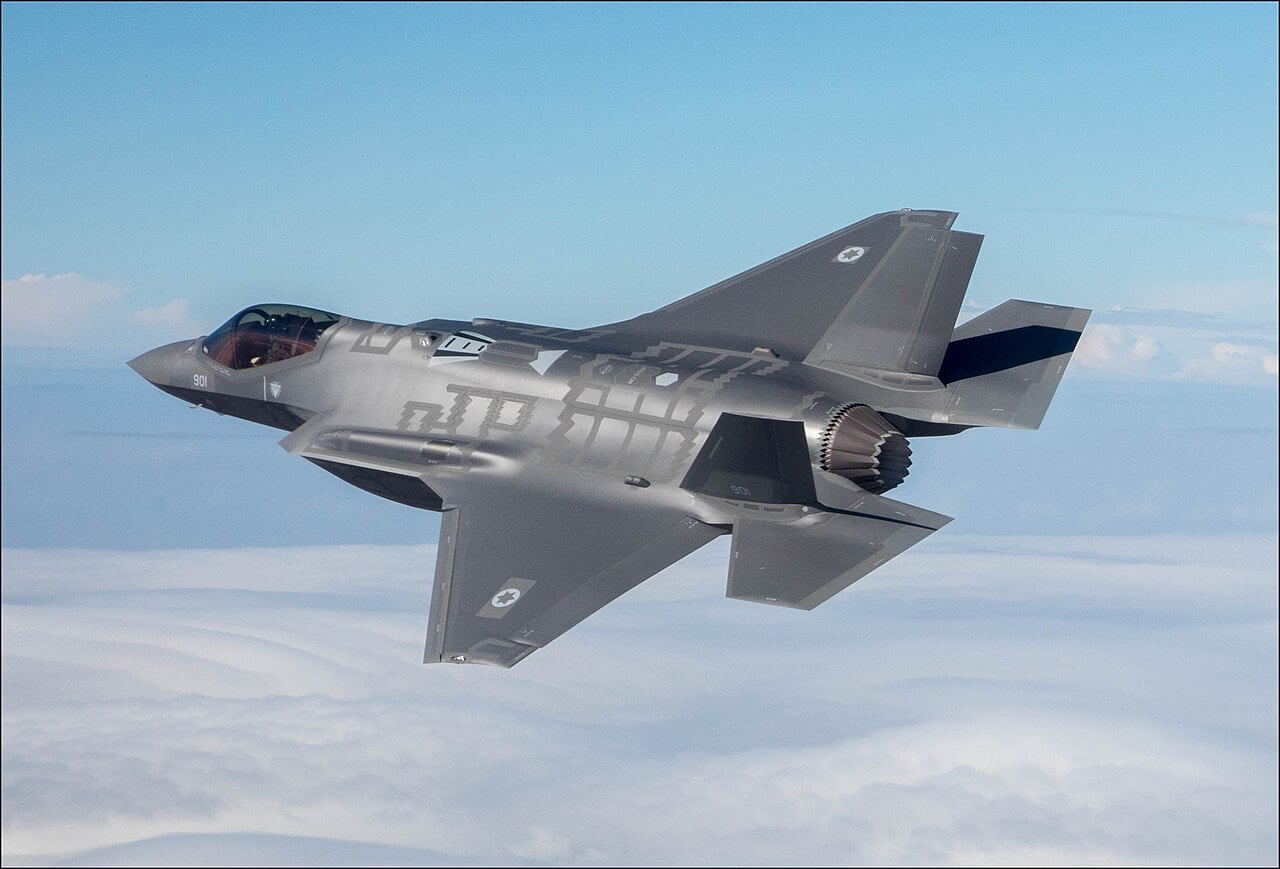
Israeli Air Force F-35I Adir stealth multi-role fighter. (Photo: Maj. Ofer / Israeli Air Force)
For decades, Israel’s deterrence model and national survival have rested upon a single, undeniable operational reality: qualitative military edge (QME), manifested primarily through absolute air superiority. While surrounding regional actors often commanded massive standing armies and extensive conventional hardware, the Israeli Air Force (IAF)—operating cutting-edge platforms like the F-35I Adir, F-15I Ra’am, and advanced F-16 variants—has functioned as the ultimate strategic equalizer and pre-emptive offensive spearhead.
Today, as the Syrian theater undergoes structural geopolitical tectonic shifts following the collapse of the old status quo, a profound operational danger is quietly taking shape. Amid diplomatic maneuvers and shifting spheres of influence, Ankara is actively positioning itself to establish long-term military infrastructure, forward air operating locations, and surface-to-air missile umbrellas across Syrian soil.
For Israeli planners, this must represent a rigid, non-negotiable red line. Permitting Turkish military bases, advanced radar networks, and air defense batteries in Syria would dismantle Israel’s primary strategic shield.
The Reality of Numbers: A Dangerous Asymmetry
Any sober military assessment must strip away diplomatic niceties and look directly at numbers and force structures. On paper, Turkey possesses overwhelming quantitative superiority against Israel in both land and naval domains. The Turkish Armed Forces (TSK) field NATO’s second-largest standing army—an expeditionary ground force backed by extensive mechanized divisions, drone warfare capabilities, and seasoned battle groups. In the maritime arena, the Turkish Navy maintains a considerable numerical advantage in major surface combatants and diesel-electric submarines compared to the Israeli Navy’s specialized, littoral-focused fleet.
Where does Israel’s decisive advantage lie? Exclusively in the skies, and in its multi-layered air defense shield.
The Turkish Air Force relies heavily on older tranches of F-16s and F-4 Phantoms. Hampered by its exclusion from the F-35 program and facing delays in major fighter modernization, Ankara cannot challenge the IAF in pure air-to-air combat over open skies. The IAF’s 5th-generation stealth dominance, networked electronic warfare suites, and sensor-fusion capabilities give Jerusalem undisputed tactical supremacy against Turkish fast jets.
Ankara’s strategists understand this asymmetry intimately. And precisely because they cannot defeat the IAF in the air, their counter-strategy relies on ground-based Anti-Access/Area Denial (A2/AD).
The A2/AD Threat: Neutralizing the IAF from the Ground
The true threat of a permanent Turkish military presence in Syria is not an expeditionary squadron of older Turkish F-16s operating out of Syrian airbases. The true threat is the deployment of long-range air defense systems, such as the Russian-made S-400 or Ankara’s indigenous, rapidly maturing SIPER and HİSAR-U missile batteries, coupled with early-warning radar arrays.
If Turkish integrated air defense systems (IADS) are allowed to embed themselves in central or southern Syria, the strategic geography changes overnight:
-
Elimination of Freedom of Action: An operational air defense umbrella spanning hundreds of kilometers would place Israeli airspace, northern IDF airbases (such as Ramat David), and the vital Lebanese flight corridors directly inside the engagement envelope of hostile missile radars. The IAF’s ability to conduct routine pre-emptive operations, interdict arms transfers, and neutralize emerging threats would be fundamentally curtailed.
-
Erosion of the Stealth Advantage: Dense, overlapping radar tracking networks on Israel’s northern border significantly reduce the sanctuary of 5th-generation stealth aircraft, providing early tracking telemetry that complicates Israeli tactical ingress and egress.
-
Strategic Paralysis: In a crisis, Israel’s small geographical depth means it cannot absorb a conventional air and missile saturation strike before mobilizing its reserves. If its offensive air weapon is pinned down or forced to spend critical initial hours suppressing dense A2/AD bubbles on its immediate frontier, the deterrence balance collapses.
The Northern Envelope
This is not a theoretical dispute over borders; it is a structural challenge to Israel’s survival. If Ankara succeeds in anchoring military footholds across Syria, Israel faces an unprecedented dilemma: a hostile, neo-Ottoman power projecting conventional military power directly onto its land borders, while simultaneously contesting its maritime flanks in the Eastern Mediterranean through the revisionist “Blue Homeland” doctrine.
A Turkish military perimeter in Syria would connect Ankara’s political ambitions with local proxies and battle-hardened paramilitary factions right up to Israel’s doorstep. Under the protective cover of Turkish radar and missile batteries, asymmetric actors could operate with relative impunity, knowing that an Israeli retaliatory strike would risk triggering a direct, high-consequence confrontation with a major conventional NATO military power.
A Definitive Red Line
Israel cannot afford to evaluate Turkish intentions through the prism of temporary diplomatic calms or transactional agreements. In military strategy, capabilities dictate outcomes, not rhetoric.
Jerusalem must establish an unequivocal strategic baseline, communicated clearly to Washington, regional capitals, and Ankara itself: The Syrian airspace and sovereign territory south of the Turkish border must remain entirely free of foreign strategic air defense architectures, advanced radar installations, and permanent offensive military staging bases.
Israel’s qualitative edge in the air is the linchpin that keeps conventional war at bay and compensates for its lack of strategic depth. Allowing a massive regional military power to set up an air defense trap just across the border would be an existential concession Israel simply cannot afford to make.
Related Topics