London based entrepreneur, cybersecurity analyst doing a PhD in AI
The Tongue
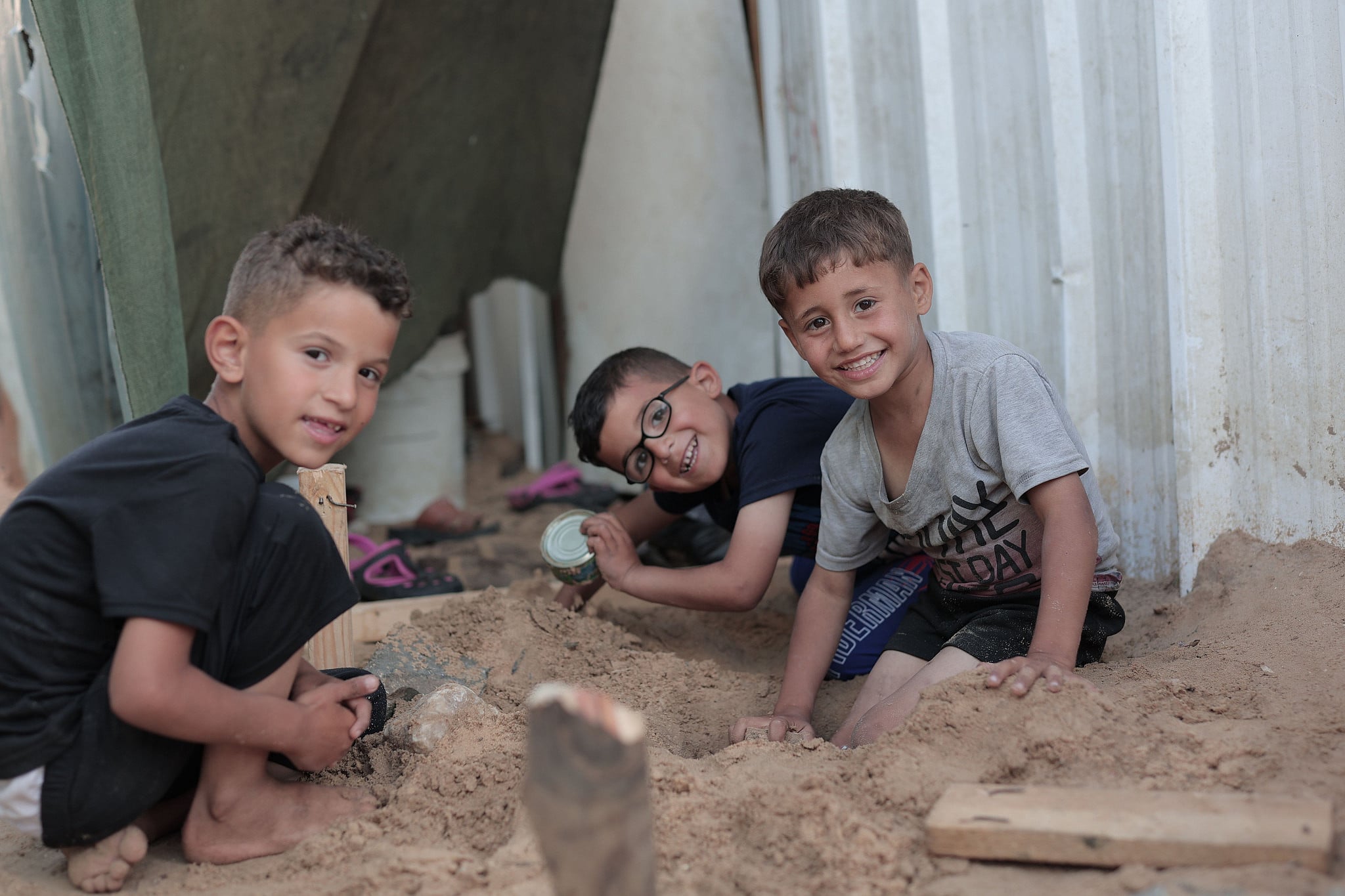
(Hosny Salah from Pexels.com)
The Tongue
A child’s hand reaches through the rubble.
We know nothing about the child. No nationality. No religion. No politics.
Can I play with my toys?
No.
Can I go to school?
No.
Can I have ice cream?
No.
Can I watch the birds cross the sky?
No.
Can I put my feet in the sea?
No.
Can I grow up?
Here we must stop.
The answer is yes.
A child is not born an enemy. Adults give the child labels.
Before the Hand, the Tongue
War has weapons. But before the weapon often comes the word.
Enemy. Vermin. Traitor. Terrorist. Collateral. Them.
Some words describe real things. Terrorists exist. Combatants exist. Evil exists.
The danger comes when the word ceases to identify the guilty and begins to swallow everyone around them.
Psychology gives the descent a simple shape:
Threat → repetition → association → category → distance → permission → action.
The crucial step is permission. It need not begin as permission to kill.
It begins as permission to care less.
Restrain This
The Prophet Muhammad ﷺ understood the danger of the tongue with startling economy.
Muʿādh ibn Jabal (raḍiyallāhu ʿanhu) asked the Prophet Muhammad ﷺ about the deeds that lead to Paradise and away from the Fire. After teaching him about worship, prayer, charity, fasting and other matters, the Prophet Muhammad ﷺ took hold of his own tongue.
“Restrain this.”
Muʿādh ibn Jabal (raḍiyallāhu ʿanhu) asked whether people would really be accountable for what they said. The Prophet Muhammad ﷺ replied that people are cast into the Fire because of what “their tongues have wrought.” Jāmiʿ al-Tirmidhī 2616; al-Tirmidhī graded it ḥasan ṣaḥīḥ. (Sunnah)
The image is sometimes rendered as the “harvests of their tongues.”
A harvest begins with a seed.
Say What Is Straight
The Qur’an commands:
“O you who have believed, fear Allah and speak words of appropriate justice.”
Qur’an 33:70
The Arabic expression is qawlan sadīdan. Translations render it as speech that is right, straight, truthful, just, or “hitting the mark.” (The Quranic Arabic Corpus)
This is more demanding than simply avoiding lies. Speech must itself be sound.
Islamic fiqh therefore distinguishes sins of speech carefully. Ghibah is speaking about someone in a way they would dislike, even where the matter is true; buhtān is false accusation; namīmah carries destructive speech between people.
But Islam does not require silence before wrongdoing. A victim may complain. A witness may testify. Danger may be identified.
Truth is permitted. Injustice may be exposed.
Dehumanisation is something else.
Death and Life
The Torah commands:
“You shall not go about as a talebearer among your people; neither shall you stand idly by the blood of your neighbour.”
Leviticus 19:16
The proximity is striking: destructive speech and the blood of another human being appear in the same verse.
Rashi interprets its second command as forbidding a person from watching another die when rescue is possible. (Sefaria)
Rabbinic tradition develops the point further. Maimonides treats talebearing as a grave sin capable of causing the destruction of lives and explicitly connects this danger to the Torah’s warning about standing by another’s blood. (Sefaria)
The Talmud makes the metaphor almost physical when discussing Proverbs 18:21, “Death and life are in the power of the tongue”:
Just as the hand can kill, the tongue can kill. Arakhin 15b. (Voices)
The tongue prepares what the hand may later perform.
The Neighbour’s Stone
Suppose my neighbour throws a stone through someone’s window.
I did not throw it. I did not give him the stone. I did not encourage him. I did not finance him. I did not care for his children while he went to throw it. I may even have told them once “don’t do it”, or tried to, but got too scared and went home instead.
If someone comes tomorrow and smashes my window, justice has not been done.
Now there are two victims.
War does not repeal this elementary principle.
The soldier is not his neighbour’s child who may live 8 houses down, may have said “Hi” once out of fear of getting shot himself or herself, may have asked for salt once, or recommended a Netflix series to them, and smiles so they don’t get their car smashed in or teeth kicked in.
Guilt does not travel through blood, religion or geography. Not everyone “loves thy neighbours”, sometimes we just “tolerate them” and “keep our mouths shut” to “keep peace” and not “ruffle feathers” in a society which teaches us to conform or else there are consequences.
The ordinary woman or man is trapped from all sides. Damned if they do, damned if they don’t.
But This Is War
Yes.
And war is where morality becomes expensive.
Human dignity is easy over dinner. The test comes when another person’s innocent child becomes inconvenient to our cause, dangerous to protect, or difficult to love after our own people have suffered.
That is when law matters.
Otherwise morality is merely decoration for peaceful times.
Return to the rubble.
Can I play with my toys?
Yes.
Can I go to school?
Yes.
Can I have ice cream?
Yes.
Can I watch the birds cross the sky?
Yes.
Can I put my feet in the sea?
Yes.
Can I grow up?
Yes.
Then move the rubble.
The most dangerous weapon may not be the one that finally reaches the body.
It may be the tongue that first persuaded us there was less of a human being underneath.
Author’s note
AI was used for primary research and in assisting with the writing of this article. The arguments and views expressed are my own.
For transparency, the Islamic theological position from which I write should not be softened for an interfaith audience. It would not serve my audience. Muslims believe in Mūsā (Moses) (ʿalayhi aṣalātu wa-s-salām), ʿĪsā (Jesus) (ʿalayhi aṣalātu wa-s-salām), Ibrāhīm (Abraham) (ʿalayhi aṣalātu wa-s-salām), and the revelations God originally gave His Prophets from the Children of Israel and otherwise (ʿalayhi aṣalātu wa-s-salām). Muslims also believe that the Prophet Muhammad ﷺ is God’s final Messenger and that the Qur’an is the final revelation: confirming what preceded it while serving as the final criterion and universally binding revelation.
This is not merely my personal formulation. Abū Hurayrah (raḍiyallāhu ʿanhu) narrated that the Prophet Muhammad ﷺ said:
“By Him in Whose hand is the life of Muhammad, he who amongst the community of Jews or Christians hears about me, but does not affirm his belief in that with which I have been sent and dies in this state, he shall be but one of the denizens of Hell-Fire.
Ṣaḥīḥ Muslim 153. (Sunnah)
Indeed, the chapter under which Ṣaḥīḥ Muslim transmits this hadith expressly concerns the universality of the message of the Prophet Muhammad ﷺ and the supersession of previous religious dispensations. (Sunnah) This is why I find comparison with the Torah morally valuable rather than theologically compromising: from the Islamic perspective, these are threads in the history of revelation from the same God, culminating in the final revelation given to the Prophet Muhammad ﷺ.
Related Topics
Related Posts