
The tools the West won’t use, the ones it should
Sanctions have failed. Military strikes are catastrophic. Diplomacy is stalled. What remains in the toolkit for those who want the Islamic Republic to change, and what are the honest limits of outside intervention?
The Islamic Republic of Iran is not a state in the conventional sense. It is a revolutionary theocracy layered over a nation, and the distinction matters enormously for anyone trying to think clearly about what outside powers can and cannot do to change it. The Iranian people and the Iranian regime are not the same thing. This seems obvious. Yet Western policy has repeatedly collapsed the two, producing decades of sanctions that impoverish ordinary Iranians while leaving the Revolutionary Guards largely intact and diplomatic frameworks that treat the regime as the legitimate voice of eighty-five million people who never chose it.
The conversation that needs to happen — and is only beginning to happen seriously — is not “how do we destroy Iran?” It is something harder and more precise: what tools actually work, on what timeline, with what risks, and in support of what kind of change?
Let us start with what we know does not work. Broad economic sanctions — the kind that restrict currency, oil exports, and access to international banking — have been the West’s primary instrument against Tehran since 1979. The results are unambiguous and damning. The rial has collapsed to historically catastrophic levels, with ordinary Iranians bearing the full weight of economic isolation. The middle class has been hollowed out. Poverty has become the experience of people who were once comfortable. And the regime? It has adapted, diversified its revenue through proxies and grey-market oil sales, and used the economic crisis as propaganda evidence of Western aggression.
This is not a fringe critique. It is a conclusion that serious analysts across the political spectrum — from the Carnegie Endowment to hawkish think tanks in Washington and Jerusalem — have reluctantly reached. Broad sanctions are a blunt instrument deployed against a sharp problem. They create misery without creating leverage.
Targeted sanctions, asset freezes, and travel bans on specific individuals within the IRGC, judiciary, and security apparatus are a different matter. These are underused, under-coordinated, and potentially far more effective. The problem is political will, not capability. European governments have been slow to designate individuals for fear of disrupting what remains of diplomatic channels. The result is a system where the architects of repression travel freely, hold assets in Western financial systems, and educate their children in European universities.
There is one area where the gap between what is technically possible and what is politically prioritized is most glaring, and it is not military. It is connectivity.
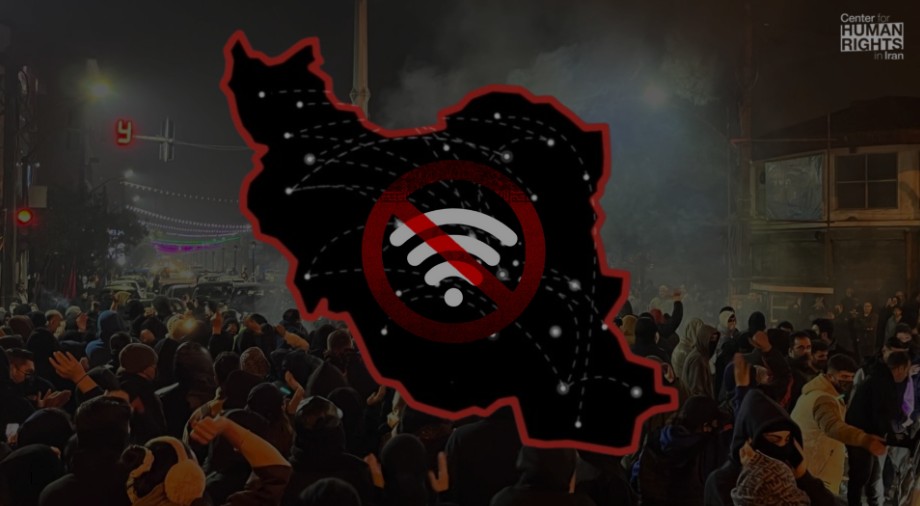
The Iranian regime has developed, with significant Chinese technical assistance, one of the most sophisticated internet shutdown architectures in the world. When protests erupt, as they did during the Woman, Life, Freedom movement and again in the massacre of early 2026, the first response is to sever communications. Not just social media. Voice calls. Encrypted messaging. The ability of a protester in Mashhad to know what is happening in Tehran or to coordinate with anyone beyond their immediate physical vicinity.
This is not a side issue. It is central to how the regime survives mass mobilization. A population that cannot communicate cannot organize. Those who cannot see each other’s courage cannot sustain it. The blackout is not an inconvenience; it is a precision instrument of counter-revolution.
The tools to counter it exist. Low-earth orbit satellite constellations can provide connectivity that terrestrial shutdowns cannot easily interrupt. Mesh networking technologies allow localized communication even when national infrastructure is severed. Advances in software-defined radio enable signals to reach devices without conventional infrastructure. The question is not technical feasibility. It is whether Western governments and the companies that control these technologies treat internet access for Iranians as a strategic priority or an afterthought.
The Biden administration granted a general license allowing certain internet services to operate in Iran. It was a start and inadequate. The Trump administration’s approach has been incoherent, maximalist pressure rhetoric combined with no serious investment in the connectivity infrastructure that would actually empower Iranian civil society. The gap between the declared goal of “supporting the Iranian people” and the practical steps taken to enable them to organize is enormous and, to Iranians watching from inside, deeply demoralizing.
The diplomatic track presents its own paradox. The nuclear file is real. An Iran with deliverable nuclear weapons changes the security architecture of the Middle East in ways that no regional actor, including those who publicly oppose Western pressure on Tehran, actually wants. The imperative to negotiate on the nuclear question is genuine. But there is a persistent and damaging conflation: treating progress on the nuclear file as requiring silence on human rights, and treating human rights advocacy as incompatible with diplomatic engagement.
This is a false choice, and the regime knows it and exploits it. Every time Western governments signal that the nuclear deal is the priority, Tehran’s internal security apparatus gains a degree of impunity. The message received in Evin Prison is the world will trade your suffering for its own security. That message is corrosive not only morally but also strategically; it tells the Iranian people that the West is, at bottom, indifferent to their fate.
A more sophisticated approach would decouple the tracks operationally while linking them rhetorically. Negotiate on the nuclear file. But simultaneously, coordinate with allies on individual sanctions, publicly name and designate the officials responsible for executions and torture, and make unmistakably clear that normalization of the regime is not on the table regardless of what happens with enrichment. These are not contradictory positions. They require political discipline that Western governments have consistently lacked.
There is one thing that outside powers cannot do, and clarity about this is essential. They cannot produce regime change. They cannot install a government. They cannot, through any combination of pressure and support, substitute for the political agency of Iranians themselves. Any strategy premised on the idea that the right sequence of external actions will topple the Islamic Republic is a fantasy and a dangerous one because it always ends up justifying escalation when each previous step fails.
What outside powers can do is alter the conditions under which Iranians make their own choices. Targeted sanctions that reduce the financial security of the repressive apparatus. Connectivity tools that enable communication when the state severs it. International legal mechanisms that document atrocities and create accountability that outlasts any particular government. Public, unambiguous solidarity with the women, students, and workers who have put their bodies on the line against a system that responds to protest with bullets.
Iran’s economy is at a breaking point. The currency has collapsed. The social contract between even the regime’s traditional support base and its leadership has frayed. The conditions for popular mobilization are arguably more mature now than at any point since 1979. What is uncertain is timing and spark, and what is clear is that when that moment comes, whether the outside world has laid groundwork or remained paralyzed will matter enormously.
There is no clean answer to Iran. There is only the discipline to use the tools that work, the honesty to abandon the ones that don’t, and the commitment to treat the Iranian people — not the Islamic Republic — as the actual interlocutor whose future matters. That reorientation, simple as it sounds, would represent the most significant shift in Western policy towards Iran in a generation.