Educator, Mother, Learner, Wife — Guided by Torah
The Truth About Yoatzet Halacha and Maharat Feminism
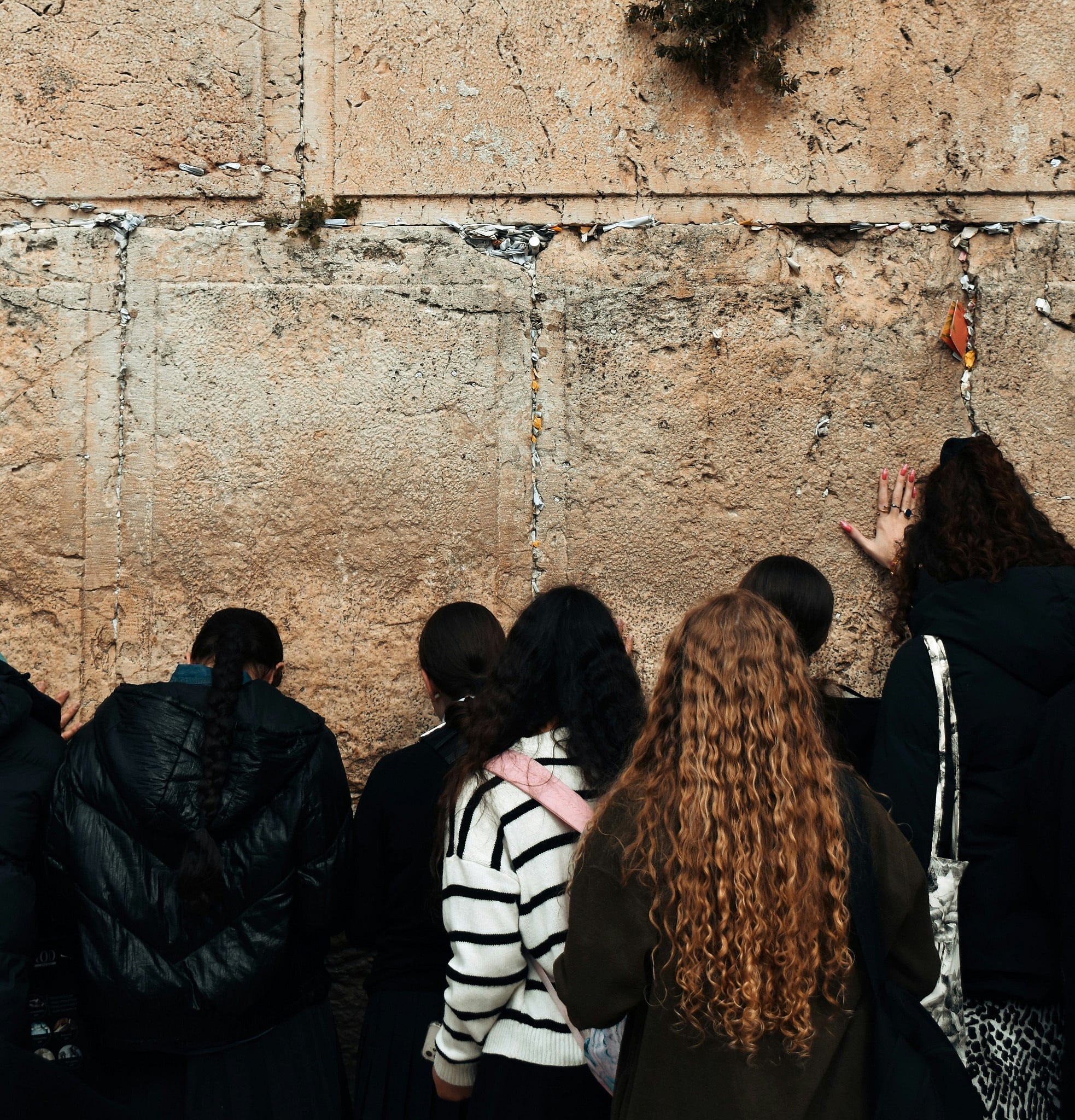
Jewish women do not need to act like men to matter (Anna Mircea, Unsplash).
As Modern Orthodoxy and Open Orthodoxy clash over authority, the traditional centres of Torah life in Brooklyn and Yerushalayim watch with quiet scepticism and amusement.
Seeing a War From the Outside
I write this as a woman who lives comfortably and confidently within the yeshivish and chareidi world. I do not experience my world as hostile to women. On the contrary, I experience it as structured, dignified, and deeply respectful of girls and women precisely because it insists on difference rather than sameness. Thus, when I watch Modern Orthodoxy contort itself to explain why yoetzet halacha is acceptable but Rabba, Maharat, or female rabbi is not, I do not see nuance. I see evasion.
We are told, repeatedly, that yoetzet halacha represents a modest, halachically responsible development, while Rabba, Maharat, or female rabbi represents a dangerous rupture with tradition. Yeshiva University, the Rabbinical Council of America, the Beth Din of America, and the Orthodox Union present themselves as the Modern Orthodox guardians of the mesorah precisely by drawing this distinction. Yet amidst all the careful language and institutional anxiety, the distinction collapses under even mild scrutiny. What remains is not a principled halachic line, but an institutional one. The fight is not simply “Orthodoxy vs. heresy,” but a family feud within Modern Orthodoxy itself — with Open Orthodoxy acting as the mirror Modern Orthodoxy cannot bear to look into.
The Illusion of Difference
Let us begin with clarity. A yoetzet halacha is supposedly a woman trained to answer halachic questions, originally limited to taharas hamishpocha, and the movement still describes itself that way. A Rabba, Maharat, or female rabbi is a woman trained to answer halachic questions more broadly, often with pastoral and communal authority, and often with an explicit title. These labels are not meaningfully different from one another. They are branding choices attached to the same functional claim: female halachic authority.
Modern Orthodoxy insists that the difference lies in paskening. Yoatzot, we are told, do not pasken; they “advise.” Female rabbis do pasken. But halachic authority does not operate primarily through job descriptions or disclaimers. It operates through trust, reliance, and communal practice. When a woman becomes the primary address for halachic questions, especially recurring ones, she is exercising authority whether or not the word psak appears on a website. Once that framework is accepted, attempts to draw a sharp halachic distinction between a yoetzet halacha and a female rabbi become exceedingly difficult to maintain. What remains instead is optics.
Indeed there is a right-wing critique here that is worth saying out loud: Modern Orthodoxy often acts as though the substantive difference is that one innovation looks “frummer” than the other. After all, a yoetzet halacha’s skirt usually covers her knees. Meanwhile Lakewood, Flatbush, Monsey, and Bnei Brak are thinking, with amusement: “where are your tights?” Regardless, if the dividing line is ultimately aesthetic, it is not really a halachic line at all.
A Turf War Disguised
This is not a clash between Torah fidelity and outside attack. It is a turf war within Modern Orthodoxy over who controls the boundaries of change.
On the Open Orthodox side stand Yeshivat Chovevei Torah, Yeshivat Maharat, and the Riverdale ecosystem around them (with SAR often treated as part of that broader orbit), alongside the International Rabbinic Fellowship, which functions as an alternative professional home to the Rabbinical Council of America. On the Modern Orthodox establishment side are Yeshiva University, the Rabbinical Council of America, the Beth Din of America, and the Orthodox Union — a single ecosystem, not rival camps posing as neutral referees.
The Modern Orthodox establishment does not oppose Open Orthodoxy because Open Orthodoxy invented something categorically new. It opposes Open Orthodoxy because Open Orthodoxy refuses to maintain the fiction that feminism has not reshaped Modern Orthodox assumptions. Rabbi Avi Weiss’s project, and the public saga around the Rabba and Maharat titles, was explicit enough that nobody can honestly claim this was merely a “local experiment” that got misunderstood. One may reject his conclusions — as I do — but his forthrightness about the direction of travel was unmistakable.
Modern Orthodoxy, by contrast, insists that it rejects feminism while steadily incorporating feminist outcomes: expanded female authority, reconfigured leadership roles, and a new language of religious legitimacy. The disagreement, then, is not over whether change is occurring, but over who gets to manage it, brand it, and deny it. This is where sociology becomes uncomfortable, as some resistance sounds less like halachic alarm and more like social distancing — reassurance that we are the serious ones. Modern Orthodoxy often operates with an unspoken axiom familiar in American Jewish life: everyone to my left is a heretic, and everyone to my right is a fanatic.
Money and institutional preservation are not incidental. Programmes that create new female quasi-clerical roles attract donor funding, communal prestige, and professional pipelines. Once such programmes exist, they must justify their expansion. That is not corruption; it is human nature. But it does mean that appeals to “pure halacha” ring hollow when institutional incentives go unexamined.

The Clarity of Lakewood
Defenders of yoetzet halacha often insist that yoatzot do not pasken. This claim may have been descriptively accurate at the very beginning. It is no longer accurate as a general description of how the role functions in practice. Yoatzot began with taharas hamishpocha, then expanded to “women’s issues” and in many communities became the first address for a widening range of halachic questions The line between advising and deciding blurred not because of individual bad faith, but because communal practice evolved. Even sympathetic summaries of the yoetzet phenomenon openly describe yoatzot as intermediaries handling a widening range of questions. In other words: you can draft endless policies insisting the role is “only advisory,” but if the community experiences her as the address, she becomes the address — a de facto rabbi.
A right-wing critique matters, because it cuts through the cosmetics. When the Moetzes Gedolei HaTorah of America condemned women in rabbinic positions, it did not treat “Rabba” versus “Maharat” as a meaningful distinction. It called the rebranding superficial and stated plainly that a congregation with a woman in a rabbinic position “cannot be considered Orthodox.” That statement was published with signatures from recognisable pillars of the yeshivish and chareidi world: Rabbi Shmuel Kamenetsky shlit”a, Rabbi Aryeh Malkiel Kotler shlit”a of Lakewood, Rabbi Dovid Feinstein zt”l of New York, Rabbi Yaakov Perlow zt”l of Brooklyn, and Rabbi Aaron Schechter zt”l of Brooklyn, amongst others.
That is precisely the point. In the yeshivish, chareidi and chassidish worlds — where true Torah Judaism is proudly practised against the tides of our time — people do not pretend that the difference between the yoetzet halacha model and the Maharat model is meaningful. Rabbi Yaakov Feitman was one of the first to see these interconnected issues and discuss them. They understand that both developments are downstream of the same ideological pressure: the translation of women’s learning into institutionalised public authority. In other words, the right is not confused about the direction of travel. Agudath Israel of America, Beth Medrash Govoha, Mir Yeshiva, and other true Orthodox institutions really understand what is happening. The right refuses to sanctify it or entertain the game at all. On the other hand, Modern Orthodoxy hates Open Orthodoxy so intensely, in part, because it recognises itself in it.
Gemara & Authority
At this point, it is worth stating explicitly what is often assumed but rarely articulated. In my world, women do not intensively learn Gemara — baruch Hashem. This is not experienced as deprivation or condescension, but as part of a coherent mesorah in which men and women cultivate different forms of Torah greatness. The question has never been whether women can master Shas, but whether doing so is appropriate or desirable for banos yisroel.
What is striking, then, is that both sides of the Modern Orthodoxy debate — Open Orthodoxy and its institutional critics — are broadly supportive of women learning Gemara. Open Orthodoxy celebrates it openly and ideologically. Modern Orthodoxy endorses it enthusiastically. The disagreement, therefore, is not truly about learning. It is about power, authority, and representation. Invoking women’s Gemara learning as proof that yoetzet halacha is benign while Rabba or Maharat is dangerous is a rhetorical sleight of hand. Both models arise from the same assumption: that advanced Torah learning must naturally translate into public halachic authority. That assumption itself is a matter under debate.
From a yeshivish perspective, this entire framing is already misplaced. Torah learning does not automatically confer authority, and authority is not the primary goal of women’s spiritual life. Radical feminists are not particularly common in my chareidi world.
Women Are Not Oppressed Where I Come From
Once authority is treated as the natural endpoint of learning, the conversation collapses into a false binary. We are told that the only alternatives are either female clergy or women forced into humiliating encounters with male rabbinic authorities. That binary is historically false. For generations, women brought sensitive shailos to rebbetzins or trusted female figures, who then conveyed the question to a rabbi discreetly. Tznius was preserved. Halachic authority was preserved. Female dignity was preserved. This model worked precisely because it trusted women without transforming them into clergy.
In my world, women are not oppressed. We are influential in ways that do not mimic male authority. Morahs shape generations. Rebbetzins define communal tone. Vaad HaTznius members structure norms. There is even a frum female ambulance service in Brooklyn blossoming. These are not consolation prizes; they are formative positions of leadership. I do not want to be just like men — nor do my friends. I want to be a woman within Torah. Women are not simply men who wear skirts — the differences are much deeper and more sacred than just appearance.
I am careful to say that I am not necessarily opposed to all change. Female-only kol isha concerts, for example, have developed in many yeshivish and chassidish communities with rabbinic backing and clear boundaries. Listening to Shaindy Plotzker is a highlight of my daughter’s day, for example, and Torah-approved female-only spaces help build her confidence. I am not against legitimate, institutionally-backed changes in line with Torah values. I am against borrowing feminist ideology and calling it “halachic progress” simply because it learned to dress in semi-Orthodox aesthetics. A yoetzet halacha is basically a female rabbi — just one whose skirt covers her knees.
Honesty Matters
One must conclude with clarity. I do not believe in yoetzot halacha. I do not believe in Rabba, Maharat, or female rabbi. These are two sides of the same coin. I believe all of these emerge from the same ideological root, and I reject that root. Post-modernist assumptions do not belong in our Torah world.
At the same time, I respect those who say openly that both are acceptable far more than those who say one is acceptable and only so if it remains within the correct social circle. Intellectual honesty, intellectual transparency, and intellectual consistency matter. A philosophically-coherent right-winger can respect a philosophically-coherent left-winger. We must understand that, in essence, the leaders of the Rabbi Isaac Elchanan Theological Seminary are just as much of progressive feminists as the leaders of Yeshivat Chovevei Torah and Yeshivat Maharat. Modern Orthodoxy cannot simply “self identify” as kosher while doing problematic things that are fundamentally the same as Open Orthodoxy.
Orthodoxy cannot indefinitely sustain itself on cosmetic distinctions. Dressing more tznius is not enough to cancel the binding nature of the Talmud. Titles are not the heart of the matter. Either feminism reshaping halachic authority is acceptable, or it is not. Thus, amidst the politics and the posturing, I am asking for something simple and demanding: honesty. We need honesty about ideology and honesty about power. We must have honesty about women, who are far more perceptive than these debates often assume. Amongst women who love Torah, cosmetic compromises are fooling no one.
Related Topics
Related Posts