
A voice from Morocco
Featured Post
The tunnel of comeuppance
The fighters holed up in Gaza are a litmus test for whether Hamas will disarm or preserve its myth of eternal 'resistance'
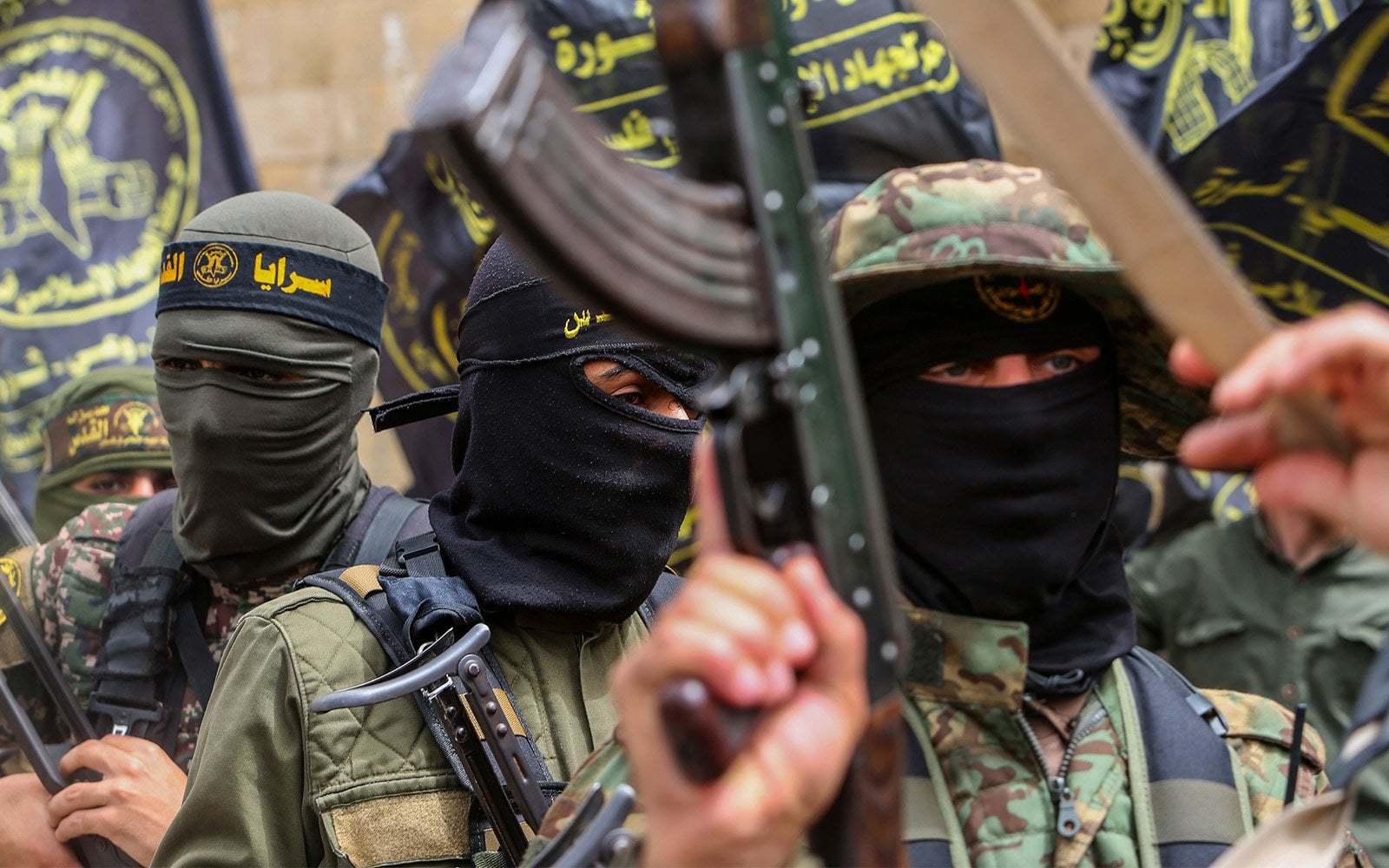
Supporters of the Hamas and Islamic Jihad terror groups take part in a rally to celebrate a shooting attack in Tel Aviv, in the southern Gaza Strip, on April 8, 2022. (Attia Muhammed/Flash90)
The 100-200 Hamas operatives trapped beneath the Israeli side of the Yellow Line are more than a military liability; they are a spoiler, a premature glimpse into the next act of a geopolitical drama that was meant to unfold on Washington’s terms. Some among them are believed to have killed Israeli reservists after the ceasefire, and may have also taken part in the October 7 massacre. Now, they are starving, suffocating, and surrounded. But their fate is not just a tactical dilemma — it is a strategic omen.
In a closed-door meeting with US envoy Steve Witkoff and Jared Kushner, Hamas reportedly gave its word: it would disarm. That promise was the cornerstone of the Trump administration’s 20-Point Plan, particularly its second phase, which hinges on Hamas’s demilitarization in exchange for amnesty. But the tunnel standoff has inadvertently accelerated the timeline. It has forced Hamas, and its patrons in Ankara and Doha, into a corner they were hoping to avoid. Now, that promise faces its first real test, not in a conference room, but in a tunnel. The 150 fighters underground are the first proof of sincerity Hamas must offer. Their surrender would be the plan’s opening scene – their defiance, its unraveling.
The optics are brutal. If the 150 surrender, it will be a televised renunciation of the very ideology Hamas claims to embody. The image of mujahideen laying down arms, raising up their hands, and submitting to Israeli custody would be a psychological rupture for their support base — a photo op that Israel would be tempted to seize, and one that Hamas, Qatar, and Turkey would dread seeing splashed across headlines from Cairo to Kuala Lumpur.
It would be the Arab world’s “Saigon moment” — a symbolic collapse of the resistance mythos. Al Jazeera’s Arabic headlines would struggle to spin it: “Allah’s warriors throw in the towel” is a bitter pill for any narrative of divine victory. It would be a propaganda catastrophe. It would be a symbolic collapse of the idea that Allah is greater, that Allah endorsed what they did on October 7, that Allah was their shield and sponsor. It would mean that the very deity in whose name they claimed to act is now letting them down. That’s not just a military defeat, it’s a theological humiliation.
But letting them die is no less damning. It would confirm what many have long suspected: that Hamas’s leadership is willing to sacrifice its own for the sake of ideological theater. In the group’s worldview, martyrdom is not a tragedy but a transaction. Death in the name of jihad is not an end but a promotion to paradise. This cynical calculus makes the proverb “the ends justify the means” not just a rationale, but a doctrine.
The world is watching
Qatar and Turkey, meanwhile, are scrambling. Qatar’s Tamim is reportedly exploring a rebranding of Hamas — new name, new logo, same dogma. Turkey’s Erdogan is convening summits, trying to square the circle of preserving Hamas’s ideological core while appearing to comply with US demands. But the tunnel has made abstraction impossible. The 150 fighters are not just trapped underground; they are trapped in a contradiction that no amount of diplomacy can bury. They are now the hostages. They are now the comeuppance. They are now the thorn in the throat of the terror lords. So swallow it quietly.
The world is watching, and many within the United Nations, including its Secretary-General, are wishing for these men to be granted safe passage, heads held high and arms intact. But that image, too, would be a rupture: a diplomatic indulgence that undermines the very promise Hamas made to Witkoff and Kushner. The tunnel is a tomb, a test, and a truth serum. It reveals the limits of Hamas’s maneuverability, the duplicity of its backers, and the fragility of the ideological scaffolding that has sustained it for decades. The world is watching not just to see if these men live or die, but whether Hamas can survive its own mythology.
This is the rock and the hard place. And it is precisely what makes this moment a litmus test, not just for Hamas, but for the entire regional architecture that has enabled its survival. The Trump plan, for all its flaws, has forced a moment of truth. Hamas cannot both promise disarmament and preserve the myth of eternal “resistance”. Qatar and Turkey cannot both play peacemakers and ideological patrons.
The tunnel is no longer just a physical space. It is a metaphor for the narrowing options of a movement — and a region — trapped between past dogmas and future deals. What emerges from it, if anything, will shape the next chapter of the Middle East.
Related Topics
Related Posts