
The United States is no longer leading the free world
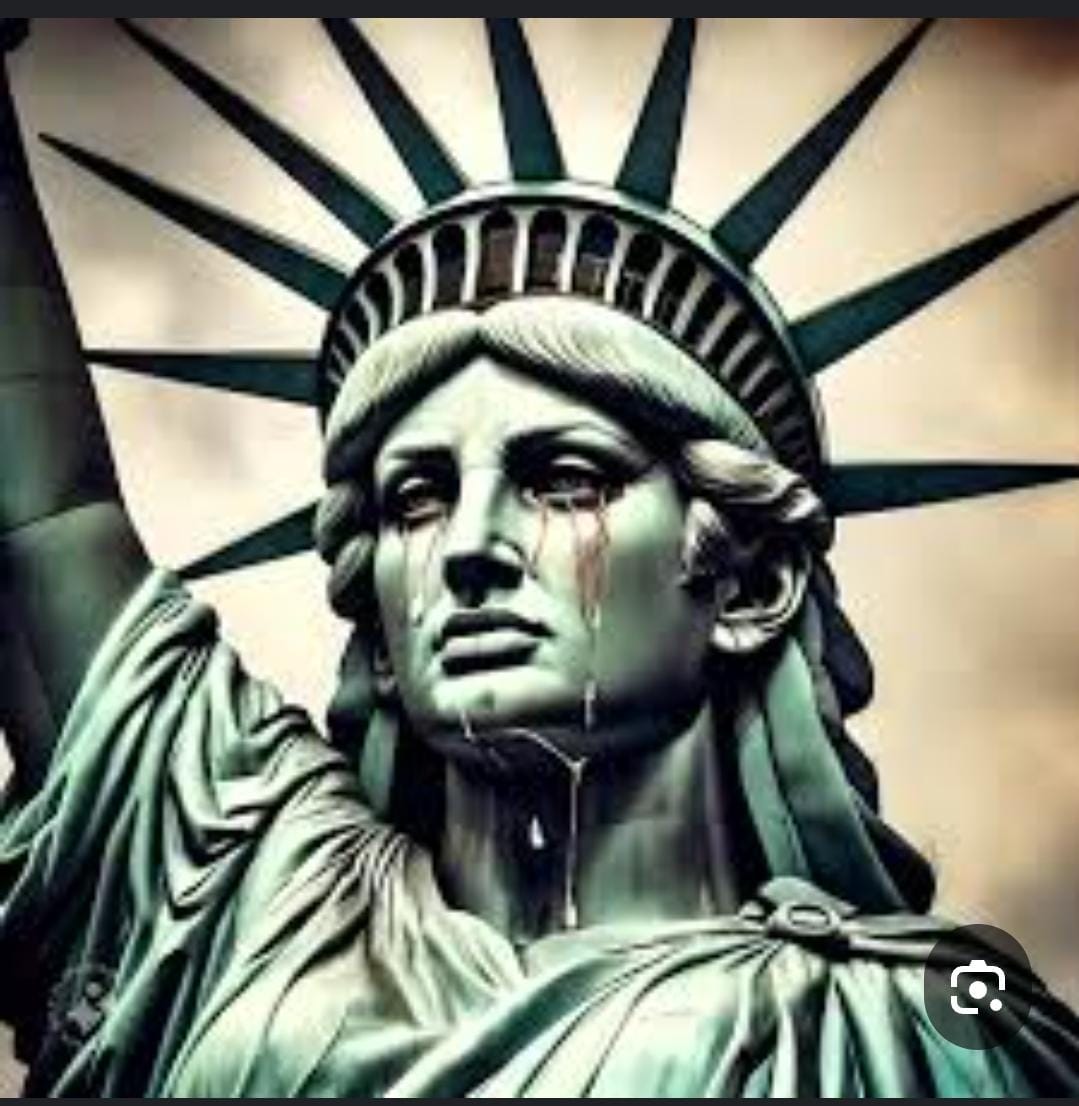
The United States – From Defender of Democracy to an Agent of Chaos
For most of the 20th and early 21st centuries, the United States was seen as the leader of the free world – the most powerful nation defending democratic values across the globe. Countries that sought US support knew that their friendship with it depended, at least in part, on identifying with democratic values of freedom, the rule of law, and human rights. That was the basis on which Americans understood their exceptionalism.
“We lead not by the example of our power, but by the power of our example,” American presidents have been fond of saying.
Alongside the “Camp of Democracies” led by the United States, dictatorial countries have operated and continue to operate on the international stage as “agents of chaos,” working to undermine democracies and sow instability. The most prominent of these is Russia, which has interfered in elections abroad in various ways to promote extremist candidates or to undermine public trust in the democratic process.
Against this backdrop, the re-election of Donald Trump as US President brought about a dramatic shift. Instead of spearheading the defense of democracies, the US itself is increasingly becoming an “agent of chaos,” undermining democratic regimes and the rule of law around the world.
In his first term, Trump displayed an affinity with authoritarian leaders. In his second term, the US itself is sliding toward becoming a “semi-authoritarian” state. Alongside the persecution of immigrants and damage to academia, healthcare, welfare, and education systems, Trump and his advisors praise illiberal rulers and attack democratic countries around the globe while simultaneously slashing USAID budgets for promoting democratic values abroad. The power that was traditionally a symbol of democracy has, under Trump, become a factor shaking the global democratic order.
A prominent example of this change is the Trump administration’s attitude towards Brazil. Jair Bolsonaro, the former president of Brazil, a right-wing populist and close ally of Trump, is on trial in his country on charges of an attempted coup, following his refusal to accept defeat in the 2022 election—paralleling events in Washington on January 6, 2021.
Under the Biden administration, the US cooperated with Brazilian authorities in investigating the January 2023 storming of government institutions in Brasilia. However, since Trump’s return to power, the policy has completely reversed. Instead of respecting Brazilian rule of law, Washington has begun to punish Brazil for the very fact of Bolsonaro’s prosecution. Trump unilaterally imposed a massive 50% tariff on all imports from Brazil, a punitive measure he claimed was intended to protest the “persecution” of his political ally. Simultaneously, Secretary of State Rubio took an unprecedented step by ordering the revocation of US visas for the justices of Brazil’s Supreme Court who are presiding over Bolsonaro’s case.
The US’s behavior under Trump is also having an impact on other arenas around the world and is encouraging leaders with authoritarian tendencies. El Salvador’s President Nayib Bukele, who agreed to open a prison in his country for migrants of different nationalities deported from the US, is now receiving legitimacy from the White House, despite being accused of violating human rights and weakening democracy in his country. He is not alone, and a growing list of authoritarian leaders around the world are feeling a “tailwind” since Trump’s return.
Alongside this, democracy activists in many places remain exposed without the American backing they had become accustomed to, and some are now even being persecuted more intensely. For example, after Trump and his team accused the United States Agency for International Development (USAID) of corruption, right-wing governments in places like Hungary, Serbia, and Slovakia rushed to launch investigations against local organizations that receive American funding.
Israel serves as another testing ground for Trump’s new policy, or rather, for his lack of respect for the rule of law and Israeli sovereignty. Initially, Trump tweeted against Netanyahu’s trial, even hinting that the US would freeze military aid to Israel if what he calls the “witch hunt” against Netanyahu continued. Shortly afterwards, his representative in Israel, Ambassador Huckabee, arrived to visit Netanyahu in court, equipped with a Bugs Bunny doll – a brazen, unprecedented intervention in a domestic legal proceeding.
We are also experiencing the consequences of the Trumpist propaganda machine. These were manifested in a fabricated report by the US Congressional investigation committee regarding alleged funding transferred from the Biden administration to Israeli protest organizations that worked to defend our democracy. Even right-wing figures in Israel were forced to admit that the conclusions of the report prepared by a committee composed of Trump’s loyalists did not reflect reality, but this did not prevent government representatives from using it to incite against protest activists.
This move against civil society organizations in Israel boosts the trends of the Israeli right to persecute organizations that promote human rights and a shared society while attempting to impose an 80 percent tax on all donations from foreign countries, with the aim of shutting them down.
In the absence of American leadership, leading European democracies, as well as established ones like Canada, Australia, and Japan, must step up and play a more active role in defending the values of freedom throughout the world. Alongside this, domestic opponents of Trump must work to utilize the internal checks and balances within the US. Trump may be determined, but there are still enough tools in the American system to make it difficult for him to take over American democracy entirely. For instance, federal courts have blocked or slowed down some of Trump’s new administration measures. It takes time to dismantle democracy, and the political system in the US – with a decentralized system of government (state governments, Congress, courts)—makes it difficult to concentrate power in the hands of one person. There is hope that these brakes will thwart some of the Trump administration’s extreme initiatives.
Trump’s second term presents a historic challenge to advocates of democracy, since the power that for generations has been an anchor of democratic values now serves, hopefully temporarily, as a destabilizing force. This period, challenging as it may be, could awaken new forces in the US and compel others to step up globally, reaffirming that democratic values will not be defeated, not even when the world’s most powerful nation loses its way.