
Educator, Mother, Learner, Wife — Guided by Torah
The US Constitution Does Not Follow You to Israel
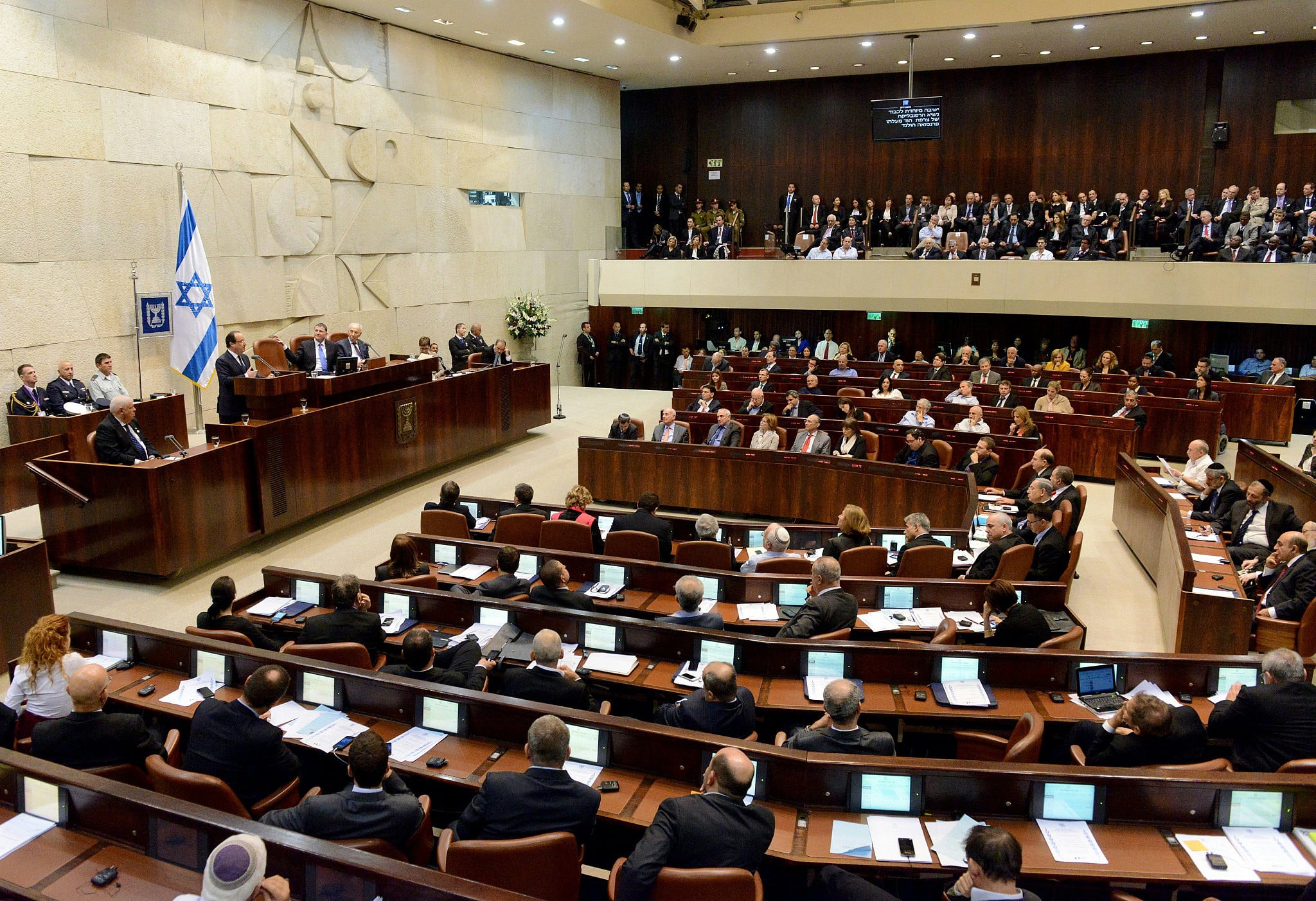
When words cross borders, responsibility must follow them (Rafael Nir, Unsplash).
American Jews often forget that the First Amendment is not a foreign policy or a global eruv.
One of the stranger habits of American Jewish life is the assumption that the United States Constitution follows American Jews wherever they go — even into Israel, even into Orthodox communal disputes, even into beis din, and even into conversations about another person’s name, family, Jewish status, or reputation.
There is a familiar kind of American Jewish bewilderment in Israel. The seminary girl who is shocked that a tiny falafel shop in Petah Tikva does not take American Express. The elderly tourist who cannot understand why the bus driver does not speak English. The visiting relative who discovers, with visible irritation, that Israeli bureaucracy was not designed around American expectations.
Most of this is harmless. Sometimes it is even funny. Americans arrive with assumptions, Israel corrects them, and everyone moves on. The problem begins when that same provincial confidence enters Jewish public discourse, and some American Jews seem to believe that American legal culture travels with them everywhere: into Israel, into Orthodox communal disputes, into beis din, and into the lives of people whose names, families, marriages, status, or reputations they discuss online.
The First Amendment is an American constitutional protection. It is not a passport, a diplomatic immunity card, or a universal license to defame people across borders. It does not govern Israel. It does not govern Jewish law — halacha. It does not magically convert loshon hora and motzi shem ra into brave public discourse because the words were typed in English from somewhere in America.
This is one of the more provincial features of American Jewish public culture. Many American Jews are so used to treating American assumptions as universal that they forget other societies have their own laws, values, and moral priorities. Israel has its own legal system. Halacha has its own categories. Europe, too, has never treated American free-speech absolutism as the natural law of civilization. In much of the democratic world, free speech is real, but it does not mean unlimited protection for hate speech, defamatory claims, or factually false statements that damage another person’s reputation.
None of this means that strong disagreement is wrong. Public writing invites criticism. If someone publishes an op-ed, readers may reject it, challenge it, mock its premises, or write a sharper response. That is part of public life, and anyone who writes publicly should expect it.
Disagreement, however, is not invention. Debate is not a license to fabricate claims about someone’s body, medical history, family, halakhic status, marriage, work, or standing in the community. Challenging an argument is one thing. Saying false things about the person who made it — or firing off petty ad hominems — is another. Hamas fires pathetic Qassams to terrorize. They are crude. They are often intercepted. They are ultimately answered by the resolve of Am Yisroel. Online character attacks have the same cheap logic. One engages the argument. The other attacks the human being.
Nor is the problem limited only to obvious lies. In both Israeli law and halacha, truth is not always a magic shield. Israeli defamation law does not treat “it was true” as the end of the conversation; truth must also be tied to a legitimate public interest. Halacha goes even further. Loshon hora can be true. A fact may be accurate and still be forbidden to publicize if it is exaggerated, distorted, irrelevant, or shared without toeles — without a proper constructive purpose. That is a very different moral universe from the American internet habit of treating every personal detail as fair game if it can be used to sway an argument.
American law often protects speech very broadly, especially when the subject involves public controversy. That is a choice the American system has made — shaped by American history, American constitutional culture, and a deep paranoia of government censorship and repression. There is a specific logic to that framework, but there is also a cost. A society that protects speech almost reflexively may leave reputational destruction under-protected, especially when the person harmed lacks the power, money, or institutional backing to fight back.

Israel makes a different choice. Israeli law places greater weight on a person’s good name. It recognizes that reputational harm is not imaginary simply because the damage travels through a screen. Humiliation, contempt, ridicule, and damage to communal or professional standing are real injuries. In some cases, a person may even face liability for defamation without the plaintiff proving specific monetary losses. One does not have to prefer every aspect of Israeli defamation law to understand the basic point: America may treat speech as almost untouchable, but Judaism has never treated another person’s good name as disposable.
The internet has made this confusion worse. People imagine that online speech floats above geography, law, and responsibility. A post written in English may be read in Israel. A false claim made from America may damage someone’s reputation in Israeli, Jewish, Orthodox, professional, or family life. An article in an Israeli publication may draw responses from abroad, yet those responses do not exist in a magical legal vacuum. The internet is not a legal force field.
It is also not a beis din — a rabbinical court. A social-media pile-on has no dayanim, no process, no claims, no evidence, no right of response, and no yiras Shomayim built into its structure. It has speed, cruelty, screenshots, applause, and the thrill of watching someone else become the entertainment of the day. That may be content for the reshaim — the wicked — but it is not justice.
A beis din is a serious forum. Its premise is that disputes require process. A person is summoned. Claims are heard. Evidence matters. Words have consequences. In some cases, when beis din is not possible or a party refuses to participate, a heter arkaos may permit recourse to secular court — a process many of us have followed properly, not as a slogan, but through rabbinic guidance. That, too, is process. It is not a tantrum. It is not “lawfare.” It is the recognition that even anger must pass through structure.
This is where Jewish public discourse has become dangerously unserious. People invoke Torah language while behaving like secular influencers, trying to staple a few frum words onto very American — and very non-Jewish — culture-war propaganda. They talk about truth while spreading rumors. They claim to defend Orthodoxy while ignoring rabbinic authority when it becomes inconvenient. They speak of women, converts, families, children, rabbis, and communal standards as if these are props in a content strategy.
That is not emes. It is branding.
If you disagree with someone, answer what they wrote. Challenge their ideas. Write the sharper op-ed. Make the stronger case. Thus, disagreement remains what it should be: an argument amongst adults, not an excuse to invent a person you would rather be destroying.
Some people prefer online theatre: anonymous rumors, social-media pile-ons, photo-less accounts, pseudonyms, podcasts, comment sections, and clicks. I have no interest in litigating my life for their entertainment. Serious claims belong in serious forums. There was a time when I felt compelled to answer every distortion on its own terms. I no longer believe dignity is restored that way.
If someone chooses to publish falsehoods about my private life or communal standing, they should not mistake my refusal to perform outrage online for passivity. The response may not come as a thread or a reel. It may come through lawyers, dayanim, and the proper channels.
The internet may reward spectacle. Torah, law, and basic decency still require evidence, process, and truth. I do not answer to the mob, the algorithm, or the loudest voice in the room. Every word is weighed before HaKadosh Baruch Hu.
Related Topics
Related Posts