"These fragments I have shored against my ruins"
The Violin With No Voice (For Children And Sensitive Readers)
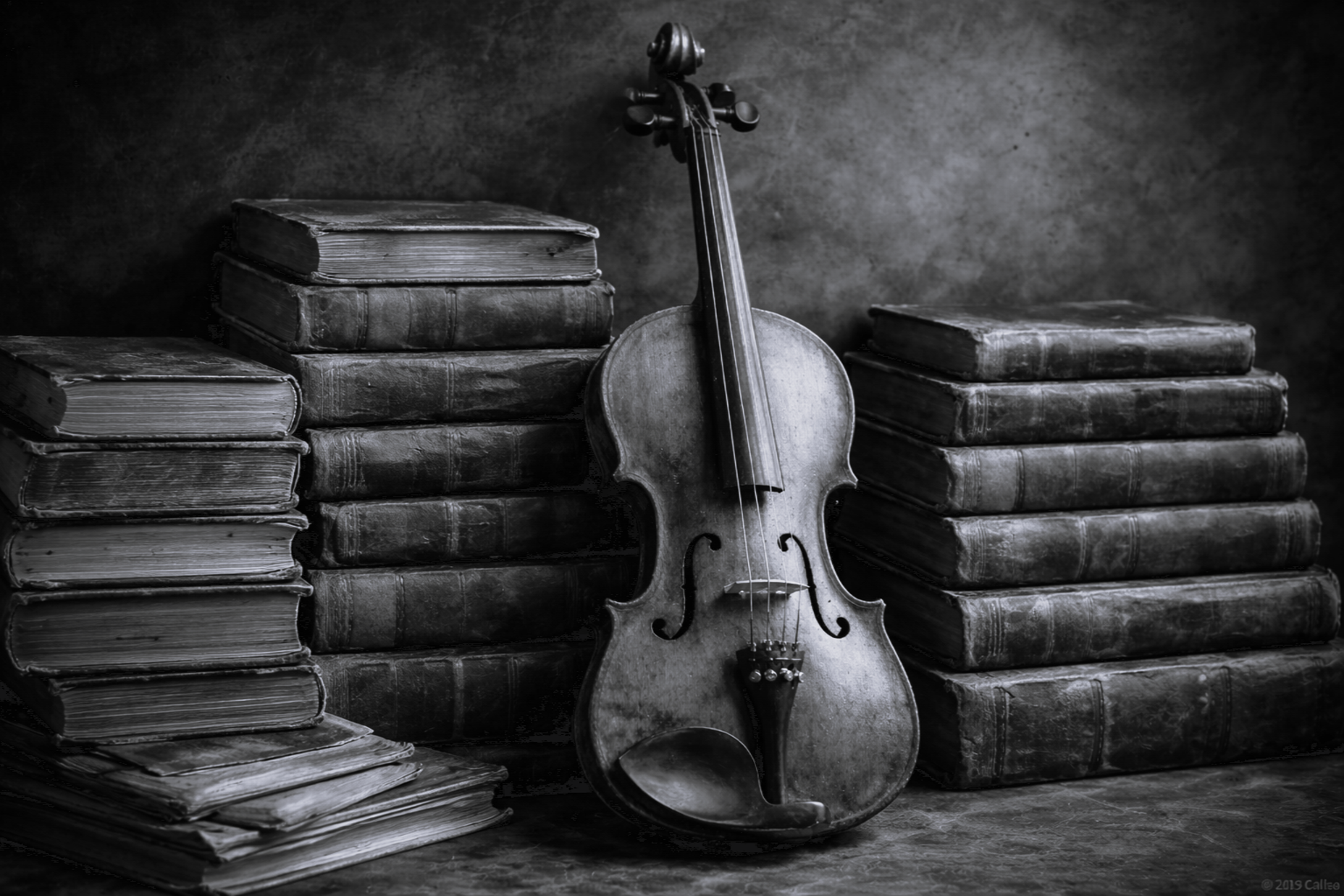
The violin with no voice (Photo courtesy of the author)
Speaking about death and loss is never simple, and speaking to children about them is harder still. The Holocaust — six million lives extinguished, countless worlds erased — resists comprehension even in adulthood. Yet memory does not vanish when speech falters; it persists in gestures, melodies, silences, in those small and stubborn forms by which one generation reaches the next.
We are now living through what memory scholars have called the “floating gap,” that precarious threshold where communicative memory gives way to cultural memory. For my generation, survivors were simply part of life; family who raised us, neighbors next door, teachers in our classrooms, doctors in their offices, friends who came for dinner and stayed late into the night telling stories. For my daughter’s generation, that connection is already less direct, more mediated through books, commemorations, archives, and institutions. For my daughter’s generation’s children, the world of witnesses will be gone altogether. In that changing landscape, speaking to children about the Shoah acquires a different urgency, and perhaps a different kind of humility as well.
This story is my small contribution to that conversation. It does not seek to explain the Holocaust to young readers, still less to reduce it to a lesson. Instead, it moves through absence, through what is not said, through the kind of silence that allows a child to sense there is more beneath the surface than the surface can hold. I wanted to trust that children, and those who read with them, can feel the weight of what lies beyond the page without being forced into it too soon.
The subtitle, “For children and sensitive readers,” comes from Danilo Kiš’s Garden, Ashes. I have always loved its firmness and its delicacy at once: a phrase that does not shy away from difficulty, yet leaves room for vulnerability, for the particular attention with which some stories must be approached.
The story itself follows Leah, a child who begins in modern indifference to “the past” and finds herself drawn into memory through a cracked violin and a melody that seems to arrive from elsewhere. For many assimilated Jewish families in the diaspora, where religion no longer functions as the principal vessel of continuity, belonging often travels through such fragile forms — through objects kept, songs half-remembered, gestures repeated without quite knowing why. A child plays a tune she never learnt; an older woman recognizes in it a world thought lost. Between them, something passes.
On Yom HaShoah, that is what I wanted to make visible: not explanation, but recognition; not instruction, but an opening. A story can do that. It can leave a trace, and trust the reader to follow it.
***
Leah never liked old things. Her parents were always dragging her to museums and old cemeteries during holidays, whispering about heritage, while she only wanted ice cream. For her, the past was a dusty attic where adults stored everything and refused to clean it out.
That summer, while her friends flew to Spain or Greece, they went to Poland. Her mother said, “It’s important to see where our family once lived.” Leah wasn’t sure anyone was still alive to care. Her great-grandparents had left before the war, a phrase that in family stories sounded the same as before the flood.
The town they visited was small, full of square grey buildings that all looked the same. Only the main street, with its old clock tower and uneven cobblestones, still kept some color. There were a few restored façades, and one shop window that caught Leah’s eye: antique candleholders and old photographs of the town’s streets full of signs, windows stacked with goods, people smiling.
While her parents took pictures a crumbling building marked by a plaque written in letters she couldn’t read, Leah slipped into the shop. The air smelt of dust and furniture wax, the kind that clings to old wood and memory. A black cat slept curled on a pile of books printed with those same unreadable letters.
In the corner stood a small violin, leaning against the wall. Its varnish was dull amber. It was a little cracked but not broken.
“How much for this violin?” Leah asked the old shopkeeper, a man in a cap with a tired, unreadable face.
“For you?” he said. “It doesn’t play.”
“I’d still like it.”
He smiled faintly. “Then you must have a reason.”
Leah hesitated. “Maybe it belonged to someone who couldn’t finish their song.”
The man studied her face: the stubbornness in her eyes, the dark curls falling over her forehead. “Maybe,” he said quietly. “And maybe it waited for someone who would.”
Leah didn’t answer, because she didn’t exactly know why she wanted it. But something about the silence felt unfinished. She ran her fingers along the cracked wood, as if listening for something. The shopkeeper watched her for a moment, then nodded and began wrapping the violin in newspaper. He didn’t say anything more, just wrapped it carefully, like something that still mattered.
When her parents found her, she was already counting her zlotys.
“Leah, darling,” her father sighed. “We can’t buy every souvenir we see. And the airline will charge for extra baggage.”
“It’s not a souvenir,” she said. “I’ll pay from my allowance,” Leah whispered. “Please.”
Her mother didn’t say anything. She just looked at Leah, then at the wrapped violin, and nodded.
That evening, back in the hotel, she tried to make it sing. The strings were slack, and the bow left only a dry whisper. Disappointed, she set it on the windowsill. The night wind moved through the curtains, touching the strings. For a moment, she thought she heard a note, something faint, trembling, almost like a sigh. But when she looked again, the violin was silent.
At home in London, life went on. The violin hung on her wall, between a photo of her cat and an old postcard of a hillside city where white stone houses stacked like steps and sunlight so bright it spilt down narrow alleys turned something golden in the distance. Her friends laughed. “You brought back a broken violin from Poland?” But sometimes, before bed, Leah stood in front of it and wondered what the shopkeeper had meant.
A few weeks later, in music class, the teacher passed around a school violin for everyone to try. When her turn came, Leah raised it to her chin and drew the bow. A sound rose. It was soft, wavering, unlike anything she’d heard.
The teacher frowned. “What piece is that, Leah? Smetana, maybe?”
Leah shook her head. “I wouldn’t know.”
That night, she took her old violin down from the wall. The crack in its body glimmered like a scar that wouldn’t fade. She looked at the violin for a long time, as if it might tell her something. Then she studied the crack, even ran her fingers along it, before tightening the strings and picking up the bow.
This time, it spoke. Fragile but real, like a voice clearing its throat after a long silence. From then on, Leah played every day. Each day, the sound grew clearer. The melody wasn’t quite sad, but not happy either. She didn’t use notes; the music seemed to find her fingers by itself.
One evening her mother stood in the doorway. “That song… where did you learn it?”
“I didn’t,” Leah said. “It came with the violin.”
Her mother looked at her strangely, as if seeing her for the first time. “You play just like my grandfather,” she whispered. “He held his head that same way.”
When the school announced a neighborhood festival, Leah’s teacher asked if she wanted to perform. She surprised herself by saying yes. Maybe it was time. The violin had waited long enough.
On the day of the festival, the park was full of music and chatter. Leah stood at the edge of the stage, the small violin polished but still cracked, the bow freshly strung. When she began to play, the world around her fell silent. The melody flowed like sunlight through old glass. It rose, wandered, returned. Children stopped playing and parents turned their heads. At the back of the crowd, an elderly woman gripped her cane. Tears ran down her cheeks.
When the applause faded, she came closer and touched Leah’s bow hand.
“Your curls,” she whispered. “Just like mine once were. My brother played that tune back in Poland, before… before…” She didn’t finish the sentence. “I never thought I’d hear it again.”
Leah didn’t know what to say. The woman smiled through her tears. “Keep playing, little one. Some songs wait a very long time to be found again.”
That night, Leah sat by her window, the violin on her lap. London’s lights flickered below, cars moving like slow fireflies. She drew the bow once more. The melody returned, but it was fuller now, with something new inside it, a harmony she hadn’t known before.
She thought of the small Polish town, the cobblestones, the shopkeeper, and the faint sound in the wind. She thought of her great-grandfather, whose name she barely knew, and the old woman who said she looked like her. She didn’t know if the violin truly remembered, or if she only imagined it. But one thing she felt for sure: when she played, something that had waited for a very long time was no longer alone. And somewhere, between the sound and the silence, the world seemed to breathe again.
Related Topics
Related Posts