
The Vision Revolution Israel Is Missing
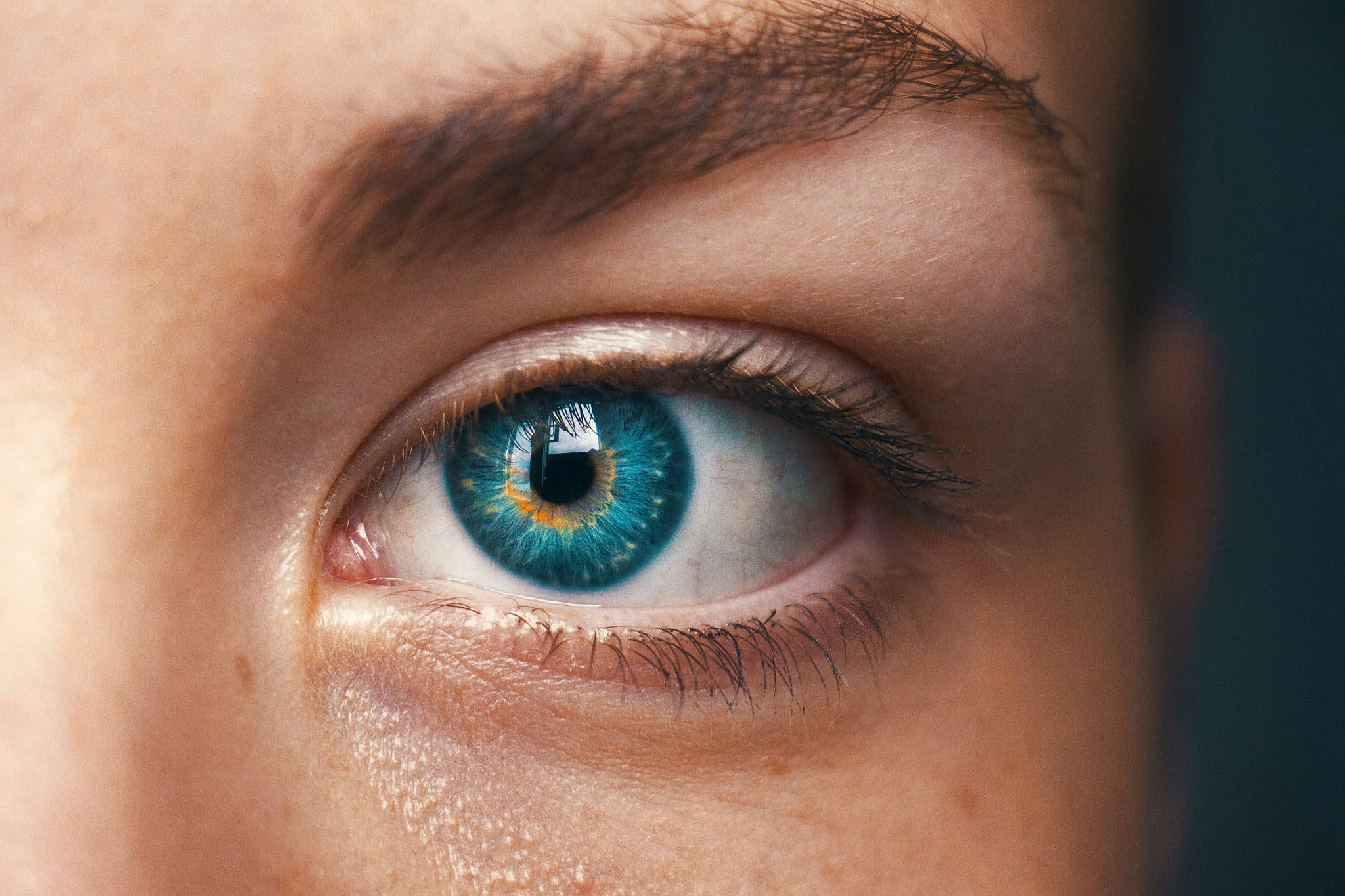
The human augmentation technology that Startup Nation invented and forgot.
1. How Far We Have Come
In a previous piece for The Times of Israel, I wrote about how Israel became the world’s most consequential computer vision ecosystem, examining breakthroughs, companies, and ideas that shaped this field. From Mobileye that created AI software that understands roads and traffic and real-time video to detect lanes, pedestrians, and traffic signs; OrCam that created devices to help blind or low vision people to instantly read text, recognize faces, and identify products; UVeye that created a touchless inspection system to scan vehicles in seconds, to Trigo that, using ceiling cameras, tracks shopper movements and product picks in retail stores, without using faciaBackedl recognition.
All this AI technology Israel built was mainly aimed at the physical world: cars, cameras, factories, and stores, processed at the “edge”, where the action is, not in some distant cloud. Machines were the easier problem. The contracts were there. The ROI was measurable. So, the ecosystem that invented modern computer vision quietly optimized itself for everything except the one entity that actually drives the global economy: the human being.
This is a fallacy: machines do not buy products, book flights, choose restaurants, or decide between two brands on a supermarket shelf. Every company that has ever bought a computer vision system ultimately runs on human decisions.
The companies that built on Israel’s computer vision foundation tell the story clearly. They are extraordinary companies solving real problems at real scale, pointed in the same direction: making machines and commercial environments smarter, faster, more efficient. The retailer benefits. The logistics operator benefits. The fleet manager benefits. The shopper, the driver, the pedestrian moving through all of these environments remain exactly as they were. Unaugmented. Unaided. Still running on biological perception alone in a world that has already moved on without them.
OrCam was the exception. Born from the same DNA as Mobileye, founded by Amnon Shashua, it was the one Israeli company pointed directly at human augmentation. Its wearable AI device worked, sold, changed lives.
And then OrCam pivoted toward audio. Away from vision. The most promising Israeli attempt at giving humans an AI perception layer quietly retreated from the hardest and most important part of the problem. The glasses were left behind. The door was left open.
2. How far we still have to go
.lumen, a Romanian startup, noticed the gap and built something remarkable. Founded by Cornel Amariei .lumen develops what it calls Pedestrian Autonomous Driving AI, the same algorithms and AI models that power a self-driving car, miniaturized into a wearable device for blind and low-vision users. Backed by the European Innovation Council and supported by Intel, Nvidia and Microsoft, with over 50 researchers, engineers, and designers, and $15 million raised, .lumen is not a small experiment. It is a serious technical operation.
.lumen’s glasses run the world’s best Pedestrian Semantic Segmentation ML model, tested in over 20 countries. The device, built entirely in-house, perceives the environment in 3D, mapping, visual odometry, and semantic surface understanding. It runs human-centered path planning algorithms: the same logic a self-driving car uses to decide where it can safely go, rewritten for a pedestrian navigating a city street. The processing happens entirely on-device, on an AI-powered wearable, with no cloud dependency. As the company puts it: “Everything a self-driving car does, 70% of the performance, 10% of the size.”
“We basically took the same algorithms and AI models of a self-driving car and applied them for the pedestrian world,” Cornel Amariei told me. “A self-driving car uses cameras and sensors to understand the environment, decide where it can safely go, calculate a path, and continuously correct that path. We do the same thing, except the computer is on your head and the vehicle is a human being.”
The engineering challenges were not where you might expect. “The transfer sounds obvious until you try it,” he added. “A flat surface is not necessarily a safe surface. A road can be perfectly flat and still have cars driving on it. A lake can be perfectly flat too. The system has to understand what a surface means, besides its geometry. Then came the hardware. We needed enough computing power to run this in something you can actually wear on your head. And then we discovered that AI wasn’t even the only difficult part: every head is different. We ended up studying anthropometry, weight distribution, adjustability, and hundreds of forehead scans. As I like to say, we accidentally created the world’s largest forehead study.”
On why .lumen stayed focused on vision when the rest of the industry moved toward audio, Amariei was direct and refreshing: “I don’t think there is another company in the world building what we are building. Most assistive technologies use audio, or sometimes haptics, to represent the environment. They convert visual information into non-visual information. I think that is fundamentally wrong. The world is simply too complex to represent everything around you. Our approach is different: the AI understands the environment, decides where it is safe to walk, and gives you one simple instruction through haptics: the direction to move. Blind people already rely heavily on hearing to understand the world. We don’t want to interfere with something that already works.”
Some blind users have operated the device with zero training. “That’s what a universal interface should feel like,” Amariei explained.
On where .lumen is going: “It took humanity thousands of years to get to around 28,000 guide dogs in the world. The moment we ship our 28,001st pair of .lumen glasses, we have changed a millennia-old paradigm. That’s goal number one. We already have plans up to goal number seven. And the glasses are only the first application of our Pedestrian Autonomous Driving AI. The same technology that guides a human can eventually guide a humanoid robot.”
.lumen is not alone. Around the world, there is a trend for visual human augmentation. Iridescence, founded by researchers from the University of Tokyo and the Technical University of Munich, is taking an entirely different architectural approach. Their Beaming Display eliminates power and weight from the glasses frame by projecting augmented reality imagery directly to the eye from an external source. The system uses a precisely calibrated light engine to beam imagery through conventional lenses, meaning the glasses themselves require no electronics, no battery, and no processing unit. The intelligence sits in a separate device that communicates wirelessly with the frame. No heavy hardware on the face. Just light, aimed precisely at the retina, carrying the full visual information of an augmented world.
Two companies. Two completely different technical architectures, both aimed at the same problem, one that Israel developed the tools to solve, and then walked away from.
This is not an isolated phenomenon. Meta has sold over a million Ray-Ban smart glasses, not because they are technically impressive, but because the market is voting for the direction. Google is returning to glasses. Apple Vision Pro exists.
Ohad Hever, COO and Co-Founder of UVeye, told me in a previous interview that Israel’s enduring advantage is “the habit of building for high-consequence, real-world conditions and deploying at scale.” That is precisely the capability required to build what .lumen and Iridescence are building. Israel has the discipline, the talent, the research infrastructure, and the ecosystem. What appears to be missing is the decision to point all of that at the human being.
The guide dog has long been the gold standard for blind navigation. But 28,000 guide dogs serving 338 million blind and visually impaired people is hardly a scalable solution. It never was.
The technology to replace this, or more precisely, to give every blind person something better than a guide dog, was largely invented in Israel: the algorithms, the edge compute architecture, the computer vision models, and the wearable form factor research. .lumen and Iridescence are building with it now. The question is not whether Israel missed the train. It is whether there is another one leaving.