
The War Did Not End for Them
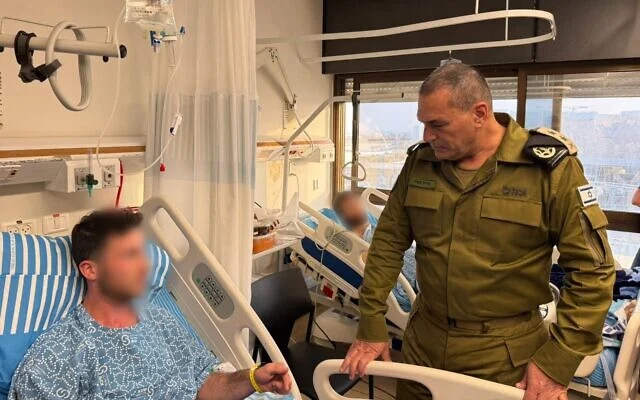
Israel’s deepest obligation to its wounded heroes
The war may have faded from headlines and daily briefings, but for many of Israel’s wounded veterans, it never truly ended.
I think often of the men and women who returned home not to parades or closure, but to wheelchairs, hospital corridors, and long, uncertain days of rehabilitation. They fought with courage beyond words, absorbed injuries meant for the rest of the nation, and now live with bodies and minds permanently altered by their service.
Israel has always known how to rally in moments of crisis. Its deeper test comes afterward – in the quieter months and years – when resilience is measured not by battlefield victories, but by how faithfully it stands beside those who paid the highest personal price for the nation’s survival.
I have long admired the Israeli Defense Forces not only for their operational brilliance, ingenuity, and courage, but for something even more profound: the moral covenant they represent between the state and those who defend it.
Israel asks much of its sons and daughters. In return, it owes them more than medals, ceremonies, or eloquent speeches; it owes them lifelong care, dignity, and unwavering support.
That is why the latest figures emerging from Israel’s rehabilitation system have left me with mixed emotions. On the one hand, I am full of admiration for the Defense Ministry’s Rehabilitation Department – its scale, its professionalism, its genuine effort to adapt to a catastrophe unlike anything Israel has faced before.
On the other hand, I cannot shake a quiet disappointment, even unease, that for all the budgets, committees, and conferences, Israel is still failing too many of its wounded and mentally challenged veterans – especially those confined to wheelchairs, many classified with 100% disability, and those carrying invisible wounds that do not heal with time.
More than 22,000 wounded soldiers have been treated since October 7, 2023. Nearly 60 percent are battling PTSD or other mental health conditions. By 2028, that number may rise to 100,000 wounded veterans, half of them psychologically scarred. These are not abstract statistics. These are young men and women – reservists, conscripts, career soldiers – who ran towards gunfire, who pulled comrades from burning vehicles, who saw things no human being should have to see.
Israel has always prided itself on resilience and renewal. But resilience is not denial, and renewal cannot happen without healing.
Don’t get me wrong: Israel’s rehabilitation system is doing many things right. The rapid deployment of rehabilitation teams to hospitals within days of October 7, the “rehabilitation before bureaucracy” principle, the assignment of personal case managers, and the extension of psychological support to families are all commendable. Hosting the first International Rehabilitation Conference was not just symbolic; it signaled that Israel is willing to innovate, learn, and lead globally in veteran care.
In many ways, this is Israel at its best – innovating the future of Israel not only in missiles and microchips, but in human-centered systems of care.
And yet.
Israel is still facing a brutal mismatch between need and capacity. One rehabilitation worker for every 750 patients is not a system – it is triage under strain. A 12-to-15-session mental health framework may help some, but for others – those with chronic PTSD, compounded trauma, or severe physical disability – it is simply not enough. Trauma does not operate on a timetable.
Wheelchair-bound veterans tell a particularly painful story. Nearly 900 veterans rely on wheelchairs; more than 600 are classified with over 100% disability. Many are young. Many were injured in the past two years. Their lives did not end on the battlefield – but in many ways, the life they knew did.
If Israel can plan multi-year weapons procurement and decades-long intelligence strategies, surely it can plan lifelong rehabilitation pathways.
The most disturbing data, however, concerns mental health and suicide. Since early 2024, hundreds of soldiers have attempted suicide. Combat soldiers account for nearly 80% of cases. Most had not seen a mental health officer in the months before their deaths.
That should chill every one of us to the bone.
Israel rightly honors the fallen – 922 soldiers killed since October 7 – but what about those who survived the battlefield only to lose the war within themselves? When a reservist medic who served 300 days evacuating bodies under fire takes his own life months after discharge, can we really say the system has fulfilled its duty?
Psychological injury is not weakness. It is not failure. It is a wound of war – no less real than an amputated limb or a spinal injury. When recognition, benefits, or even burial honors hinge on whether an injury is physical or psychological, something in Israel’s moral compass has gone badly askew
I welcome the formation of new committees, reviews, and proposed legislation. But committees do not heal trauma. Speed matters. Sensitivity matters. Continuity matters.
The cost of neglect is not only human; it is national. Untreated trauma spills into families – into marriages, into children’s lives, into homes filled with tension, silence, or fear. It spills into workplaces, productivity, and Israel’s innovation economy, where reservists make up a disproportionate share of high-skilled talent.
Mental trauma already costs Israel tens of billions of shekels annually. Over five years, the economic toll may reach half a trillion shekels. But even that staggering figure understates the real cost: lost potential, fractured families, and a quiet erosion of trust between the state and those who serve it.
Resilience is not merely surviving external threats. It is sustaining the internal fabric of society.
‘They came home, but they never really came back’
I do not doubt the intentions of Israel’s leaders, commanders, or civil servants. I know many are working tirelessly under impossible conditions. But good intentions are no longer enough. Israel must make veteran mental health and long-term rehabilitation a top-tier national priority – above coalition politics, above bureaucratic turf wars, above short-term budget calculations.
This means more therapists, faster recognition, lifelong care models, smoother transitions from military to civilian systems, and explicit acknowledgment that psychological injury can kill just as surely as shrapnel.
Most of all, it means listening – to veterans in wheelchairs, to parents burying children who survived war but not its aftermath, to spouses who say, “They came home, but they never really came back.”
Israel’s story has always been one of extraordinary resilience and renewal: from a nation of returnees from exile to a global innovation powerhouse, from existential wars to technological miracles. Yet the true measure of renewal will not be found only in GDP charts or battlefield victories.
It will be found in how Israel treats those who gave everything – and came home wounded in body, mind, or both.
The IDF must not fail these gallant former soldiers. Not now. Not quietly. Not slowly.
If Israel can innovate missile defense systems that intercept threats in midair, it can innovate systems that intercept despair before it claims another life. That, too, would be innovating the future of Israel – and honoring the deepest meaning of service, sacrifice, and shared responsibility.