The War No One Sees
Israeli Defense Forces reserve spokesperson for Portuguese-speaking countries warns of the sophistication of digital disinformation and its impact on perceptions of complex conflicts
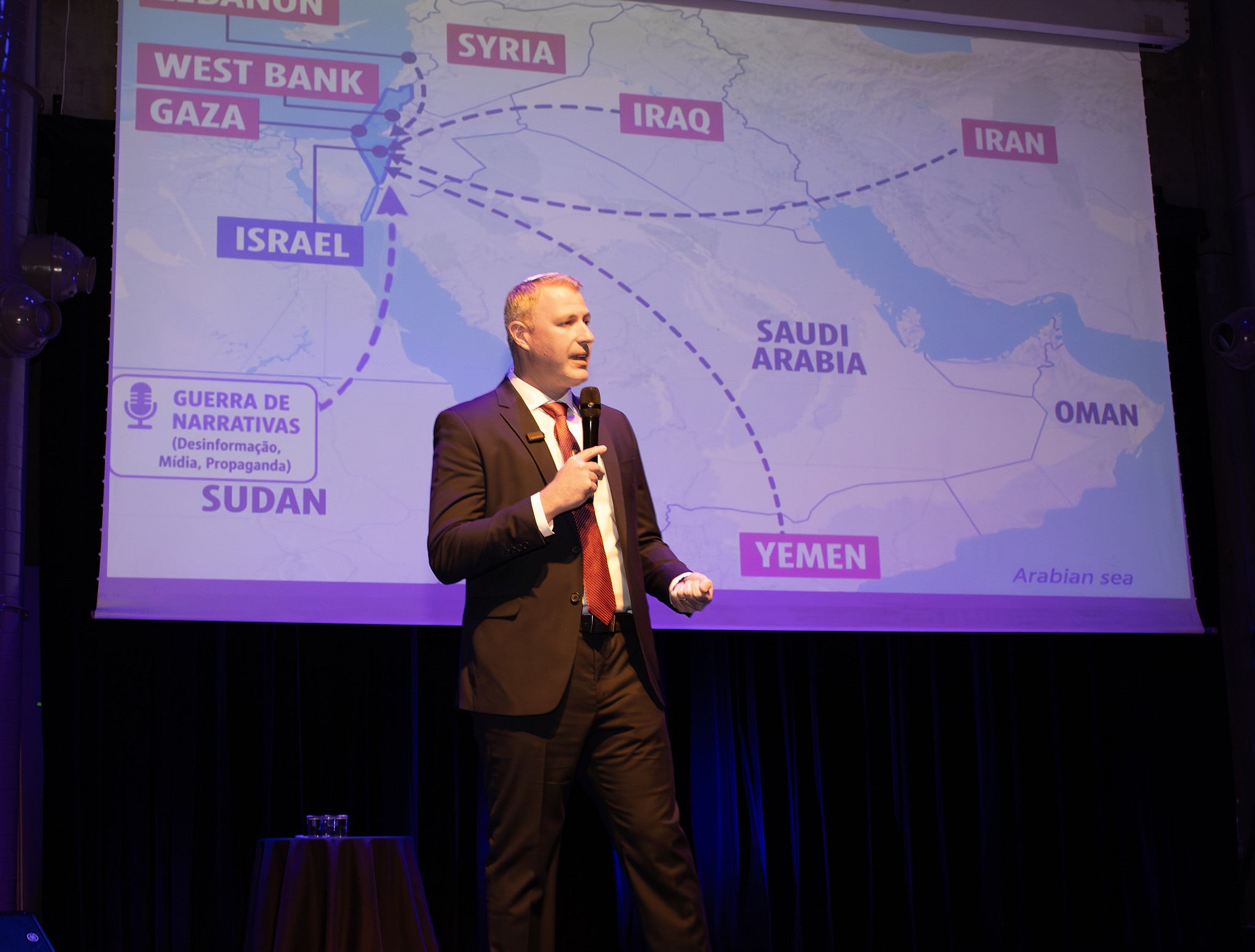
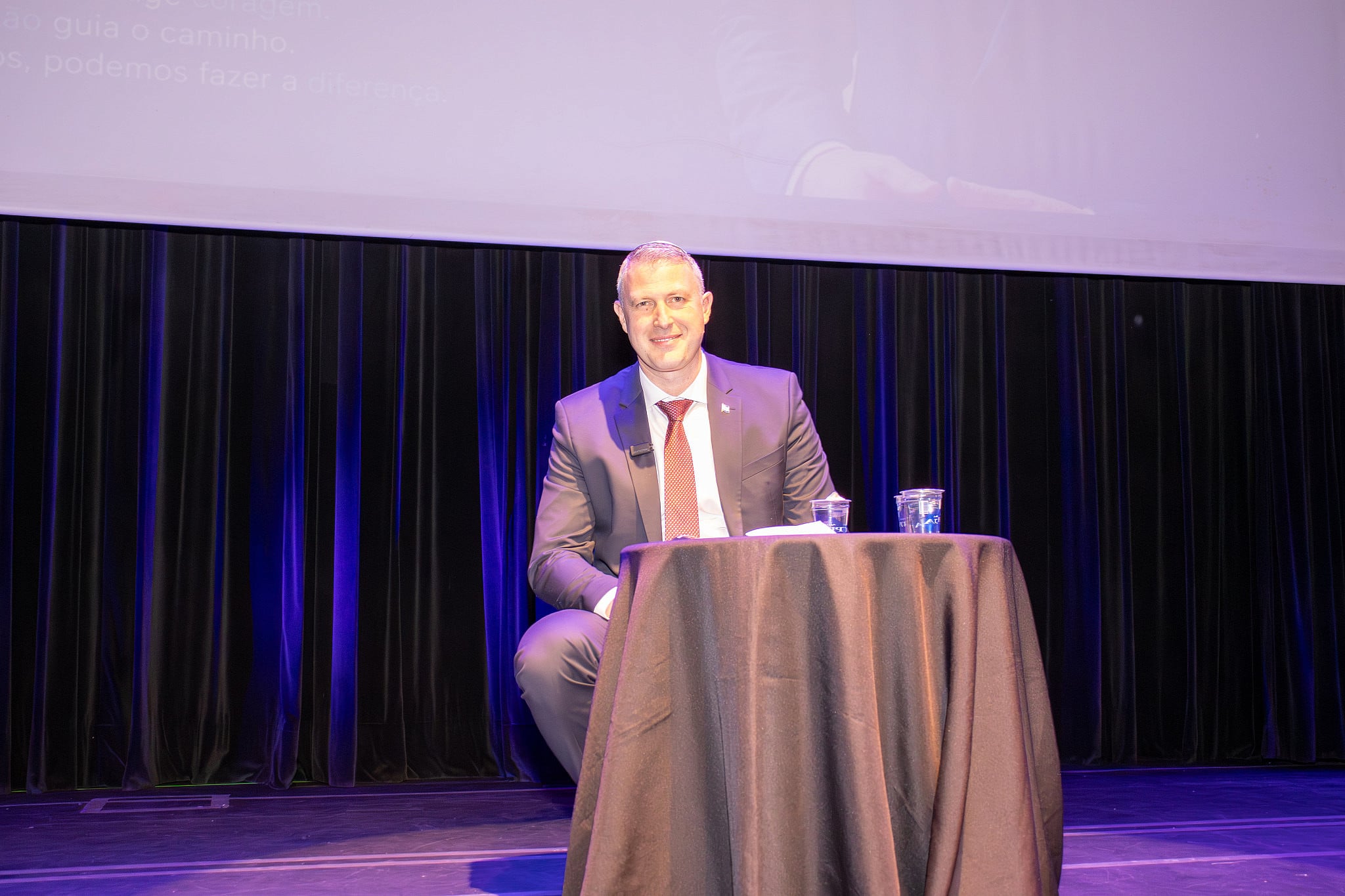
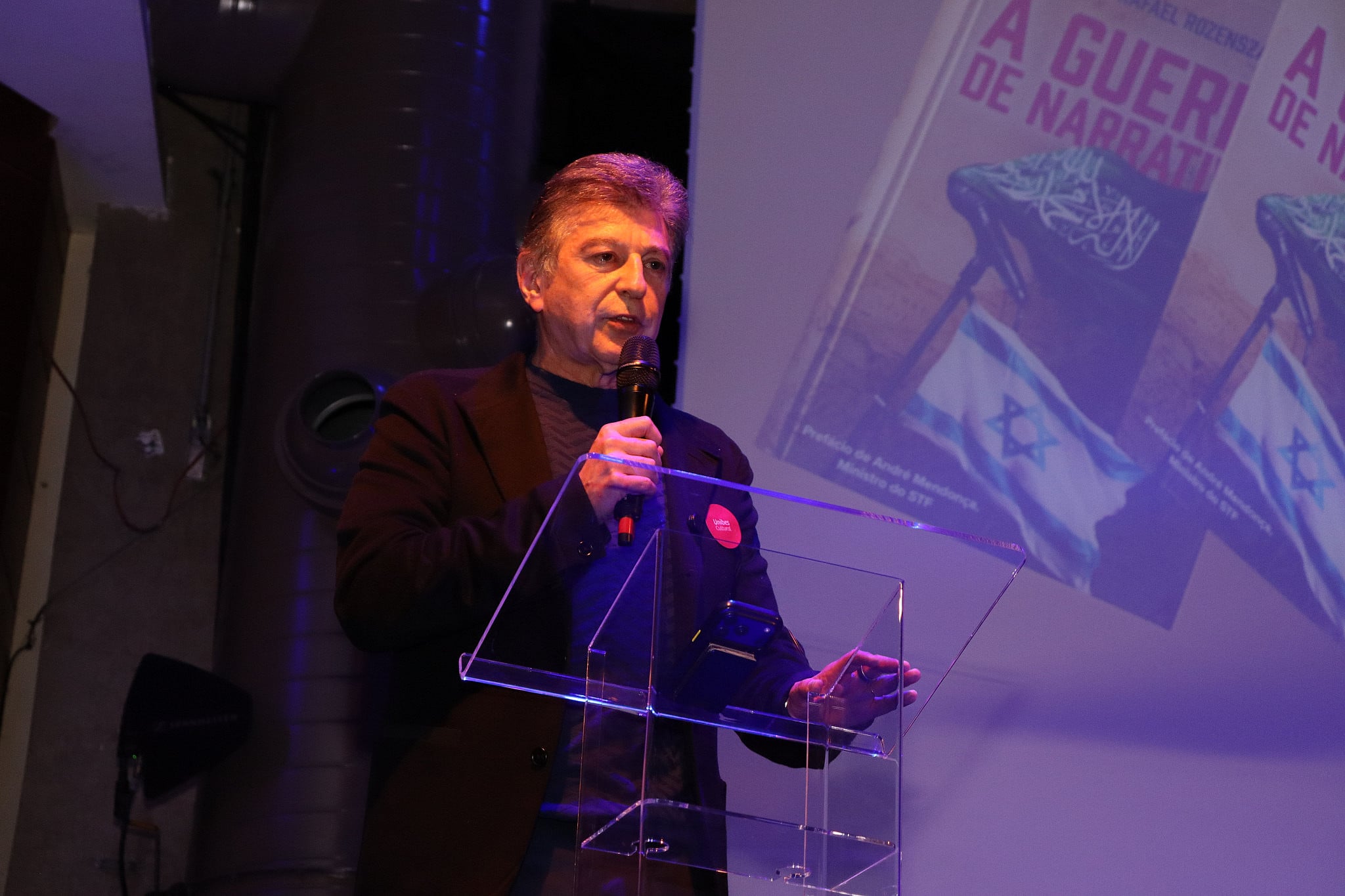
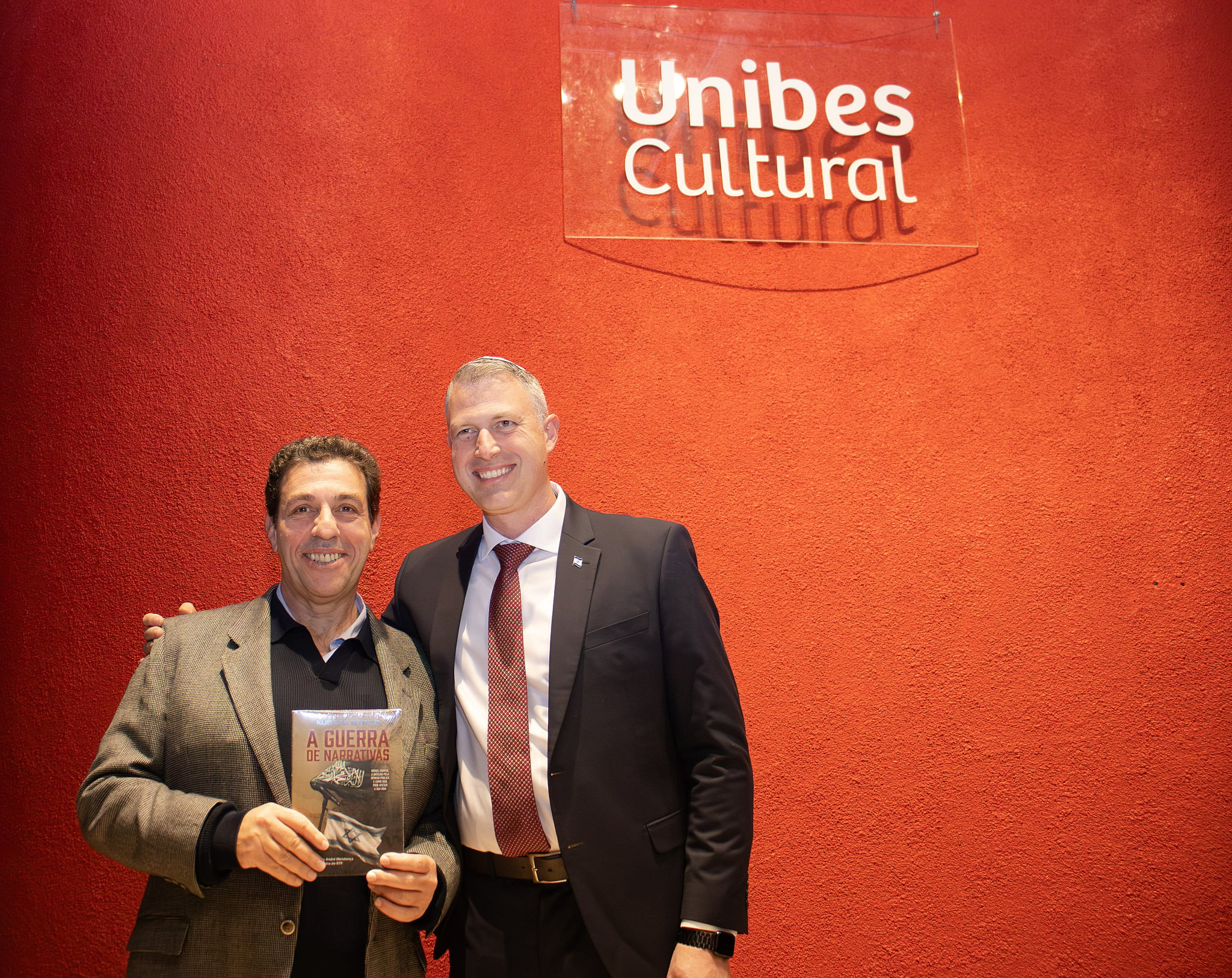
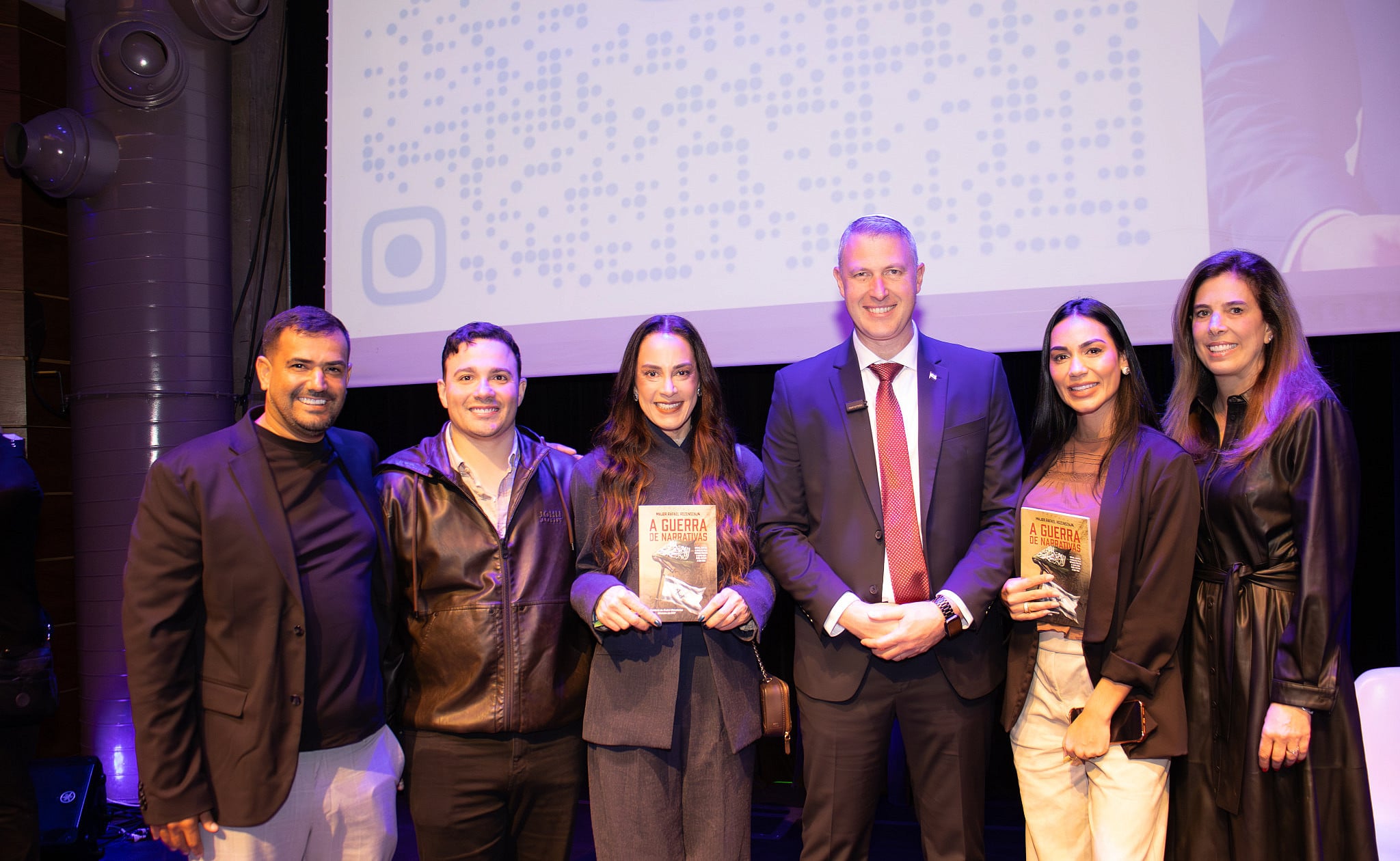
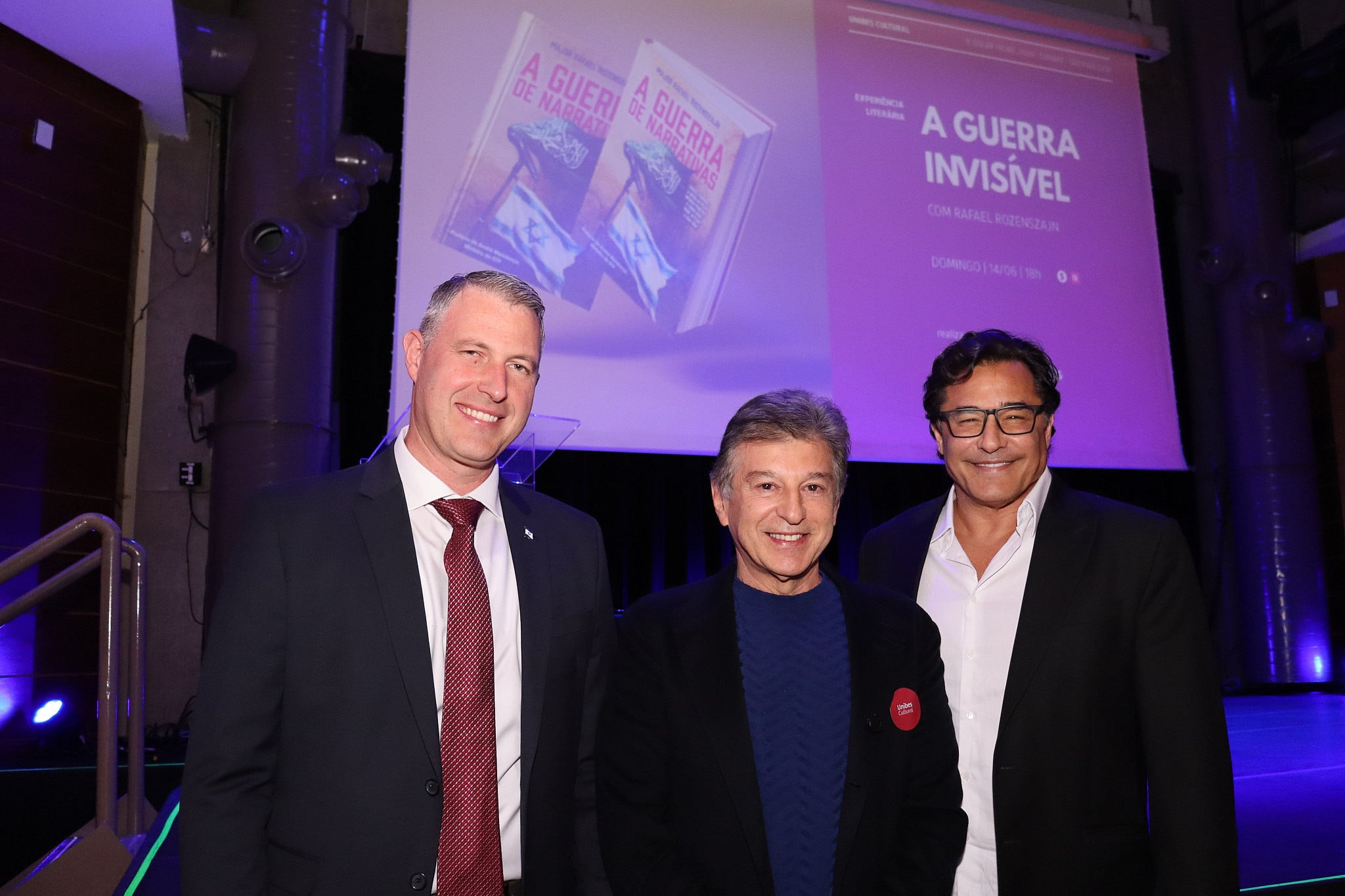
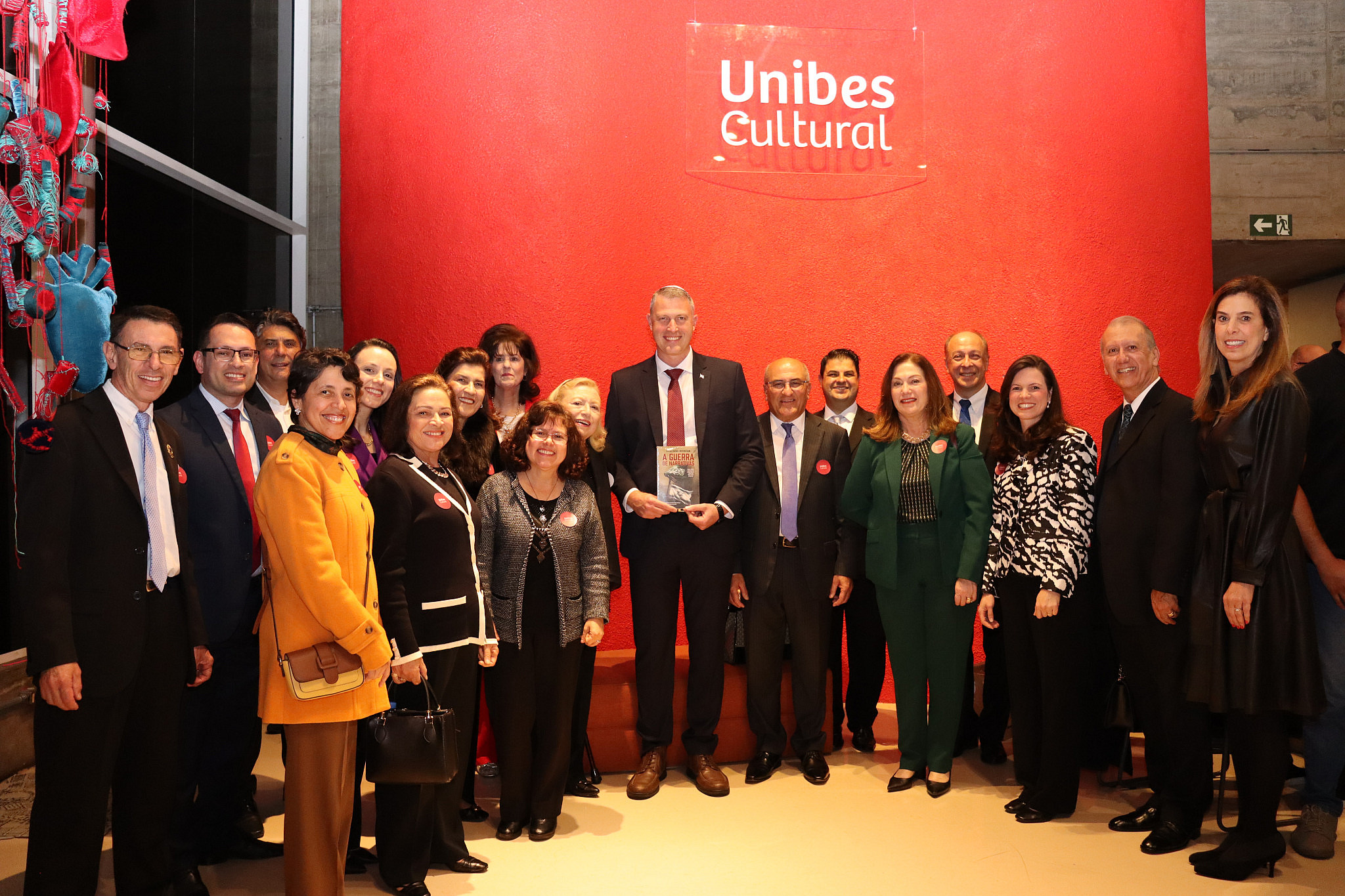
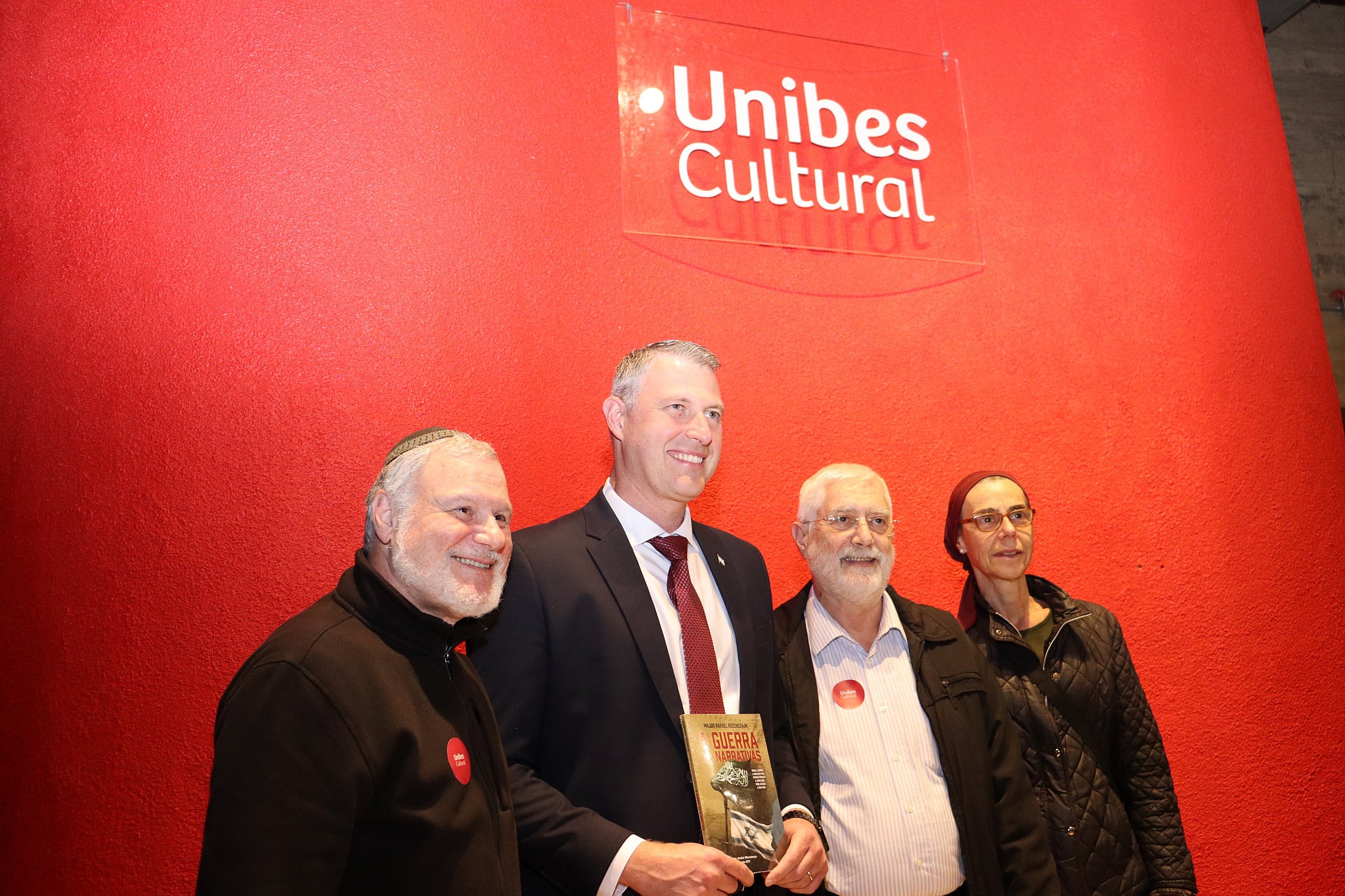
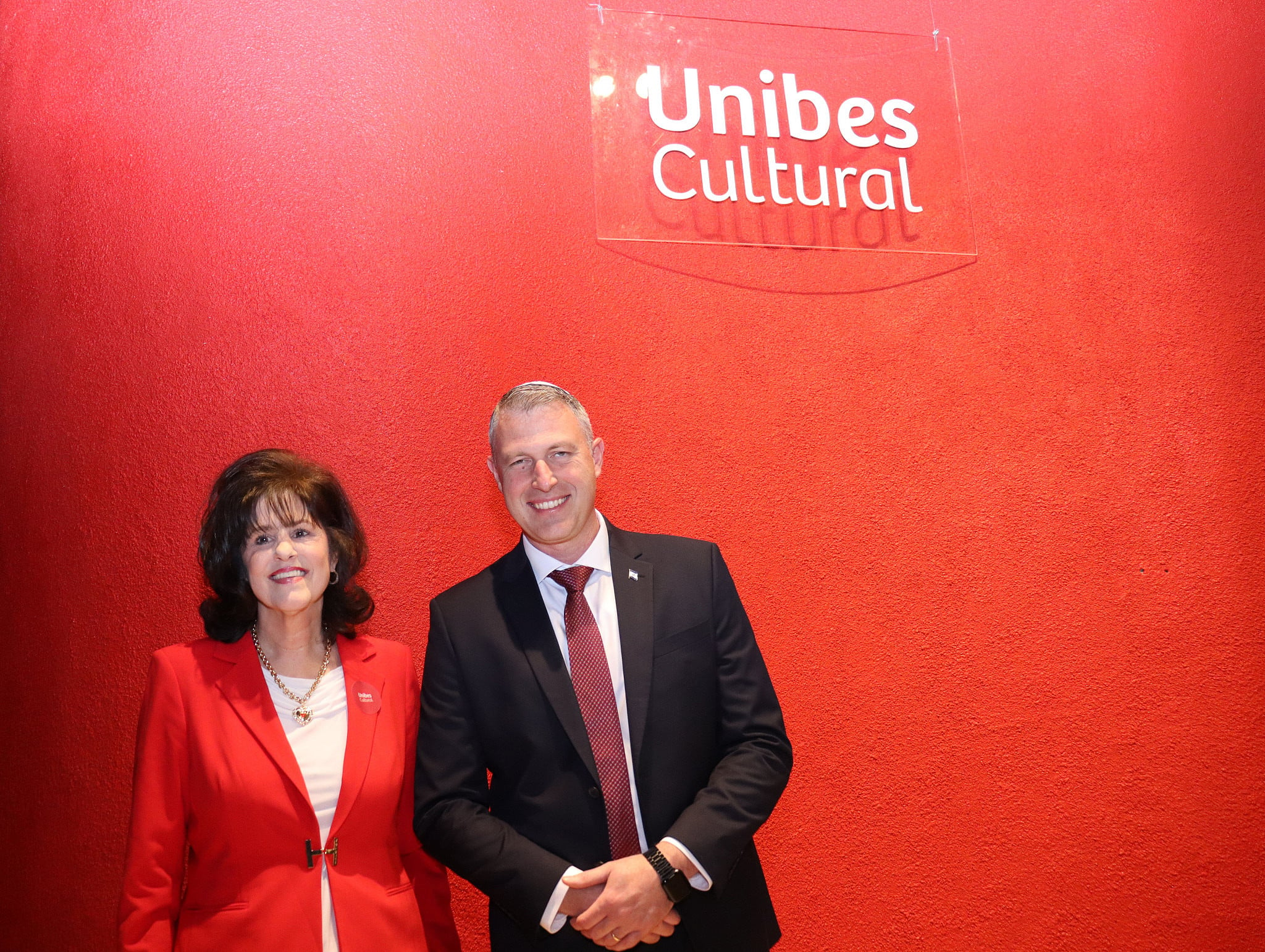
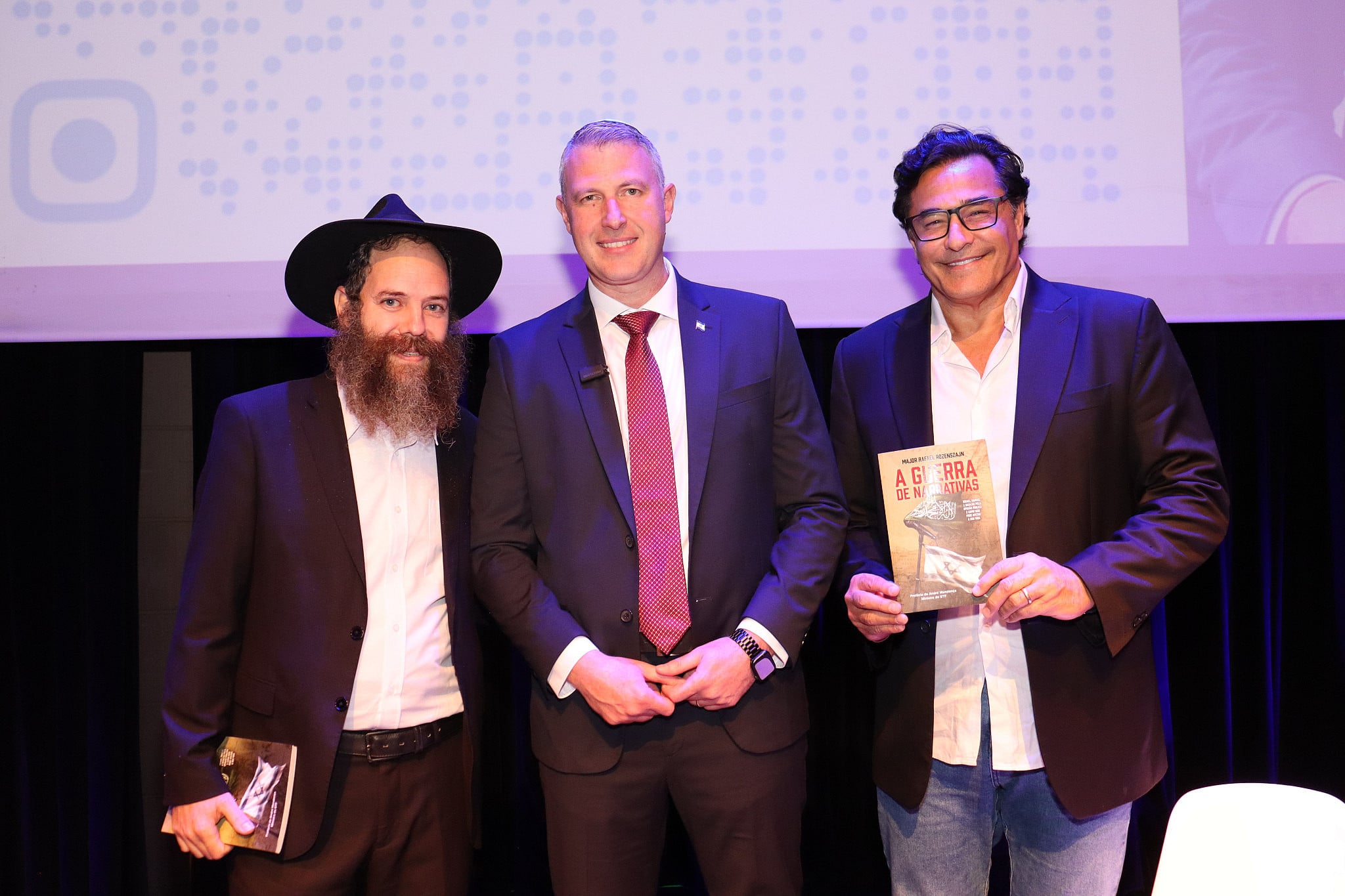
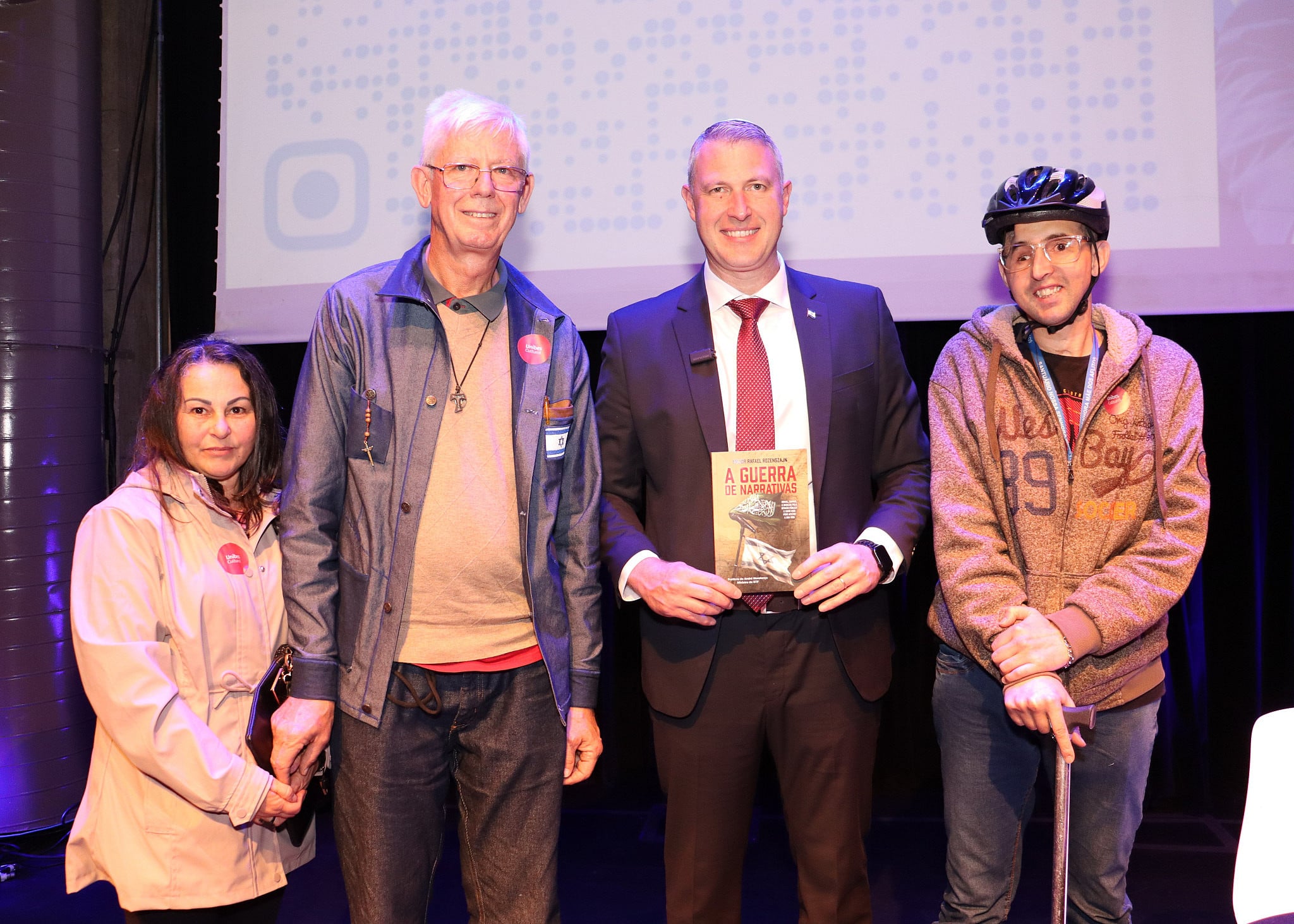
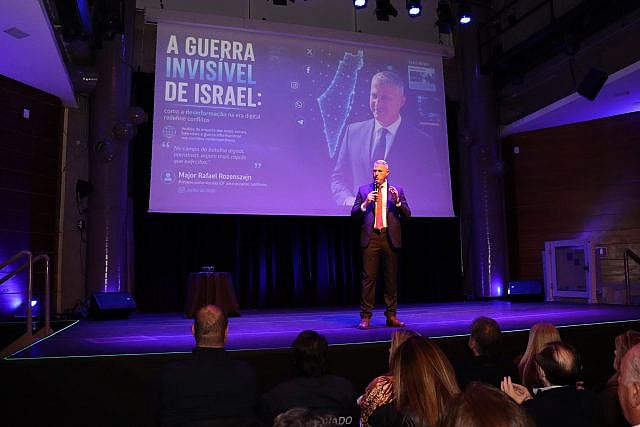
Last Sunday (14), around 300 people filled the auditorium of Unibes Cultural in São Paulo for a conversation that went far beyond the usual Middle East debate. What Major Rafael Rozenszajn, the first Israeli Defense Forces spokesperson for Portuguese speakers, presented was not a defense of military policy but a deep diagnosis of how contemporary wars are fought long before any action takes place on the battlefield.
“Today, a 15-second animation can cross borders, shape perceptions, and influence more than an official report with thoroughly analyzed facts and data.”
This observation, made by the international law attorney and bestselling author of The War of Narratives, was not rhetorical. It was a precise description of a phenomenon that often goes unnoticed: modern disinformation does not present itself as propaganda. It comes disguised in memes, slick animations, and short videos with simplified narratives. A perfect villain. A flawless victim. Ready to go viral.
The lecture is part of a Brazilian tour that also visited Belo Horizonte and Goiânia, aiming to spark reflection among diverse audiences well beyond the Jewish community. The central thesis is simple yet disturbing: real conflicts no longer compete only with rival versions—they compete for reality itself. In a virtual environment saturated with narratives, those who control the algorithm often overpower those who hold the truth.
“Real wars don’t work like that. When an urban conflict—fought between the army of a democratic country and a terrorist group—is reduced to a simplified story, the goal is not just to distort facts. It is to shape global perception,” Rozenszajn said.
Coordinated disinformation campaigns exploit not universal credibility but emotional penetration. The difference between disinformation two decades ago and today is scale. It is not just technological but operational: videos, audios, and images meticulously designed to sway public opinion through emotional aesthetics and the appearance of truth are now produced on an industrial scale.
“Before, it was about convincing. Now, it’s about flooding. When everything seems plausible, doubt becomes the rule. And when people doubt everything, they choose to believe what confirms their emotions,” Rozenszajn noted.
This highlights a broader dilemma: truth requires context, time, and complexity. Lies offer immediate clarity and emotional comfort.
The Industrialization of Lies
Two cases that made global headlines illustrate how this dynamic works in practice. The first was the explosion at Al-Ahli Baptist Hospital in central Gaza on October 17, 2023. Immediately after the incident, Hamas accused Israel of bombing the hospital, claiming 500 deaths. Media outlets replicated the narrative on a massive scale, despite Israeli requests to wait for fact-checking. Intelligence evidence later indicated the blast was caused by a failed missile launched by Islamic Jihad, a Hamas ally. The issue was not just conflicting versions but narrative speed: the accusation went viral, while the correction arrived too late—and often invisible to those who had already shared the falsehood.
Another example followed the same pattern. Accusations that Israel killed civilians waiting in line for food circulated widely. Later videos and documents revealed that Hamas operatives, disguised among civilians, fired the shots. These same militants steal food, resell it at exorbitant prices, and use hunger in Gaza as a weapon of war. Israeli forces recovered documented evidence: audios, videos recorded by the terrorists themselves, and intercepted communications. All verifiable. None generated by AI. But the transmission chain was already broken—the false narrative had spread across platforms with reach no correction could match.
Rozenszajn’s diagnosis of institutions tasked with safeguarding truth is equally incisive. Israel’s primary challenge today, he argues, is how to deal with the flood of information spread as absolute truth. Responding to everything risks amplifying lies. Remaining silent allows them to dominate. The challenge extends to how media, human rights organizations, and academia handle information in a reality contaminated by supposed truths fabricated with the help of artificial intelligence.
“Credibility is not built in crises. It is tested in them. If facts alone are not enough, context is needed. Language is needed. And above all, humanity is needed,” summarized the IDF reserve spokesperson.
Brazil Among Israel’s Strongest Supporters
Why does an analysis of Middle East disinformation matter to Brazilian audiences? The answer is structural. Brazil is a massive consumer of digital content, a shaper of opinion on international security, and a space where coordinated campaigns routinely operate. The narrative sophistication of the Middle East conflict—driven by the simplification of complex disputes, ideological memes, and emotional exploitation—is not an exotic episode. It is a pattern.
The phenomenon is measurable. A Pew Research Center survey tracking perceptions of Israel since 2025 revealed extraordinary results for Brazil in 2026: simultaneous improvement in three key metrics—precisely when Israel’s image worsened in much of the world. Total support rose from 32% to 33%. Total rejection fell from 58% to 52%. The most radical rejection dropped from 14% to 13%.
“Brazil is the only country in Latin America with simultaneous improvement in all three metrics. Only Greece showed similar results among the countries analyzed. But Greece’s case has a situational explanation: in March this year, Iranian drones attacked a British base in Cyprus, near Greek territory. Direct involvement in defense against Iran explains Greece’s closer alignment with Israel. Brazil had no equivalent situational factor. Its official discourse remained critical of Israel. Yet its population showed greater willingness to engage with facts, resisting the global trend,” Rozenszajn explained.
His conclusion was both diagnosis and invitation. The Brazilian tour is not about winning debates over Israel’s military actions. It is about providing tools for critical reading and exposing the mechanics of disinformation—not so audiences blindly believe official narratives, but so they avoid blindly believing any unilateral account.
“Today’s war doesn’t begin with the first shot. It begins with the first video you believe. And often, it is already happening before you even realize it.”
The packed auditoriums that welcomed Major Rafael Rozenszajn reflect a recognition among Brazilian audiences that this is true: in a world of algorithms, memes, and deepfakes, defending truth is part of the battlefield. Understanding how this struggle works—and who is fighting on each side—is essential to forming opinions rather than consuming prepackaged ideas.
Source: Paula Cohn